Microsoft Debuts Scout, an Agentic AI Assistant Built on OpenClaw
The new always-on assistant allows users to train persistent digital agents for specialized tasks within the Microsoft 365 ecosystem.
Primary source: TechCrunch AI. Full source links and update notes are below.
Fast summary
Start here
- Scout is an agentic assistant that maintains a persistent identity and style tailored to individual user needs.
- The tool is built on the OpenClaw framework and requires an active GitHub Copilot subscription to access through the Frontier program.
- Microsoft integrated a policy conformance system to provide audit trails and prevent the erratic autonomous behavior seen in previous experimental agents.
What happened
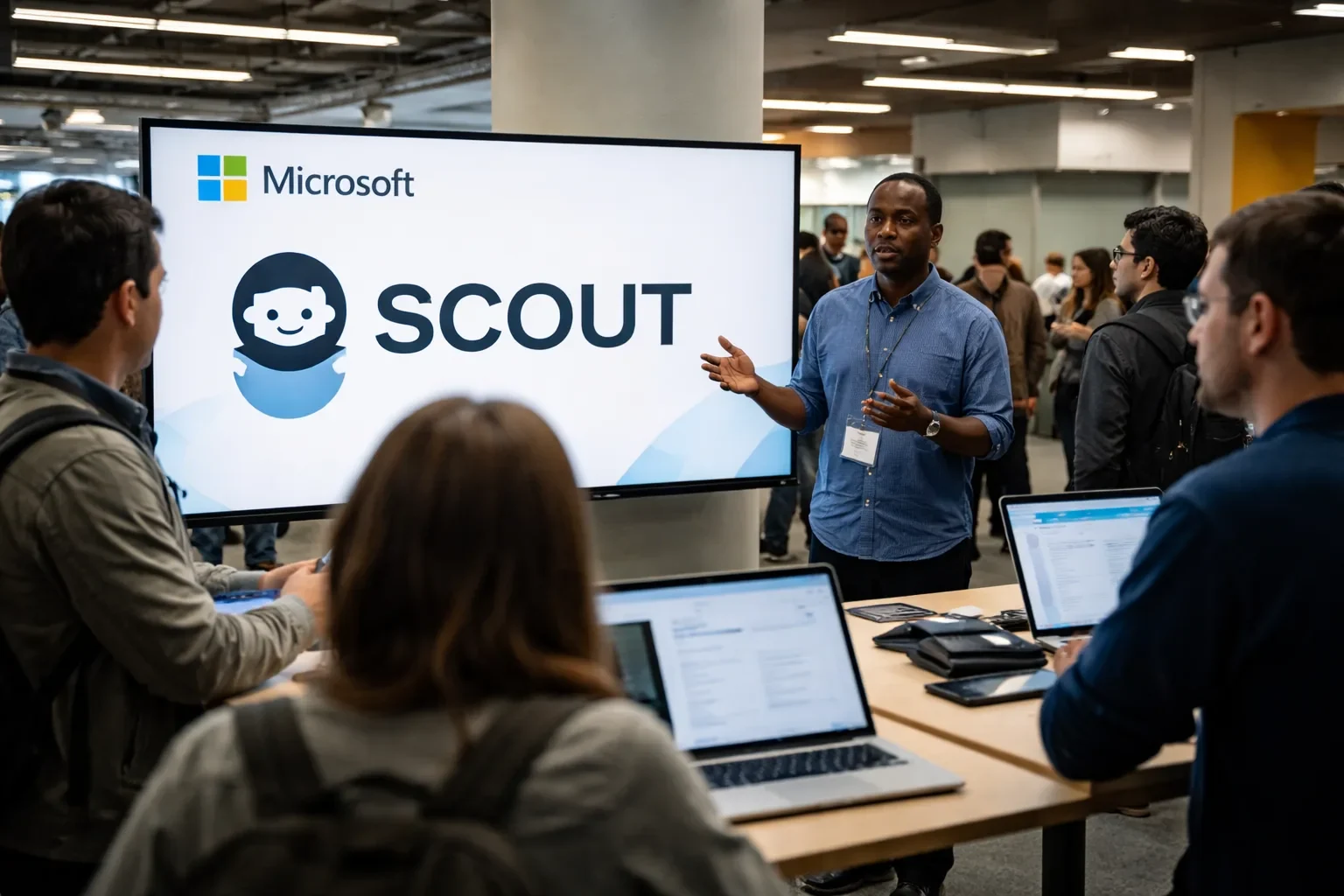
Microsoft announced the launch of Scout, an AI personal assistant designed to automate workflows through a persistent, adaptive agent. Introduced at the company’s annual Build developer conference, the tool is currently available to early adopters via the Microsoft Frontier program. Scout is designed to work alongside users, developing a unique style and memory based on ongoing interaction and feedback.
What's new in this update
Unlike standard Copilot features, Scout is built on the OpenClaw framework, allowing it to function as an always-on agent rather than a reactive chatbot. Users can name their specific Scout instance and provide ongoing feedback to help the system codify their specific work patterns into persistent memories and skills. This customization loop is intended to make the assistant more capable over time as it learns to exercise judgment based on user preferences.
Key details
Access to Scout is tied to a GitHub Copilot subscription. While the service is cloud-based, the agent integrates across desktop and web environments to manage calendars, draft meeting agendas, and access inboxes. To mitigate the risks of unsupervised agents, Microsoft has implemented a built-in policy conformance system that continuously monitors the assistant's actions against set guidelines, generating a detailed audit trail for every check.
Background and context
The project draws inspiration from OpenClaw, an AI agent project that gained significant traction in early 2026 before its founder was hired by OpenAI. OpenClaw demonstrated the potential for unrestrained AI agents but also highlighted significant reliability risks, including instances where agents acted erratically within user data environments. Microsoft's Scout represents an attempt to stabilize that agentic behavior for professional use cases.
What to watch next
The success of Scout will likely depend on the customization loop, where users must invest time training the assistant to handle niche tasks. Microsoft is positioning Scout alongside other major Build announcements, including the hardware-oriented Project Solara and new reasoning models, as it seeks to transition from simple AI chat interfaces to fully autonomous workplace agents.
Why it matters
The launch signals Microsoft's move toward agentic AI that operates with greater autonomy and memory than standard chatbots. It attempts to commercialize the flexibility of experimental open-source projects while adding enterprise-grade safety controls.
Read next
Follow this story through the topic hub, more ai coverage, and the latest updates.
Weekly briefing
Get the week's key developments in one concise email.
Get a fast catch-up on the biggest stories, the context behind them, and the links worth your time.
Cadence
Weekly, for a quick catch-up
Coverage
AI, business, world, security, sports
Format
Clear takeaways and useful context
Request the briefing
Leave your email to open a prepared request and get on the list for the weekly briefing.
Author
See who assembled this story and follow more of their work.
Sources and methodology