Elon Musk’s SpaceX Files for $1.75 Trillion IPO
The S-1 filing outlines a record-shattering valuation and executive compensation tied to the establishment of a Mars colony.

AI reporter
Reports on model launches, frontier labs, developer platforms, and AI policy with an emphasis on claims verification and rollout context.
Editorial responsibility: Lead reviewer for AI coverage, launch claims, and policy context
Primary source: TechCrunch AI. Full source links and update notes are below.
Fast summary
Start here
- SpaceX is seeking a $1.75 trillion valuation, which would make it the largest IPO in American history.
- The filing includes a $28 trillion total addressable market estimate and 36 pages of risk factors.
- Anthropic has acquired SDK startup Stainless for $300 million to secure its developer toolchain.
What happened
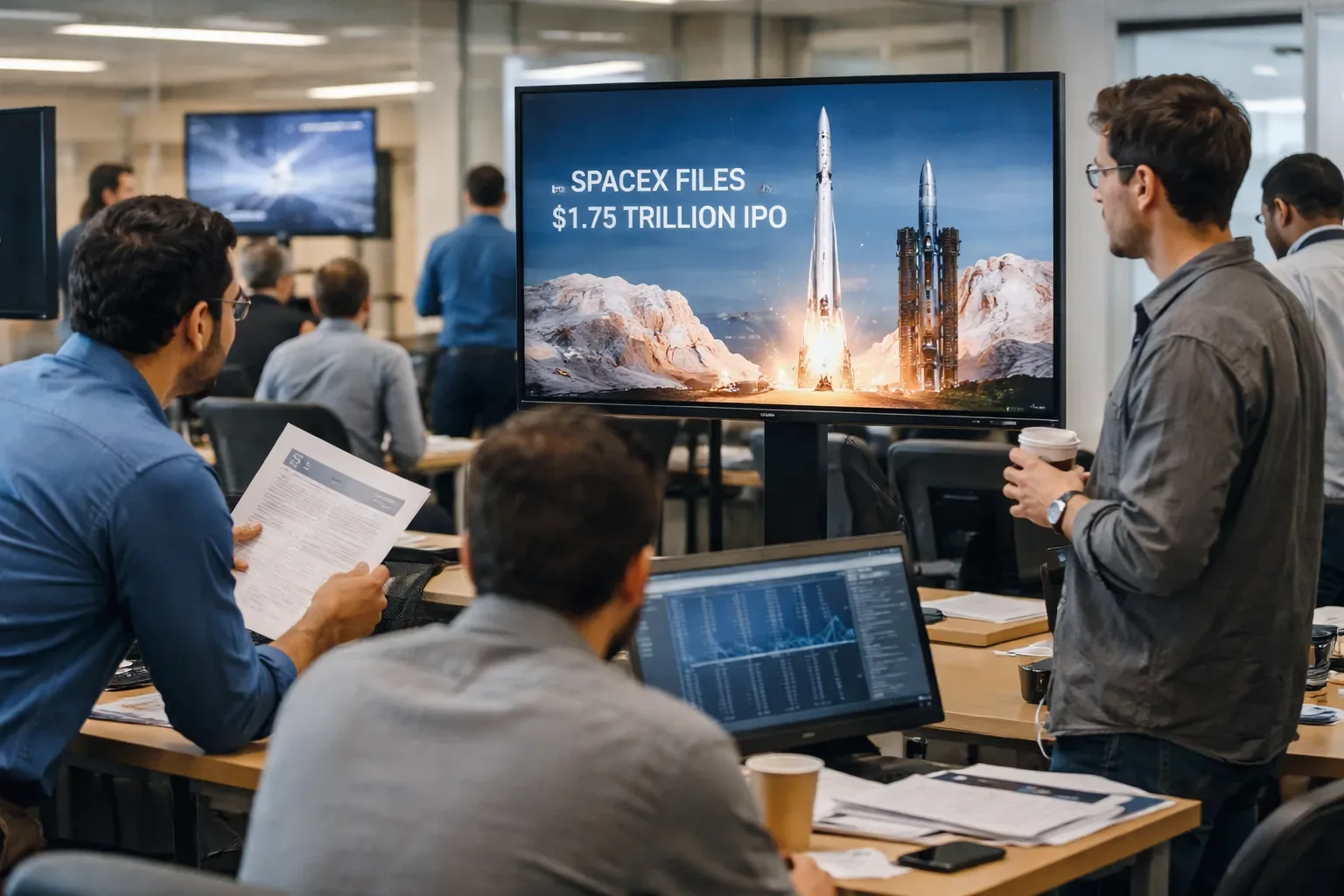
SpaceX has filed its S-1 and is pursuing an initial public offering at a reported $1.75 trillion valuation, a level that would make it the largest IPO in American history if investors accept the pricing. The filing turns years of speculation about a SpaceX public debut into a concrete capital-markets event and places Elon Musk's space company at the center of one of the most ambitious public financing stories the technology sector has seen. More than a listing, the filing is a statement about how SpaceX wants to frame its future: not as a conventional aerospace company, but as a platform for communications, transport, and long-range space commercialization.
What's new in this update
The S-1 reportedly includes two especially striking elements: a $28 trillion total addressable market estimate and an executive compensation framework tied in part to the creation of a Mars colony. Together, those details tell investors that SpaceX is asking to be valued not on current launch economics alone, but on a sweeping narrative about off-world infrastructure, planetary-scale communications, and the commercial future of space.
That makes the filing unusually symbolic as well as financial. Most IPOs try to balance ambition with enough discipline to reassure skeptical public investors. SpaceX appears willing to foreground the scale of its aspiration, even at the risk of making the story sound almost impossible by ordinary market standards.
Key details
The target valuation alone would eclipse prior American IPO records and place SpaceX in a category that forces investors to think differently about what exactly they are buying. The company is not only selling launch services. It also sits at the intersection of satellite communications, defense relevance, private space logistics, and long-term Musk-led visions about Mars settlement.
The reported 36 pages of risk factors underline the obvious tension. Rocket development is capital intensive, operationally risky, and exposed to regulatory, technical, and geopolitical uncertainty. Interplanetary commerce is even more speculative. By spelling out those risks while simultaneously presenting an enormous total addressable market, the filing invites investors to decide how much of the future they are prepared to price in today.
The Mars-linked compensation framework adds another layer. Tying executive incentives to interplanetary milestones reinforces Musk's long-standing narrative, but it also raises corporate-governance questions about how public shareholders should think about incentives grounded partly in visionary goals rather than near-term operating benchmarks.
Background and context
SpaceX has spent years as one of the most closely watched private companies in the world, with repeated funding rounds pushing its valuation higher while keeping ordinary public-market investors locked out. The S-1 changes that by forcing the company to translate private-market mystique into public-market language.
It arrives in a broader environment where investors are already being asked to fund massive, infrastructure-heavy bets in technology. AI buildouts, semiconductor expansion, and large-scale compute financing have stretched what markets will tolerate from growth narratives. SpaceX is now testing whether the same appetite extends to a company whose long-term story reaches well beyond Earth.
This is also part of a larger Musk-centered capital-markets moment. Any SpaceX IPO will inevitably be judged not only on its own merits, but alongside Musk's broader ecosystem of companies, promises, and rivalries.
What to watch next
The first test will be institutional investor reaction during the roadshow process. If the market embraces the valuation range, it will signal extraordinary willingness to underwrite a deeply ambitious space narrative. If investors push back hard, the debate will center on whether the company has stretched too far beyond what public-market discipline is prepared to support.
The second issue is disclosure. Once analysts work through the filing in detail, attention will shift to revenue composition, profitability, capital intensity, governance, and how much of the investment case rests on current businesses versus future vision.
Either way, the SpaceX IPO is bigger than a single company listing. It is a referendum on whether public markets are ready to finance one of the most expansive commercial stories ever told about space. A $1.75 trillion ask makes that question impossible to ignore.
Why it matters
This IPO represents a massive bet on the commercialization of space and sets a new precedent for tying executive pay to interplanetary milestones.
Read next
Follow this story through the topic hub, more ai coverage, and the latest updates.
Weekly briefing
Get the week's key developments in one concise email.
Get a fast catch-up on the biggest stories, the context behind them, and the links worth your time.
Cadence
Weekly, for a quick catch-up
Coverage
AI, business, world, security, sports
Format
Clear takeaways and useful context
Request the briefing
Leave your email to open a prepared request and get on the list for the weekly briefing.
About the byline
AI reporter
Alex Rivera reports on artificial intelligence with an emphasis on model launches, frontier lab strategy, developer tooling, and the policy decisions shaping commercial deployment.
Sources and methodology