Zelensky Meets European Allies in London as Russia Targets Nuclear
The Ukrainian leader held talks with the E3 group in Downing Street to bolster defense cooperation and secure long-term security guarantees.

World correspondent
Reports on international affairs, diplomacy, and humanitarian developments with an emphasis on official statements, multilateral institutions, and regional context.
Editorial responsibility: Lead reviewer for geopolitics, international institutions, and crisis coverage
Primary source: BBC World News. Full source links and update notes are below.
Fast summary
Start here
- President Zelensky met with PM Keir Starmer, President Emmanuel Macron, and Chancellor Friedrich Merz to discuss European air defense and security guarantees.
- The diplomatic summit follows a Russian drone strike that partially destroyed a spent nuclear fuel storage facility at the Chornobyl plant.
- Russian President Vladimir Putin recently rejected a proposal for face-to-face negotiations, stating he saw no point in meeting with the Ukrainian leader.
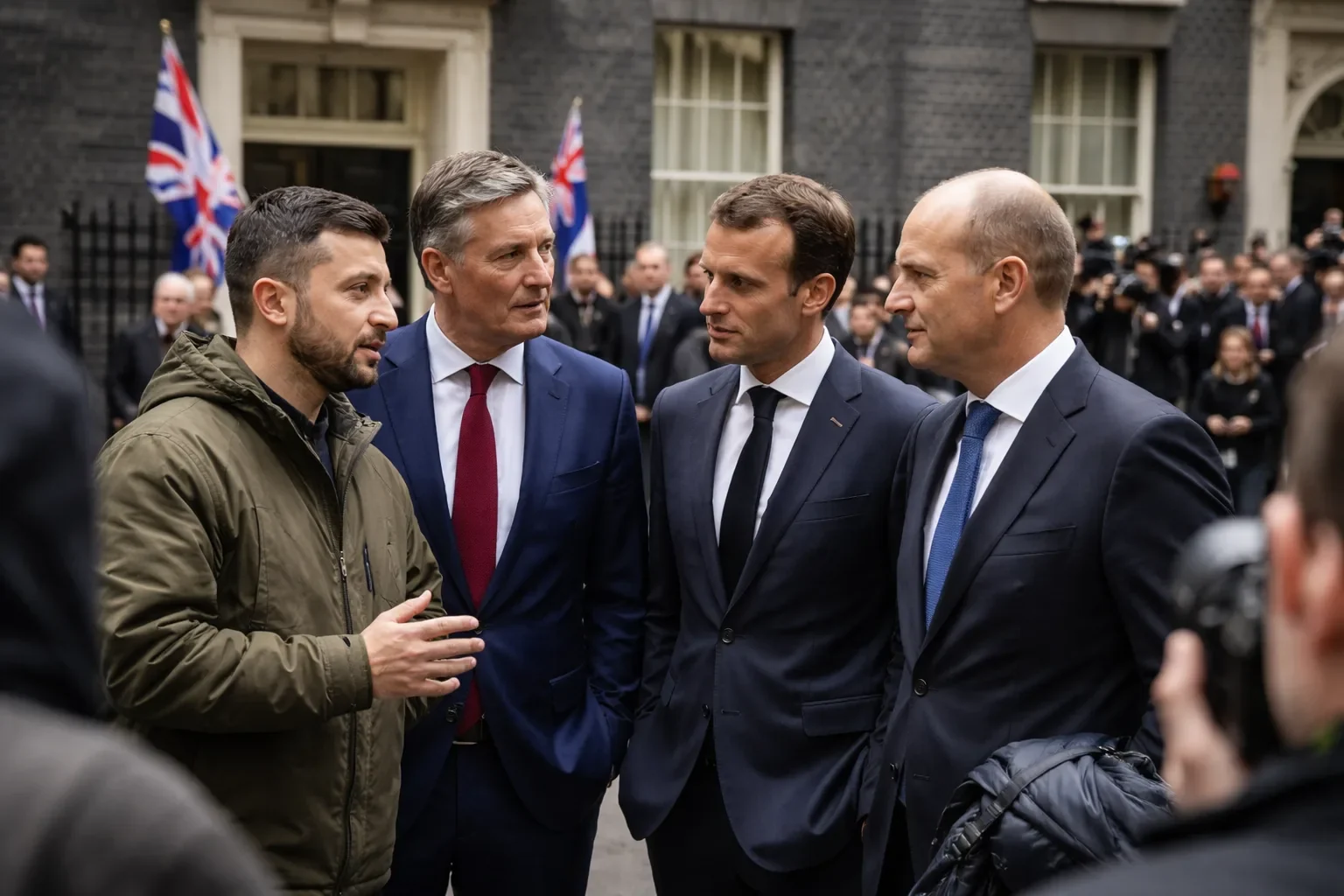
What happened
Volodymyr Zelensky met Keir Starmer, Emmanuel Macron, and Friedrich Merz in London as Ukraine sought stronger European backing at a moment of renewed pressure on its nuclear infrastructure and broader security position. The setting at Downing Street mattered symbolically, but the urgency came from events on the ground: Russia had just escalated concern by striking near infrastructure tied to Chornobyl, reviving fears about the vulnerability of nuclear-related sites in a long war already defined by strategic risk.
This was not a routine diplomatic photo opportunity. It was a meeting designed to show that Europe intends to keep Ukraine central to its security agenda even when other crises compete for attention.
Why the nuclear infrastructure angle matters
The reported strike on a spent nuclear fuel storage facility changes the tone of the moment because attacks around nuclear sites are never treated as ordinary battlefield developments. Even when radiation levels remain stable, the symbolism and risk are enormous. Strikes near places like Chornobyl remind Europe that the war in Ukraine still contains escalation paths that reach far beyond conventional military damage.
That is why the Zelensky meets European leaders summit had a sharper edge than a standard alliance consultation. It came with a renewed warning: Ukrainian security is not only about front-line defense, but about the protection of infrastructure whose disruption could affect the entire region.
Why Europe is taking a bigger role
The E3 group meeting also reflects a broader shift in burden-sharing. As US political attention becomes more divided, European leaders are increasingly under pressure to demonstrate that support for Ukraine can remain durable without depending entirely on Washington's focus or internal politics.
This means the talks were likely about more than immediate weapons deliveries. They were also about:
- Air defense coordination
- Long-term security guarantees
- Diplomatic alignment on negotiations
- European responsibility in sustaining Ukraine's war effort
That is a strategic evolution, not just a tactical update.
Why Putin's refusal matters
The meeting gains additional significance because Vladimir Putin has reportedly rejected the prospect of direct leader-level negotiations. That leaves Ukraine and its European partners in a familiar position: trying to hold open diplomatic pathways while preparing for the possibility that Moscow sees greater value in military pressure than in political compromise.
When the Kremlin closes off face-to-face negotiation, allied coordination becomes even more important. It gives Ukraine leverage not through direct dialogue with Russia, but through clarity among those still committed to backing it.
Why these leaders specifically matter
The presence of Starmer, Macron, and Merz highlights the attempt to anchor support in major European capitals that can influence military aid, diplomatic legitimacy, and future postwar security architecture. Each leader represents not just a government, but a piece of the coalition Ukraine needs if long-term backing is to survive electoral shifts and war fatigue.
That is why the optics of the meeting matter. They tell Moscow, and the rest of Europe, that Ukraine is not being left to bargain from isolation.
What to watch next
The next questions are whether the London talks produce more concrete commitments on air defense and security guarantees, and whether European partners clarify what role they are willing to play if future negotiations ever move beyond symbolic positioning. Watch too for additional reporting on the Chornobyl-linked damage, because any worsening around nuclear infrastructure would intensify the pressure for stronger European action.
Why this matters
The Zelensky meets European leaders at Downing Street amid escalating nuclear infrastructure attacks story matters because it links two urgent realities: the battlefield danger posed by strikes near nuclear-related sites and the political necessity of turning European solidarity into durable security commitments. Ukraine needs both. The meeting was about showing Europe understands that.
Related coverage
Why it matters
These talks aim to solidify European security commitments to Ukraine at a time when US political focus has shifted toward conflict in the Middle East and Iran.
Read next
Follow this story through the topic hub, more world coverage, and the latest updates.
Weekly briefing
Get the week's key developments in one concise email.
Get a fast catch-up on the biggest stories, the context behind them, and the links worth your time.
Cadence
Weekly, for a quick catch-up
Coverage
AI, business, world, security, sports
Format
Clear takeaways and useful context
Request the briefing
Leave your email to open a prepared request and get on the list for the weekly briefing.
About the byline
World correspondent
Leila Haddad covers world affairs, diplomacy, and humanitarian crises, with a focus on how fast-moving international developments affect public policy, conflict response, and cross-border institutions.
Sources and methodology