Putin Dismisses Zelensky Proposal for Face-to-Face Peace Talks
The Russian president characterized a request for direct negotiations as "rude" and maintained that military goals must be met before a ceasefire.
Primary source: BBC World News. Full source links and update notes are below.
Fast summary
Start here
- Vladimir Putin rejected Volodymyr Zelensky's open letter calling for direct talks and a ceasefire.
- Moscow maintains that Ukraine must withdraw from four occupied regions and abandon NATO aspirations.
- Zelensky accused the Kremlin of "choosing war again" following the rejection of his proposal.
What happened
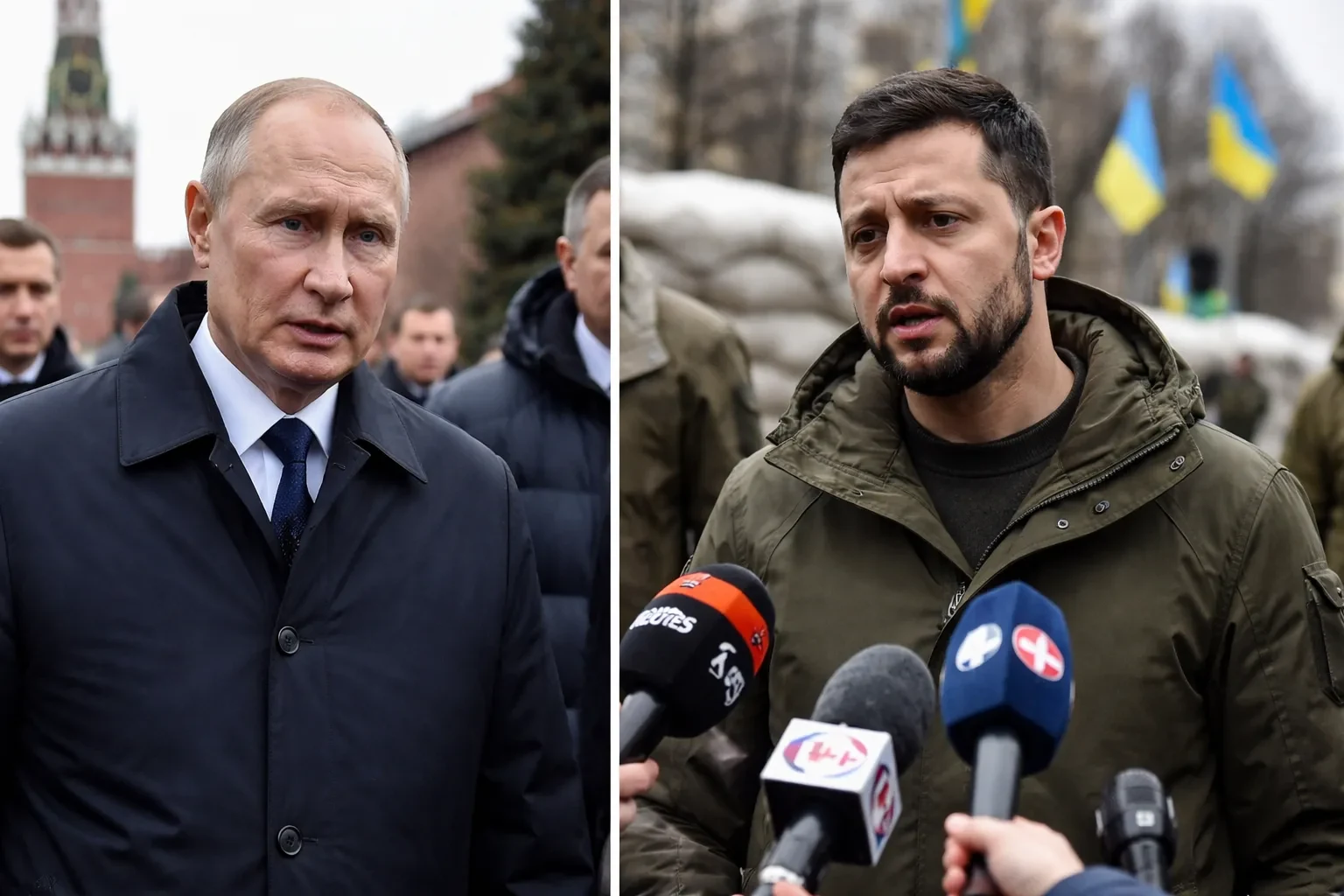
Russian President Vladimir Putin has stated there is "no point" in meeting with President Volodymyr Zelensky following an open letter from the Ukrainian leader requesting face-to-face negotiations. Speaking at the annual economic forum in St Petersburg, Putin dismissed the request, suggesting the proposal was a tactic to halt the advance of Russian forces rather than a genuine effort to establish long-term peace.
What's new in this update
The rejection came after Zelensky issued a defiant open letter calling for direct talks and a ceasefire. The letter reportedly struck a mocking tone regarding Putin's age and referenced recent Ukrainian strikes on Russian territory, including a drone attack near St Petersburg. Putin labeled the correspondence as "rude" and reiterated that any ceasefire must be preceded by comprehensive peace agreements that meet Moscow's territorial demands.
Key details
Putin maintained that military actions will only conclude once Russia has achieved its goals, which include the full withdrawal of Ukrainian forces from the Donetsk, Luhansk, Kherson, and Zaporizhzhia regions. Additionally, Moscow continues to demand that Ukraine abandon its efforts to join NATO. Zelensky, in a statement on Telegram, said the rejection proved Russia is "choosing war again" and expressed disappointment on behalf of the international community.
Background and context
The stalemate occurs as fighting intensifies across several fronts. Ukraine recently confirmed strikes on five cargo ships in the Sea of Azov, accusing them of transporting military supplies and stolen grain. This diplomatic friction follows over two years of full-scale conflict, with Kyiv consistently refusing to cede territory, citing the 2014 annexation of Crimea as evidence that concessions would only lead to further Russian aggression.
What to watch next
Putin has suggested that experts from both sides must first establish solutions and agreements before any presidential-level meeting can take place. Meanwhile, the international community remains divided on the path forward; while U.S. President Donald Trump indicated a meeting between the two leaders would be a positive step, the fundamental disagreement over territorial sovereignty suggests no immediate breakthrough is likely.
Why this matters
The refusal to meet underscores a deep diplomatic divide as both nations remain committed to military objectives over territorial concessions.
Reader context
This story belongs to Northstar Herald's International Relations and Russia-Ukraine War coverage, with related entities including Vladimir Putin, Volodymyr Zelensky, St Petersburg Economic Forum, Peace Treaty. The report is based on BBC World News source material.
Related coverage
Why it matters
The refusal to meet underscores a deep diplomatic divide as both nations remain committed to military objectives over territorial concessions.
Read next
Follow this story through the topic hub, more world coverage, and the latest updates.
Weekly briefing
Get the week's key developments in one concise email.
Get a fast catch-up on the biggest stories, the context behind them, and the links worth your time.
Cadence
Weekly, for a quick catch-up
Coverage
AI, business, world, security, sports
Format
Clear takeaways and useful context
Request the briefing
Leave your email to open a prepared request and get on the list for the weekly briefing.
Author
See who assembled this story and follow more of their work.
Sources and methodology