Zelensky Meets European Allies in London as Russia Targets Nuclear Infrastructure
The Ukrainian leader held talks with the E3 group in Downing Street to bolster defense cooperation and secure long-term security guarantees.
Primary source: BBC World News. Full source links, newsroom standards, and correction details are below.
Fast summary
Start here
- President Zelensky met with PM Keir Starmer, President Emmanuel Macron, and Chancellor Friedrich Merz to discuss European air defense and security guarantees.
- The diplomatic summit follows a Russian drone strike that partially destroyed a spent nuclear fuel storage facility at the Chornobyl plant.
- Russian President Vladimir Putin recently rejected a proposal for face-to-face negotiations, stating he saw no point in meeting with the Ukrainian leader.
What happened
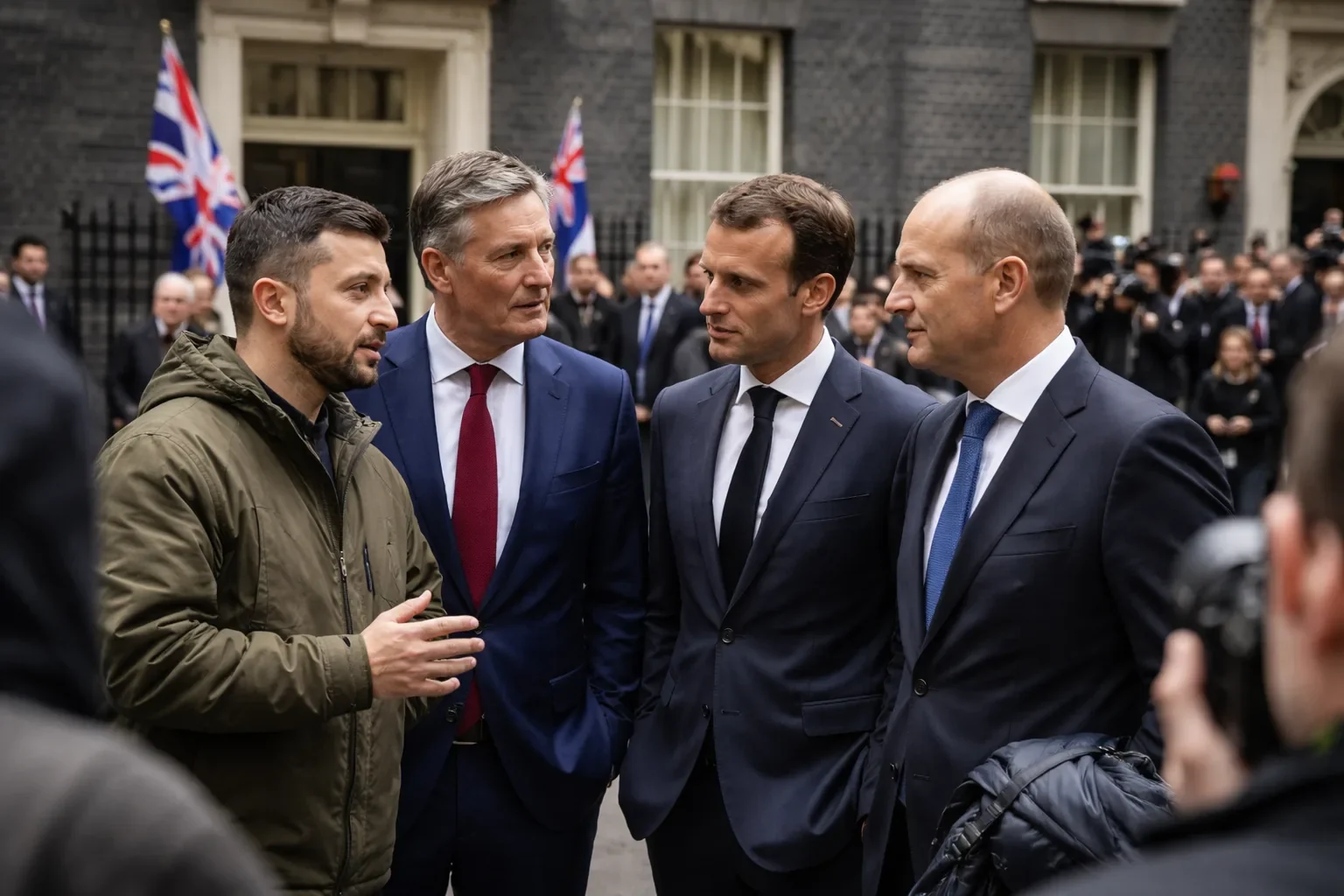
Ukrainian President Volodymyr Zelensky arrived in London on Sunday for high-level talks at 10 Downing Street. Hosted by British Prime Minister Sir Keir Starmer, the meeting included French President Emmanuel Macron and German Chancellor Friedrich Merz. The session focused on the 'E3' group's defense cooperation, the enhancement of European air defense, and the development of a shared diplomatic framework for ending the five-year conflict with Russia.
What's new in this update
The diplomatic visit coincides with what Zelensky described as a 'vile' Russian attack on critical nuclear infrastructure. Ukrainian officials reported that a Russian drone strike targeted a storage facility for spent nuclear fuel near the Chornobyl nuclear plant. While Enerhoatom confirmed that radiation levels remained stable and no injuries occurred, the strike partially destroyed a storage building, marking a direct threat to international nuclear safety.
Key details
In addition to the Chornobyl strike, Russian forces launched a deadly attack on a village near Zaporizhzhia, killing at least three people. This follows a period of heightened activity where Ukraine conducted 'unprecedented' drone strikes on St. Petersburg during a major Russian economic forum. The meeting in London serves as a counterweight to these escalations, with the UK and France leading a 'coalition of the willing' to provide security guarantees as part of any future peace process.
Background and context
The war is now in its fifth year, and European leaders are increasingly taking the lead on security initiatives as US President Donald Trump focuses on tensions with Iran. Zelensky recently sent an open letter calling for direct negotiations with Moscow to avoid waiting for a shift in US foreign policy attention; however, Vladimir Putin rejected the proposal on Friday, reiterating his refusal to meet with the Ukrainian leadership.
What to watch next
The international community is monitoring the E3 group for specific commitments regarding the 'coalition of the willing' and the delivery of advanced air defense systems. Further reports on the structural integrity of the Chornobyl fuel storage facility are expected, alongside updates on whether the latest round of diplomacy will soften the Kremlin's stance on future peace negotiations.
Why it matters
These talks aim to solidify European security commitments to Ukraine at a time when US political focus has shifted toward conflict in the Middle East and Iran.
Read next
Follow this story through the topic hub, more world coverage, and the latest updates.
Weekly briefing
Get the week's key developments in one concise email.
Get a fast catch-up on the biggest stories, the context behind them, and the links worth your time.
Cadence
Weekly, for a quick catch-up
Coverage
AI, business, world, security, sports
Format
Clear takeaways and useful context
Request the briefing
Leave your email to open a prepared request and get on the list for the weekly briefing.
Author

The Northstar Herald editorial desk assembles wire-driven and source-linked coverage, verifies core facts against published materials, and updates stories as new reporting becomes available.
Sources and methodology