Lebanese Army General Among Three Killed in Israeli Strike on Vehicle
The IDF has launched an investigation into the strike near Kfar Tebnit, which occurred amid stalled ceasefire negotiations and escalating combat with Hezbollah.
Primary source: BBC World News. Full source links, newsroom standards, and correction details are below.
Fast summary
Start here
- A brigadier-general, a captain, and a private from the Lebanese Army were killed in a vehicle strike near Kfar Tebnit on Saturday.
- The IDF stated the vehicle was moving suspiciously in an active combat zone but reiterated it is not targeting the Lebanese sovereign military.
- Hezbollah leadership recently rejected a US-backed ceasefire proposal, complicating diplomatic efforts to de-escalate the conflict.
What happened
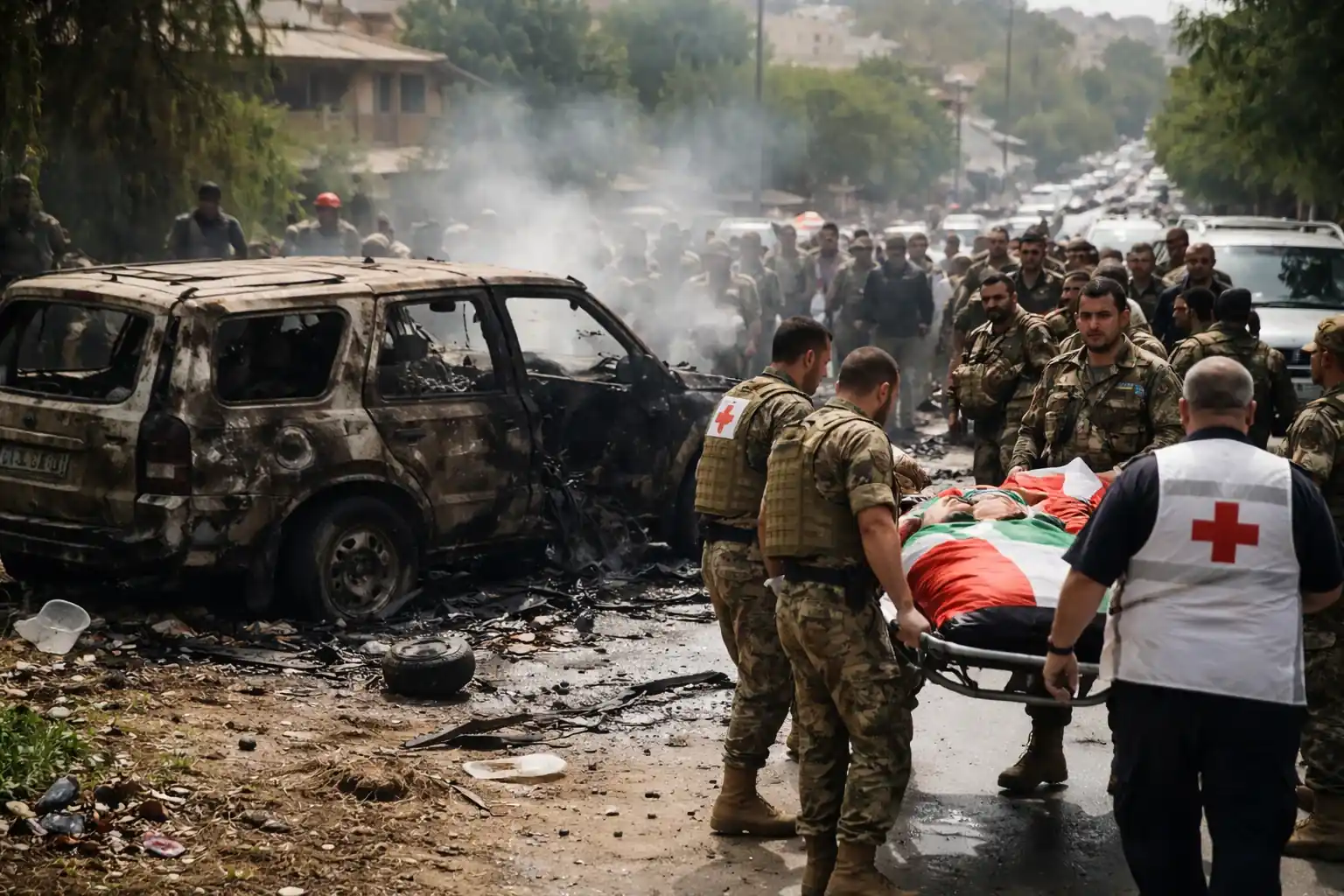
Three members of the Lebanese Army, including a high-ranking brigadier-general, were killed on Saturday when their vehicle was struck by the Israel Defense Forces (IDF) in southern Lebanon. The strike occurred on a road near the village of Kfar Tebnit, an area that has seen intense fighting and mass displacement. The Lebanese Army identified the victims as Brig Gen Samer Sabra, Cpt Elie Khoury, and Pte Hassan Ghazal, accusing Israel of deliberate aggression.
What's new in this update
The IDF has officially opened an investigation into the incident, confirming it targeted the vehicle after it was observed moving suspiciously toward Israeli forces in an evacuated combat zone. While the IDF maintains it is operating exclusively against Hezbollah infrastructure, this strike represents a direct engagement with Lebanese sovereign forces, who are not formal belligerents in the current war between Israel and Hezbollah.
Key details
The strike took place approximately four miles north of the Litani River near the city of Nabatieh. According to the IDF, troop movements in this active combat zone require coordination to prevent accidental engagements. This specific incident occurred during a weekend in which the IDF reported striking 150 Hezbollah sites, including command centers and weapon storage facilities, as part of its ongoing campaign in southern Lebanon.
Background and context
Hostilities have escalated significantly since March, when Hezbollah began launching rocket and drone attacks into northern Israel. While the Lebanese government has engaged in US-backed talks to secure a ceasefire, Hezbollah leader Naim Qassem recently rejected the latest proposals, calling the diplomatic efforts futile. The Lebanese government has expressed a desire to disarm Hezbollah themselves following a ceasefire, but Israel remains skeptical of Beirut's military capacity to do so.
What to watch next
Future diplomatic efforts may depend on US President Donald Trump's stated goal of defusing regional conflict to reach a broader agreement with Iran. However, with Hezbollah rejecting current ceasefire terms and the IDF intensifying its campaign in both southern and eastern Lebanon, the prospects for a near-term cessation of hostilities remain low as the death toll in Lebanon exceeds 3,550 since the start of the conflict.
Why it matters
The death of Lebanese state soldiers by Israeli forces complicates diplomatic negotiations and risks pulling the official Lebanese military further into the conflict between Israel and Hezbollah.
Read next
Follow this story through the topic hub, more world coverage, and the latest updates.
Weekly briefing
Get the week's key developments in one concise email.
Get a fast catch-up on the biggest stories, the context behind them, and the links worth your time.
Cadence
Weekly, for a quick catch-up
Coverage
AI, business, world, security, sports
Format
Clear takeaways and useful context
Request the briefing
Leave your email to open a prepared request and get on the list for the weekly briefing.
Author

The world desk follows geopolitics, humanitarian crises, diplomacy, and major international developments with an emphasis on fast updates and public-interest context.
Sources and methodology