Three Indian Sailors Killed in US Military Strike on Tanker in Gulf
The US Central Command targeted the MT Settebello after accusing it of violating a blockade on Iranian oil, marking the second such attack on Indian crews

World correspondent
Reports on international affairs, diplomacy, and humanitarian developments with an emphasis on official statements, multilateral institutions, and regional context.
Editorial responsibility: Lead reviewer for geopolitics, international institutions, and crisis coverage
Primary source: BBC World News. Full source links and update notes are below.
Fast summary
Start here
- Three Indian sailors died after US precision munitions struck the engine room of the MT Settebello.
- The vessel was targeted for allegedly transporting oil from Iran and failing to comply with US military directions.
- This incident follows a similar strike on Monday against the Marivex, another tanker manned by Indian crew members.
What happened
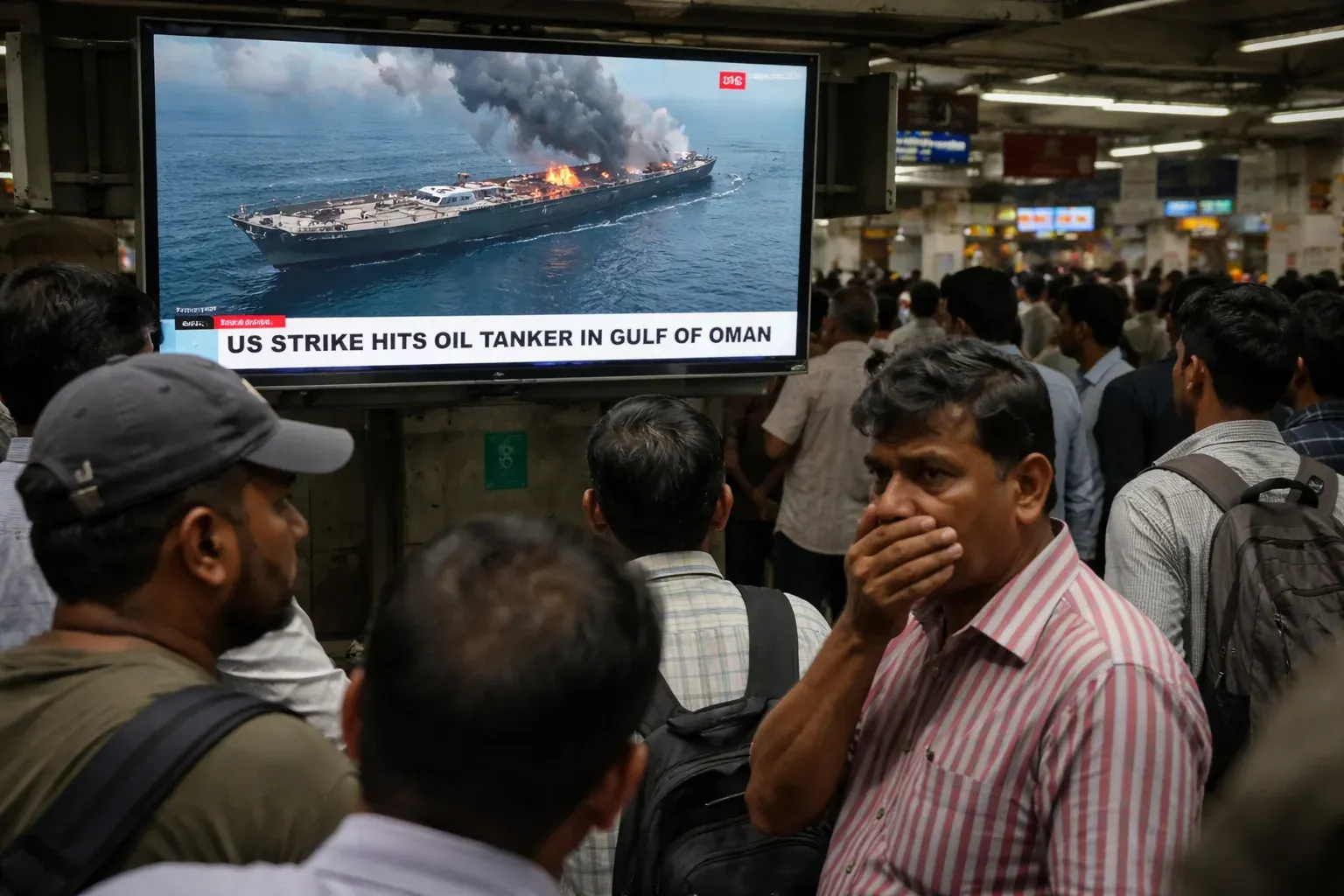
A U.S. strike on an oil tanker killed three Indian sailors after American forces targeted the MT Settebello in the Gulf of Oman, alleging the vessel was violating a U.S. blockade tied to Iranian oil. The incident immediately raised the stakes in an already dangerous regional maritime confrontation because the victims were merchant crew members rather than armed combatants.
For India, the deaths are especially sensitive. Indian sailors work across a large share of the global merchant fleet, and attacks on commercially crewed vessels create a direct human and diplomatic problem even when India is not a party to the underlying conflict.
What's new in this update
The key update is that the fatalities have now been publicly confirmed, and the strike has triggered a sharper political response from New Delhi. India's government has moved to engage U.S. officials directly, underscoring that the event is no longer just a battlefield or sanctions-enforcement story. It is also a bilateral issue between Washington and India.
That matters because the US strike on oil tanker kills three Indian sailors headline is not simply about one vessel. It also reflects the risks of a maritime enforcement strategy that is now affecting neutral or third-country crews in one of the world's most strategically important shipping corridors.
Key details
According to U.S. Central Command, the MT Settebello was hit after allegedly failing to comply with instructions and while transporting oil connected to Iran. The strike reportedly targeted the engine room using precision munitions. Of the 24 Indian crew members aboard, most were rescued, but three died.
Several details make the incident particularly serious:
- The dead were civilian merchant sailors, not military personnel
- The strike happened in the Gulf of Oman, a crucial commercial shipping route
- It was the second U.S. action in the same week involving a ship with Indian crew
- India has now been forced into direct diplomatic response
That last point is important because repeated incidents involving Indian seafarers could put growing pressure on both maritime employers and the Indian government to demand safer operating conditions or clearer rules of engagement.
Background and context
The incident is part of a wider maritime confrontation linked to pressure on Iranian oil flows and to broader U.S. regional operations after rising tensions in the Middle East. The Strait of Hormuz and surrounding waters remain among the most sensitive energy transit routes in the world, and any disruption there quickly affects shipping costs, insurance, and global commodity markets.
When military enforcement shifts from ship detention or diversion to direct strikes, the risk profile changes dramatically. Commercial vessels can become sites of lethal escalation even when the crew has no operational control over the geopolitical decisions that made the ship a target.
This is why the deaths of Indian sailors matter beyond the immediate tragedy. They expose the vulnerability of merchant crews caught between sanctions enforcement, military blockades, and unstable regional conflict dynamics. Seafarers are essential to the global economy, but in crises like this they often carry extraordinary risk with minimal political protection.
What to watch next
The next phase will involve both diplomacy and shipping-sector reaction. India is likely to continue pressing for accountability and clarification, while maritime employers and unions may intensify calls for stronger safety protocols or rerouting decisions for crews operating in contested waters.
Three follow-up questions stand out:
- Whether India pushes for a formal explanation or protest beyond immediate diplomatic summons
- Whether U.S. forces alter tactics after the deaths of civilian crew members
- Whether shipping companies reduce exposure in the Gulf of Oman and nearby routes
If additional strikes on commercially crewed vessels occur, the dispute could escalate well beyond the original sanctions-enforcement rationale.
Why this matters
The U.S. strike on oil tanker kills three Indian sailors story matters because it shows how quickly regional military pressure can spill over onto global commercial shipping and kill civilians with no direct role in the conflict. That creates not only a humanitarian problem, but also a diplomatic and economic one.
More broadly, the incident is a warning about the fragility of maritime security in the Middle East. When enforcement operations begin costing the lives of neutral seafarers, the consequences can spread far beyond the original military objective.
Why it matters
The deaths of neutral merchant sailors heighten diplomatic tensions between the US and India while underscoring the risks of the ongoing maritime blockade in the Middle East.
Read next
Follow this story through the topic hub, more world coverage, and the latest updates.
Weekly briefing
Get the week's key developments in one concise email.
Get a fast catch-up on the biggest stories, the context behind them, and the links worth your time.
Cadence
Weekly, for a quick catch-up
Coverage
AI, business, world, security, sports
Format
Clear takeaways and useful context
Request the briefing
Leave your email to open a prepared request and get on the list for the weekly briefing.
About the byline
World correspondent
Leila Haddad covers world affairs, diplomacy, and humanitarian crises, with a focus on how fast-moving international developments affect public policy, conflict response, and cross-border institutions.
Sources and methodology