US Launches New Wave of Retaliatory Strikes Against Iran
President Trump orders fresh military action against Iranian infrastructure, citing recent attacks on commercial shipping in the Strait of Hormuz.

World correspondent
Reports on international affairs, diplomacy, and humanitarian developments with an emphasis on official statements, multilateral institutions, and regional context.
Editorial responsibility: Lead reviewer for geopolitics, international institutions, and crisis coverage
Primary source: BBC World News. Full source links and update notes are below.
Fast summary
Start here
- US Central Command hit multiple targets including Bandar Abbas, Sirik, and Jask.
- President Trump declared the 17 June ceasefire agreement over after ship bombings.
- Iran's Foreign Minister promised a fearless response to what he termed US vulgarity.
What happened
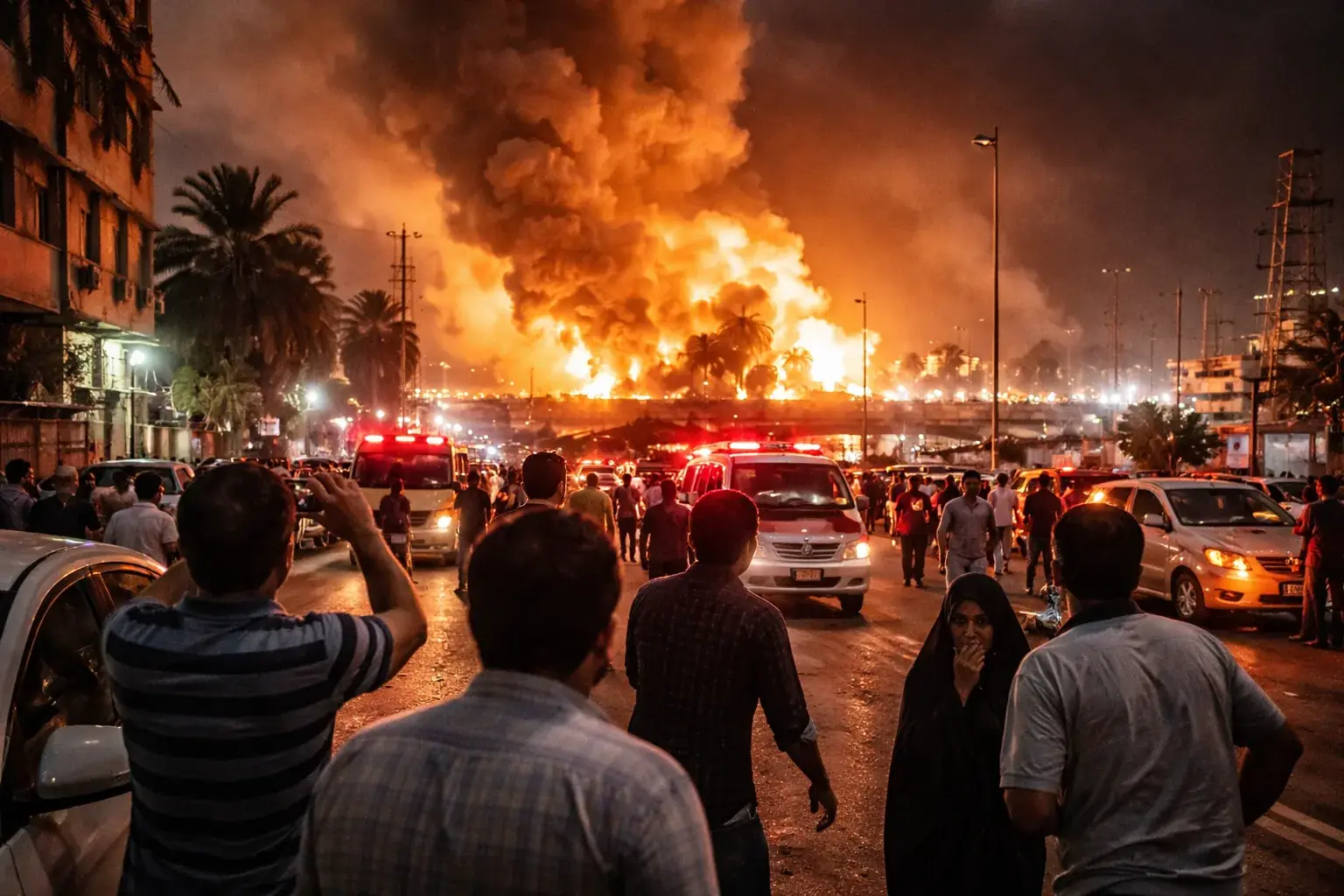
The United States military has executed a significant wave of aerial strikes against multiple Iranian targets, marking a sharp escalation in regional tensions. According to reports from Iranian state media and statements from US Central Command, the operations focused primarily on the country's southern coastline and strategic port cities. Explosions were documented in Bandar Abbas and Sirik, both of which serve as critical hubs along the Strait of Hormuz. These strikes followed a direct promise from President Donald Trump to hit them hard in response to recent hostilities. The US military confirmed the use of precision munitions aimed at degrading Tehran's capability to interfere with commercial shipping. Initial assessments indicate that several Iranian naval facilities and infrastructure points sustained damage during the midnight raids, which the US insists are necessary for the protection of international commerce.
What's new in this update
The most critical development in this latest exchange is the formal collapse of the ceasefire agreement established on June 17. President Trump explicitly stated on Wednesday that the memorandum of understanding, which was intended to provide a 60-day window for diplomatic negotiations, is now over. This declaration follows Tuesday's attacks on three commercial tankers in the strait, which Washington attributes directly to Iranian forces. Furthermore, the geographic scope of the US response has expanded, with reports of projectiles hitting the disputed island of Abu Musa and power outages affecting the city of Chabahar. Unlike previous skirmishes, this round of strikes specifically targeted an Islamic Revolutionary Guard Corps barracks in Bushehr, signifying a shift toward hitting high-value military personnel sites rather than just coastal infrastructure. This suggests a more aggressive posture from the US administration than seen in earlier weeks.
Key details
US Central Command characterized the mission as an effort to hold Tehran accountable for what it called unjustified aggression against international crews and commercial vessels freely navigating a vital international waterway. In Bandar Abbas, Iranian state television reported at least eight distinct explosions, which immediately prompted the activation of domestic air defense systems across the southern coastline. The port cities of Jask and Sirik also reported missile impacts near maritime facilities, while local officials in the city of Chabahar struggled to restore electricity after three main power lines were severed during the bombardment. Additionally, Iranian officials confirmed that military sites in Bahrain and Kuwait had been targeted by Iran earlier on Wednesday, creating a cycle of violent retaliation that has bypassed the diplomatic safeguards and de-escalation protocols put in place last month. The use of long-range projectiles suggests both sides are prepared for a high-intensity standoff that extends beyond the immediate maritime corridor.
Background and context
The June 17 memorandum of understanding was a fragile 14-point agreement designed to lower the temperature in the Middle East. It included provisions for a 60-day cooling-off period and the lifting of certain US sanctions in exchange for the safe passage of commercial vessels through the Strait of Hormuz. However, the deal has been repeatedly tested by skirmishes on June 26 and June 27. While both nations briefly agreed to stand down late last month, the ceasefire failed to survive the latest round of tanker bombings. President Trump has dismissed further diplomatic efforts as a waste of time, signaling a return to the maximum pressure strategy. This abandonment of the memorandum of understanding marks the shortest-lived peace agreement between the two nations in recent years and leaves the regional security architecture in a state of total uncertainty as both militaries mobilize.
What to watch next
As the US military prepares for potential follow-up strikes promised by the administration, the international community is closely monitoring Iran's vowed immediate response. Foreign Minister Abbas Araghchi has rejected further verbal negotiations on social media, suggesting that Tehran will now prioritize action and valour over rhetoric. The focus now shifts to the security of the Strait of Hormuz, a vital artery for global energy supplies, where insurance premiums for cargo ships are expected to skyrocket as a direct result of the kinetic exchange. Global energy markets are bracing for volatility if the waterway becomes a full-scale combat zone. Observers are also watching for the involvement of regional allies, as Iranian projectiles have already reached bases in Kuwait and Bahrain. If the IRGC continues to retaliate against US military assets in neighboring countries, the risk of a broader regional conflict involving multiple sovereign states becomes significantly more likely in the coming days.
Why it matters
The collapse of the June ceasefire deal significantly increases the risk of a full-scale regional conflict and threatens the stability of global energy markets.
Read next
Follow this story through the topic hub, more world coverage, and the latest updates.
Weekly briefing
Get the week's key developments in one concise email.
Get a fast catch-up on the biggest stories, the context behind them, and the links worth your time.
Cadence
Weekly, for a quick catch-up
Coverage
AI, business, world, security, sports
Format
Clear takeaways and useful context
Request the briefing
Leave your email to open a prepared request and get on the list for the weekly briefing.
About the byline
World correspondent
Leila Haddad covers world affairs, diplomacy, and humanitarian crises, with a focus on how fast-moving international developments affect public policy, conflict response, and cross-border institutions.
Sources and methodology