US Moves to Block Automatic Extension of Trilateral USMCA Trade Pact
Washington's refusal to grant a 16-year renewal forces the North American trade agreement into a cycle of annual reviews and sets a decade-long deadline

World correspondent
Reports on international affairs, diplomacy, and humanitarian developments with an emphasis on official statements, multilateral institutions, and regional context.
Editorial responsibility: Lead reviewer for geopolitics, international institutions, and crisis coverage
Primary source: BBC World News. Full source links and update notes are below.
Fast summary
Start here
- The US administration declined to renew the USMCA in its current form, citing unresolved issues with automotive rules and market access.
- Failure to achieve a unanimous extension triggers a ten-year shot lock, putting the agreement on a path to expire as early as 2036.
- Trade officials intend to use the newly mandated annual review process to pressure Mexico and Canada on dairy exports and Chinese market exploitation.
What happened
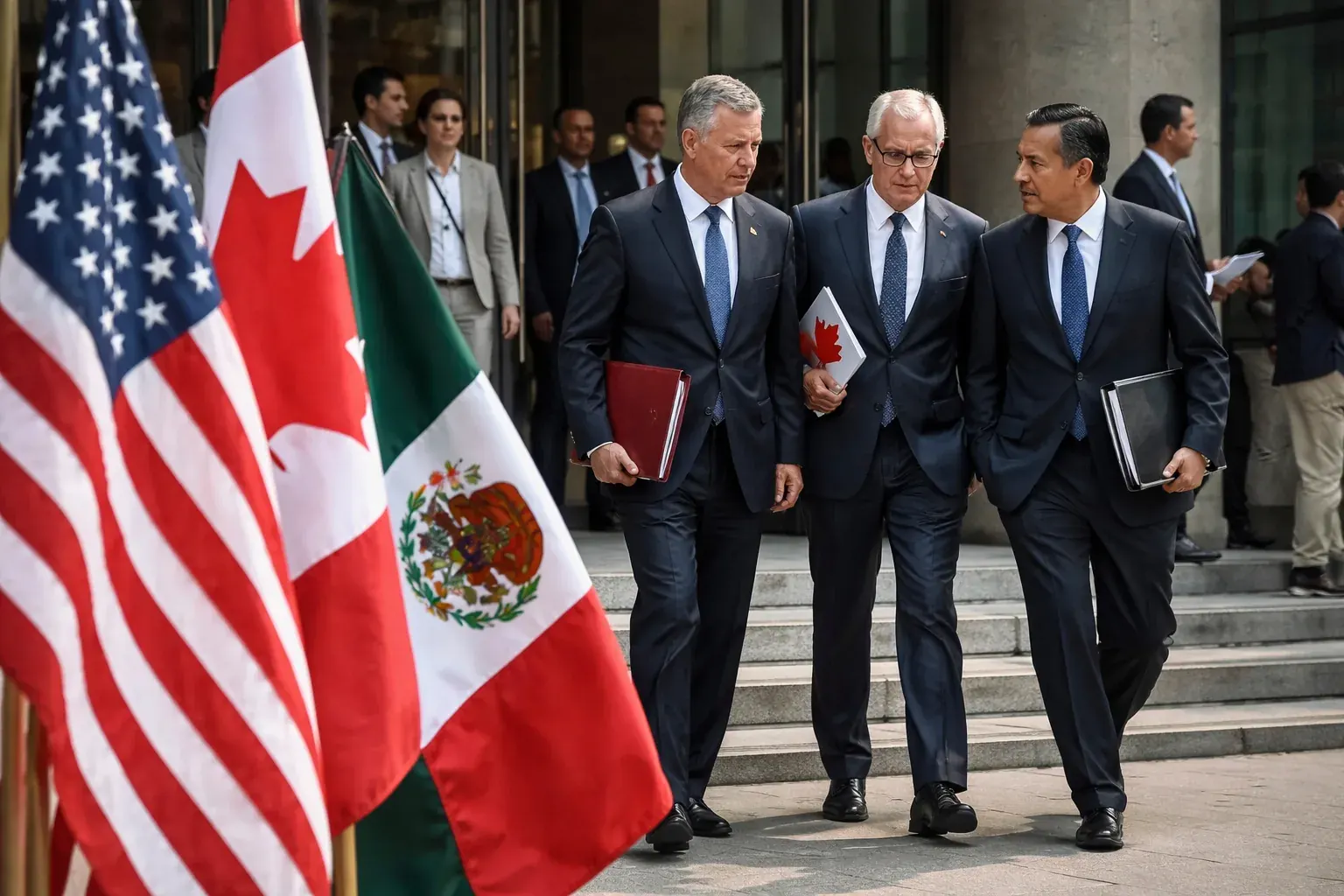
The United States government has formally declined to authorize a long-term, 16-year renewal of the United States-Mexico-Canada Agreement, known as the USMCA. According to a senior US official, the administration opted against a rubber stamp approval of the trilateral trade pact in its current form, citing a list of unresolved grievances and structural issues that require more aggressive negotiation. This move effectively ends the possibility of an automatic extension that would have secured the agreement until 2042. Instead, the refusal to grant a unanimous extension initiates a procedural countdown. Under the specific terms of the deal established six years ago, the failure to renew now places the agreement on a path toward expiration as early as 2036, unless subsequent annual reviews yield a different consensus among the three member nations.
What's new in this update
This latest development represents a significant shift from the expectations of many North American business leaders who had advocated for a seamless extension to ensure long-term cross-border certainty. By withholding approval, the US government has forced a transition from a stable 16-year horizon to a cycle of annual negotiations. A senior official emphasized that the United States did not agree to renew the USMCA without first addressing specific friction points, such as automotive rules of origin and dairy market access. This tactical decision provides American trade negotiators with renewed leverage, as the shot clock to termination creates a sense of urgency for Mexico and Canada to address Washington's demands. It also signals a more confrontational approach to trade regionalism, prioritizing the remediation of existing disputes over regional stability.
Key details
The stakes of these negotiations are immense, as the USMCA governs approximately $2 trillion in annual trade across North America. Central to the US refusal are long-standing disagreements regarding the interpretation of rules of origin for the automotive industry—a sector that relies heavily on integrated supply chains spanning all three countries. Furthermore, US officials remain focused on protecting the domestic dairy market and preventing third-party actors, specifically China, from utilizing the regional agreement as a backdoor to access North American markets. While the agreement remains legally in force for the time being, the shift to annual reviews satisfies domestic trade groups, including the American Iron and Steel Institute and the Steel Manufacturers Association, who argue that the original deal lacked sufficient mechanisms to address evolving trade imbalances and unfair competition.
Background and context
The USMCA entered into force six years ago, serving as the modernized successor to the 1994 North American Free Trade Agreement or NAFTA. The transition from NAFTA to USMCA was marked by intense negotiations aimed at updating rules for the digital age, strengthening labor rights, and increasing the regional value content required for vehicles to qualify for duty-free status. While the USMCA was initially hailed as a more balanced framework, the implementation phase has been marred by legal disputes and disagreements over enforcement. Business organizations, such as the US Chamber of Commerce, have historically supported the deal for providing the predictability necessary for capital-intensive industries like manufacturing and agriculture. However, the current US administration's decision reflects a broader trend of skepticism toward long-term trade commitments that are perceived to disadvantage domestic workers.
What to watch next
Looking ahead, the shift to annual negotiations will place significant pressure on the diplomatic and trade ministries of Mexico City and Ottawa. Observers should watch for upcoming summits where the specific demands of the US trade representative will be formally tabled. The automotive sector, in particular, may see a shift in investment strategies as companies weigh the risks of a potential 2036 expiration against the costs of complying with stricter regional content rules. Additionally, the political climate in each of the three nations will play a decisive role; elections or shifts in domestic policy could either facilitate a compromise or further harden the current deadlock. The shot clock is now officially ticking, making every annual review a high-stakes event for the future of North American economic integration. Failure to resolve these issues yearly could lead to the eventual dissolution of the pact.
Why it matters
The decision ends years of relative certainty for the $2 trillion North American trade corridor, creating potential supply chain disruptions and requiring constant diplomatic intervention.
Read next
Follow this story through the topic hub, more world coverage, and the latest updates.
Weekly briefing
Get the week's key developments in one concise email.
Get a fast catch-up on the biggest stories, the context behind them, and the links worth your time.
Cadence
Weekly, for a quick catch-up
Coverage
AI, business, world, security, sports
Format
Clear takeaways and useful context
Request the briefing
Leave your email to open a prepared request and get on the list for the weekly briefing.
About the byline
World correspondent
Leila Haddad covers world affairs, diplomacy, and humanitarian crises, with a focus on how fast-moving international developments affect public policy, conflict response, and cross-border institutions.
Sources and methodology