Canada Proposes 16-Year Extension of North American Free Trade Agreement
Trade Minister Dominic LeBlanc called the pact highly beneficial while signaling a willingness to discuss improvements to regional prosperity.
Primary source: BBC World News. Full source links, newsroom standards, and correction details are below.
Fast summary
Start here
- Canada submitted a formal notice requesting the USMCA be renewed for an additional 16-year term ahead of the July deadline.
- Negotiations face hurdles over sectoral tariffs on steel, aluminum, and automobiles, as well as US access to Canada's dairy market.
- US Trade Representative Jamieson Greer noted that Canada-US talks are lagging behind Mexico due to previous retaliatory measures.
What happened
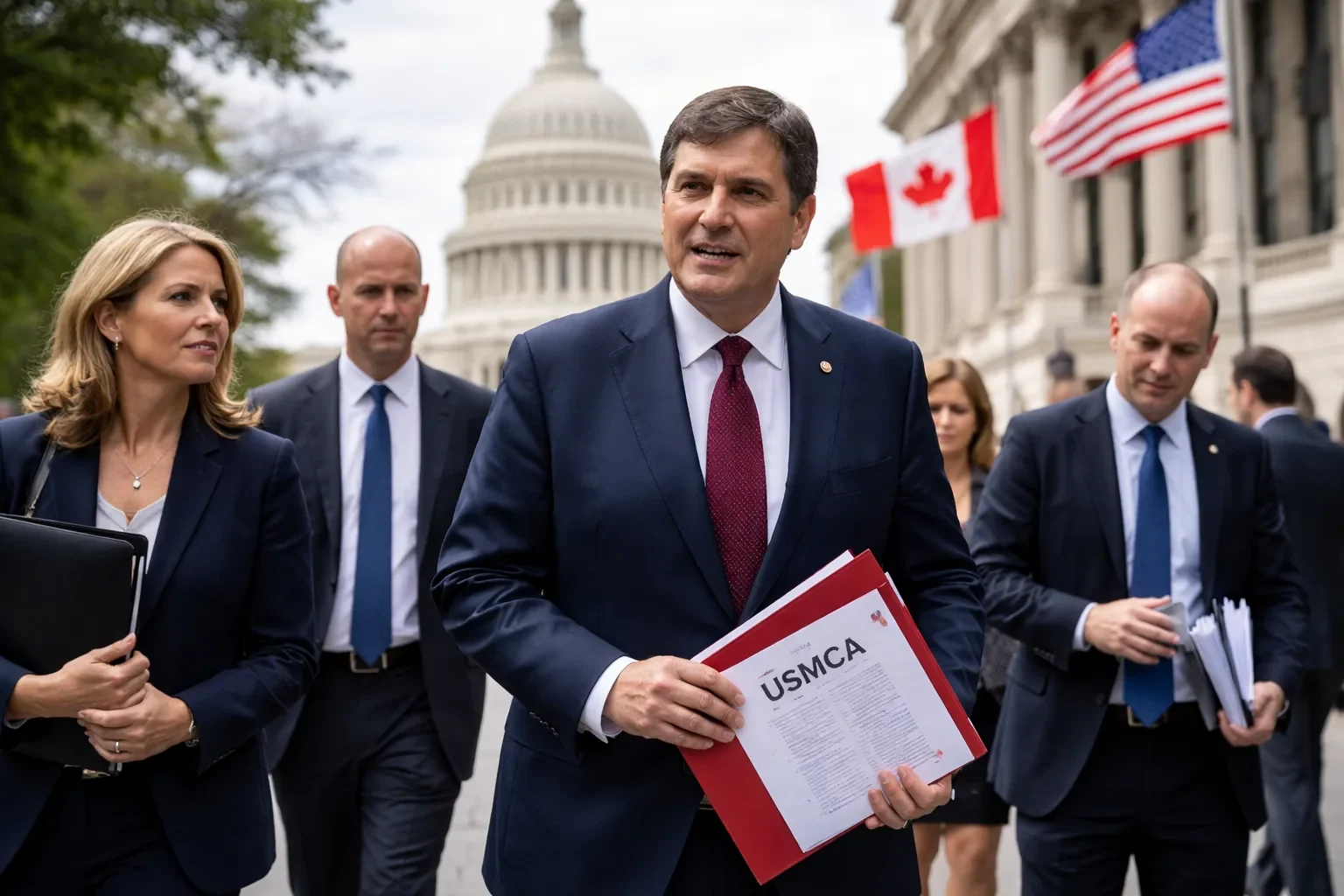
Canada has officially initiated the renewal process for the United States-Mexico-Canada Agreement (USMCA). In a formal notice, Canada-US trade minister Dominic LeBlanc requested that the deal be extended for another 16 years. LeBlanc described the agreement, known domestically as CUSMA, as a vital framework that provides North American nations with a competitive advantage on the global stage.
What's new in this update
LeBlanc arrived in Washington on Tuesday to meet with US Trade Representative Jamieson Greer. The formal request comes as the US concludes bilateral talks with Mexico, while negotiations with Canada have reportedly moved at a slower pace. Canadian officials have indicated they are open to proposals that enhance long-term prosperity but stressed that resolving sectoral tariffs on steel, aluminum, and automobiles remains a priority.
Key details
The US has identified several trade irritants, including Canada's supply management system for dairy and the removal of American alcohol from many provincial shelves. Additionally, US negotiators are pushing for higher percentages of American-made content in vehicles produced across North America. Prime Minister Mark Carney noted that Canadian vehicles already average approximately 50% US content, but Greer has suggested that Canada may need to accept certain US levies to move forward.
Background and context
The USMCA was designed with a built-in review mechanism that requires the three nations to confirm their commitment to the pact. Tensions have been high as President Donald Trump recently revived rhetoric regarding Canada's economic standing, even referring to the country as a '51st state' in social media posts. Domestically, Prime Minister Carney is facing pressure from Conservative MPs who cite lagging economic growth and high youth unemployment as evidence of failed trade strategies.
What to watch next
The focus now shifts to the bilateral meetings between LeBlanc and Greer to see if a middle ground can be reached on external tariffs and sector-specific levies. With the July deadline approaching, the three nations must decide whether to proceed with the 16-year renewal or enter into more intensive renegotiations of specific chapters within the agreement.
Why this matters
The USMCA governs trillions of dollars in trade; its renewal or renegotiation will determine the economic stability and supply chain integration of North America for nearly two decades.
Reader context
This story belongs to Northstar Herald's International Relations coverage, with related entities including USMCA, CUSMA, Canada, USA. The report is based on BBC World News source material.
Related coverage
Why it matters
The USMCA governs trillions of dollars in trade; its renewal or renegotiation will determine the economic stability and supply chain integration of North America for nearly two decades.
Read next
Follow this story through the topic hub, more world coverage, and the latest updates.
Weekly briefing
Get the week's key developments in one concise email.
Get a fast catch-up on the biggest stories, the context behind them, and the links worth your time.
Cadence
Weekly, for a quick catch-up
Coverage
AI, business, world, security, sports
Format
Clear takeaways and useful context
Request the briefing
Leave your email to open a prepared request and get on the list for the weekly briefing.
Author

The world desk follows geopolitics, humanitarian crises, diplomacy, and major international developments with an emphasis on fast updates and public-interest context.
Sources and methodology