US Targets 60 Trading Partners with New Tariffs Citing Forced Labor Negligence
The Trump administration seeks to impose duties of up to 12.5% on nearly all major importers for failing to prohibit or enforce bans on forced labor.
Primary source: BBC World News. Full source links, newsroom standards, and correction details are below.
Fast summary
Start here
- The US Trade Department announced proposed tariffs of 10% to 12.5% on 60 trading partners accounting for the majority of US imports.
- A 10% duty is planned for the UK, EU, Canada, and Mexico, while 45 other nations including China and India face 12.5% rates.
- The move follows a March investigation which concluded that dozens of countries have failed to effectively enforce legal prohibitions on forced labor.
What happened
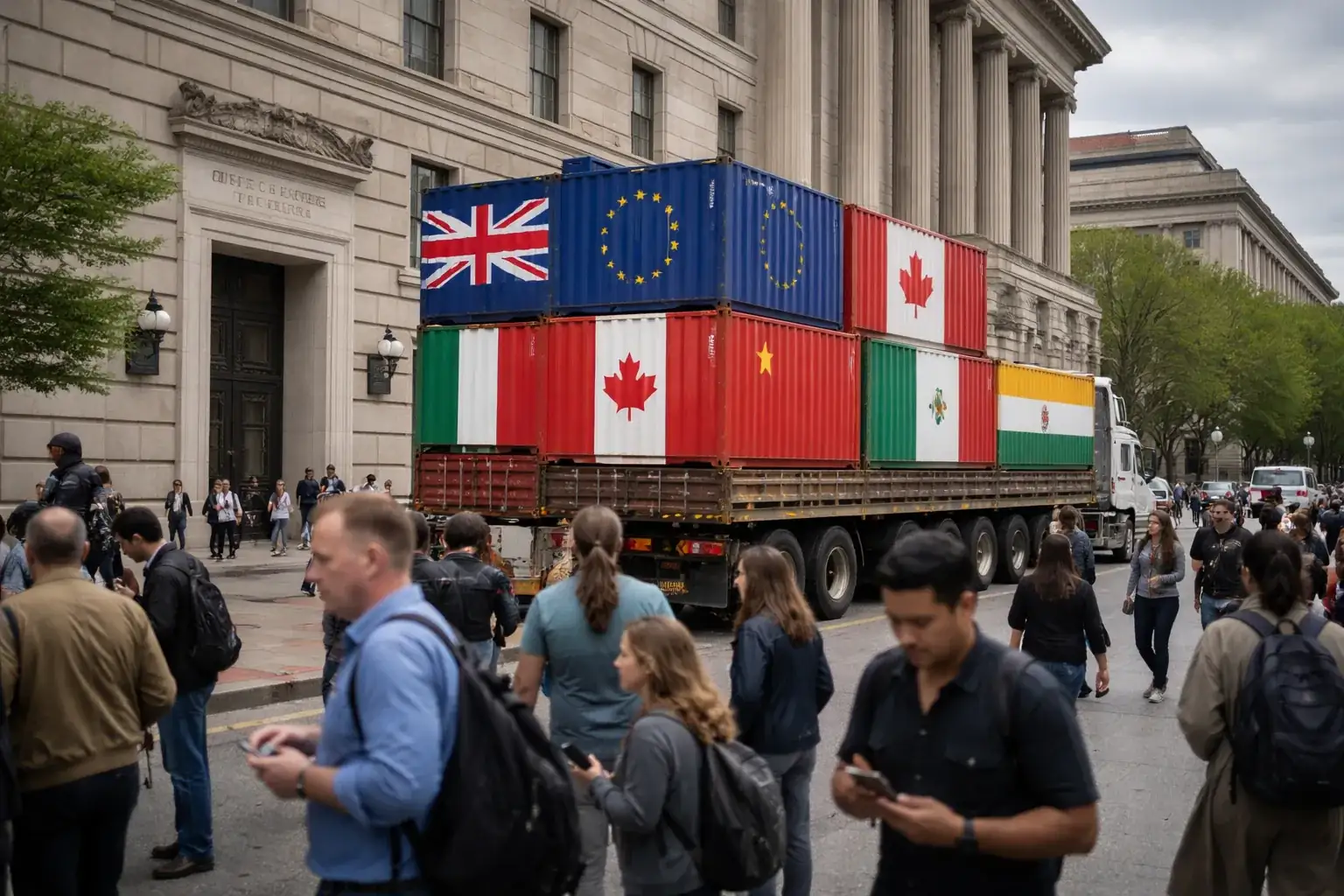
The US government has announced plans to impose new tariffs ranging from 10% to 12.5% on 60 trading partners, a group that accounts for nearly all goods imported into the United States. US Trade Representative Jamieson Greer stated the decision follows concerns that these countries are not doing enough to tackle forced labor in their supply chains, arguing that trading with such nations creates an unfair disadvantage for American workers.
What's new in this update
This proposal marks the second time the Trump administration has attempted to implement new import taxes since the US Supreme Court struck down various previous duties in February. A recent investigation led by Greer found that 54 countries had failed to legally prohibit the importation of goods produced with forced labor, while six others—Canada, the EU, Ecuador, Indonesia, Mexico, and Pakistan—were cited for failing to effectively enforce existing bans.
Key details
The tariff structure is divided into two tiers. A 10% tariff will apply to imports from 14 partners including the UK, EU, Canada, Mexico, Taiwan, and Malaysia. The remaining 45 countries, which include major trade powers like China and India, will face a higher rate of 12.5%. While the tariffs have been announced, they have not yet been enforced, as the administration must still navigate a formal implementation process.
Background and context
International reaction has been swift and largely critical. The European Commission called the tariffs unjustified, while China denied the existence of forced labor and labeled the move political manipulation. A UK government spokesperson defended the nation's Modern Slavery Act 2015, stating they continue to engage with US officials. In India, analysts have categorized the move as a pressure tactic intended to influence separate bilateral trade negotiations.
What to watch next
The formal enforcement timeline remains pending as the Trump administration moves through the necessary legal steps to finalize the duties. Legal experts, particularly in India, are already suggesting that the move may stretch the legal scope of Section 301 trade laws, potentially leading to challenges in international trade courts. Meanwhile, the EU is tracking toward a late-June deadline to implement existing tariff commitments from a separate agreement.
Why this matters
This move signals a significant escalation in US trade enforcement that could disrupt global supply chains and strain relations with major economic allies.
Reader context
This story belongs to Northstar Herald's International Relations and Diplomacy coverage, with related entities including US Trade Representative, Donald Trump, Tariffs, Forced Labor. The report is based on BBC World News source material.
Related coverage
Why it matters
This move signals a significant escalation in US trade enforcement that could disrupt global supply chains and strain relations with major economic allies.
Read next
Follow this story through the topic hub, more world coverage, and the latest updates.
Weekly briefing
Get the week's key developments in one concise email.
Get a fast catch-up on the biggest stories, the context behind them, and the links worth your time.
Cadence
Weekly, for a quick catch-up
Coverage
AI, business, world, security, sports
Format
Clear takeaways and useful context
Request the briefing
Leave your email to open a prepared request and get on the list for the weekly briefing.
Author

The world desk follows geopolitics, humanitarian crises, diplomacy, and major international developments with an emphasis on fast updates and public-interest context.
Sources and methodology