US and Iran Exchange Direct Military Strikes, Pushing Ceasefire to
Following a drone attack on a Panama-flagged tanker, the United States launched retaliatory strikes on Iranian military sites, triggering a counter-barrage

World correspondent
Reports on international affairs, diplomacy, and humanitarian developments with an emphasis on official statements, multilateral institutions, and regional context.
Editorial responsibility: Lead reviewer for geopolitics, international institutions, and crisis coverage
Primary source: BBC World News. Full source links and update notes are below.
Fast summary
Start here
- US Central Command targeted 10 military sites in Iran after a drone hit the tanker MT Kiku in the Strait of Hormuz on Saturday.
- Iran’s Revolutionary Guard Corps retaliated with ballistic missiles and drones targeting the Ali al-Salem base in Kuwait and the US Fifth Fleet in Bahrain.
- Both Washington and Tehran have formally accused each other of violating a Memorandum of Understanding and ceasefire agreement signed earlier this month.
What happened
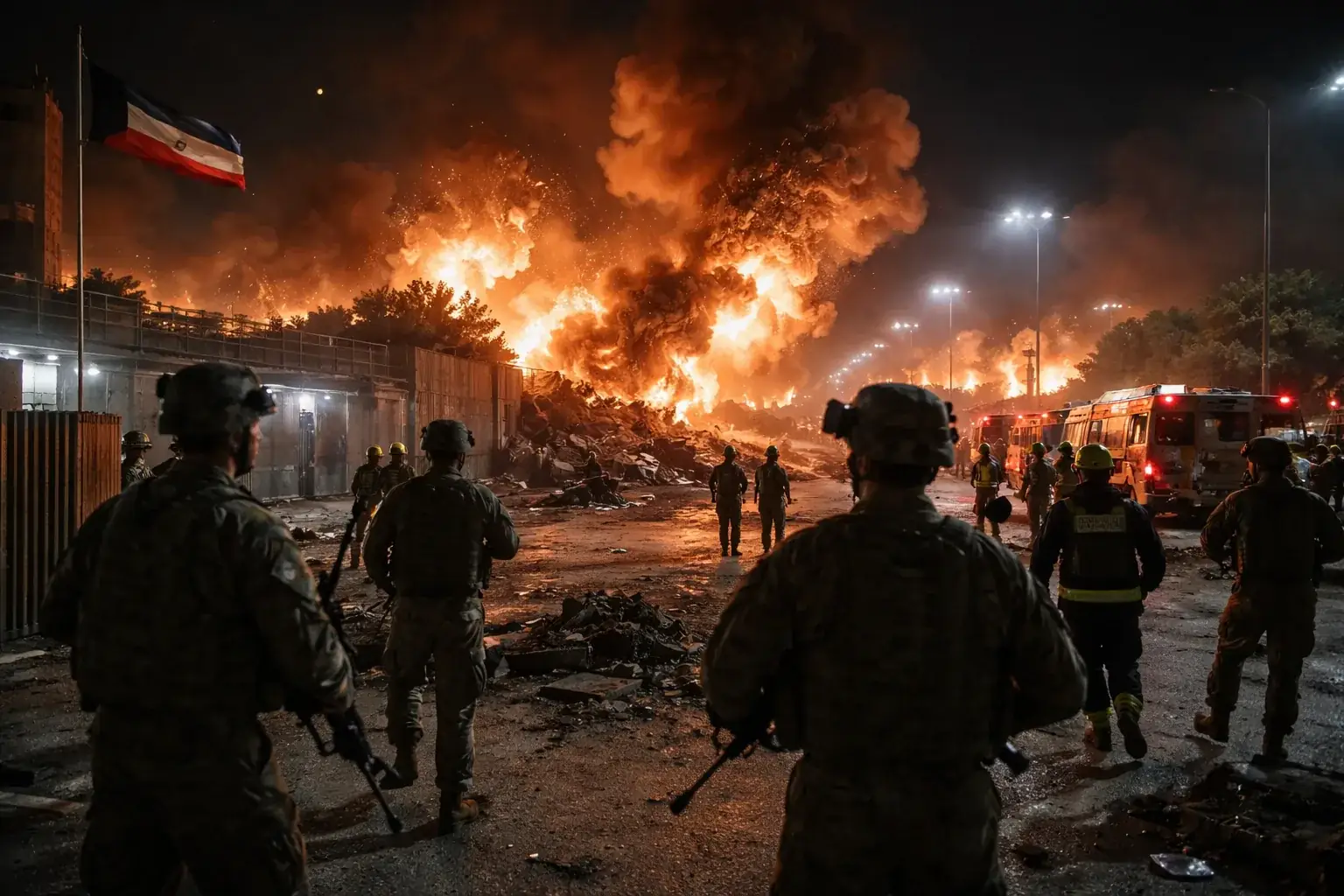
A significant military exchange occurred over the weekend as the United States and Iran conducted direct strikes against each other's assets, severely undermining a recently established ceasefire. US Central Command (Centcom) confirmed it launched strikes on ten Iranian military targets on Saturday. These strikes were a direct response to a 'one-way attack drone' that struck the MT Kiku, a Panama-flagged tanker navigating the Strait of Hormuz. Centcom officials stated that the US military successfully hit multiple targets, including communication systems, air defense sites, and drone storage facilities. This action prompted an immediate and aggressive response from Iran’s Islamic Revolutionary Guard Corps (IRGC), which launched ballistic missiles and drones at American military hubs in neighboring Kuwait and Bahrain. The exchange marks one of the most volatile breakdowns in regional security since the signing of a Memorandum of Understanding (MoU) earlier this month, intended to de-escalate maritime tensions.
What's new in this update
New reports from the region indicate that the scope of the conflict is widening to involve neighboring Gulf states. Following the IRGC's retaliation, both Kuwait and Bahrain reported that their national air defense systems were activated to intercept incoming threats. The Kuwaiti Armed Forces confirmed they were actively confronting 'hostile missile and drone attacks' and urged the public to follow safety protocols. In Bahrain, the Ministry of Interior advised citizens to remain calm and seek shelter as defenses engaged targets near Port Salman. Despite the scale of the Iranian response, a US official told Reuters that there were no reported US casualties or significant structural damage to facilities in the Middle East. Meanwhile, the political rhetoric has reached a fever pitch; former President Donald Trump stated on social media that it was 'very possible' Tehran would never learn, warning that the US might be forced to 'militarily complete the job' which would result in the Islamic Republic no longer existing.
Key details
The IRGC's official statement claimed they targeted 'eight key pieces of infrastructure' at the Ali al-Salem base in Kuwait and the Fifth Naval Fleet in Bahrain, asserting they were destroyed. The IRGC justified the attacks as a necessary response to what they called 'brutal attacks' by the US on five coastal posts in Iran. They argued that the US used the pretext of the IRGC navy confronting an 'offending ship' to launch unprovoked strikes. Centcom, however, maintains that the US fighter jets hit specific military equipment and storage sites used by Iran to threaten commercial shipping. According to US officials, Iran was given a clear opportunity to honor the ceasefire but chose to violate it when its forces launched the drone that hit the MT Kiku. The IRGC counter-argued that under the current MoU, it has the authority to control navigation in the Strait of Hormuz and that any vessels violating their protocols will be dealt with more forcefully in the future.
Background and context
The current violence follows a cycle of escalation that began late last week. On June 25, a Singapore-flagged cargo ship, the MV Ever Lovely, was hit by a drone, leading to an initial round of US retaliatory strikes. Tehran claimed that vessel was using an 'unauthorized route' through the Gulf waterway. These incidents have effectively neutralized the Memorandum of Understanding signed earlier in June, which many had hoped would provide a long-term diplomatic off-ramp for the two nations. The Iranian Foreign Ministry has now officially condemned the American actions, stating that the US 'does not place the slightest value' on its commitments and that 'breaking promises is part of its nature.' This sentiment is mirrored by US commanders who believe Iranian aggression against commercial shipping clearly violated the spirit and letter of the ceasefire agreement, forcing a 'powerful response' to protect international commerce.
What to watch next
The immediate outlook for the region remains precarious as the ceasefire appears to be in a state of total collapse. Diplomatic observers are watching for whether the 'complete halt to the process' threatened by the IRGC will result in a total withdrawal from the Memorandum of Understanding. While Centcom reports that commercial vessels continue to operate in the Strait of Hormuz, the threat level for tankers remains at an all-time high given the IRGC’s warning of a 'crushing response' to any future aggression. The international community is also monitoring the potential for further activation of regional air defenses in Kuwait, Bahrain, and potentially Saudi Arabia or the UAE if the missile exchanges continue. Further statements from Washington will be critical in determining if the US intends to move beyond retaliatory strikes into a broader military campaign, as hinted at by political figures over the weekend.
Why it matters
This escalation represents a direct military confrontation between Washington and Tehran that threatens to dissolve a newly minted ceasefire and disrupt global energy transit through the Strait of Hormuz.
Read next
Follow this story through the topic hub, more world coverage, and the latest updates.
Weekly briefing
Get the week's key developments in one concise email.
Get a fast catch-up on the biggest stories, the context behind them, and the links worth your time.
Cadence
Weekly, for a quick catch-up
Coverage
AI, business, world, security, sports
Format
Clear takeaways and useful context
Request the briefing
Leave your email to open a prepared request and get on the list for the weekly briefing.
About the byline
World correspondent
Leila Haddad covers world affairs, diplomacy, and humanitarian crises, with a focus on how fast-moving international developments affect public policy, conflict response, and cross-border institutions.
Sources and methodology