Military Escalation in Gulf as US and Iran Trade Direct Strikes and
US forces targeted Iranian military sites following a drone strike on a commercial tanker, prompting Tehran to launch retaliatory missiles at bases in

World correspondent
Reports on international affairs, diplomacy, and humanitarian developments with an emphasis on official statements, multilateral institutions, and regional context.
Editorial responsibility: Lead reviewer for geopolitics, international institutions, and crisis coverage
Primary source: BBC World News. Full source links and update notes are below.
Fast summary
Start here
- US Central Command launched strikes on 10 Iranian military targets in response to a drone attack on the Panama-flagged tanker MT Kiku.
- The IRGC retaliated with ballistic missiles and drones targeting US military infrastructure at the Ali al-Salem base in Kuwait and Port Salman in Bahrain.
- Both nations have formally accused each other of violating the Memorandum of Understanding and ceasefire agreement signed earlier this month.
What happened
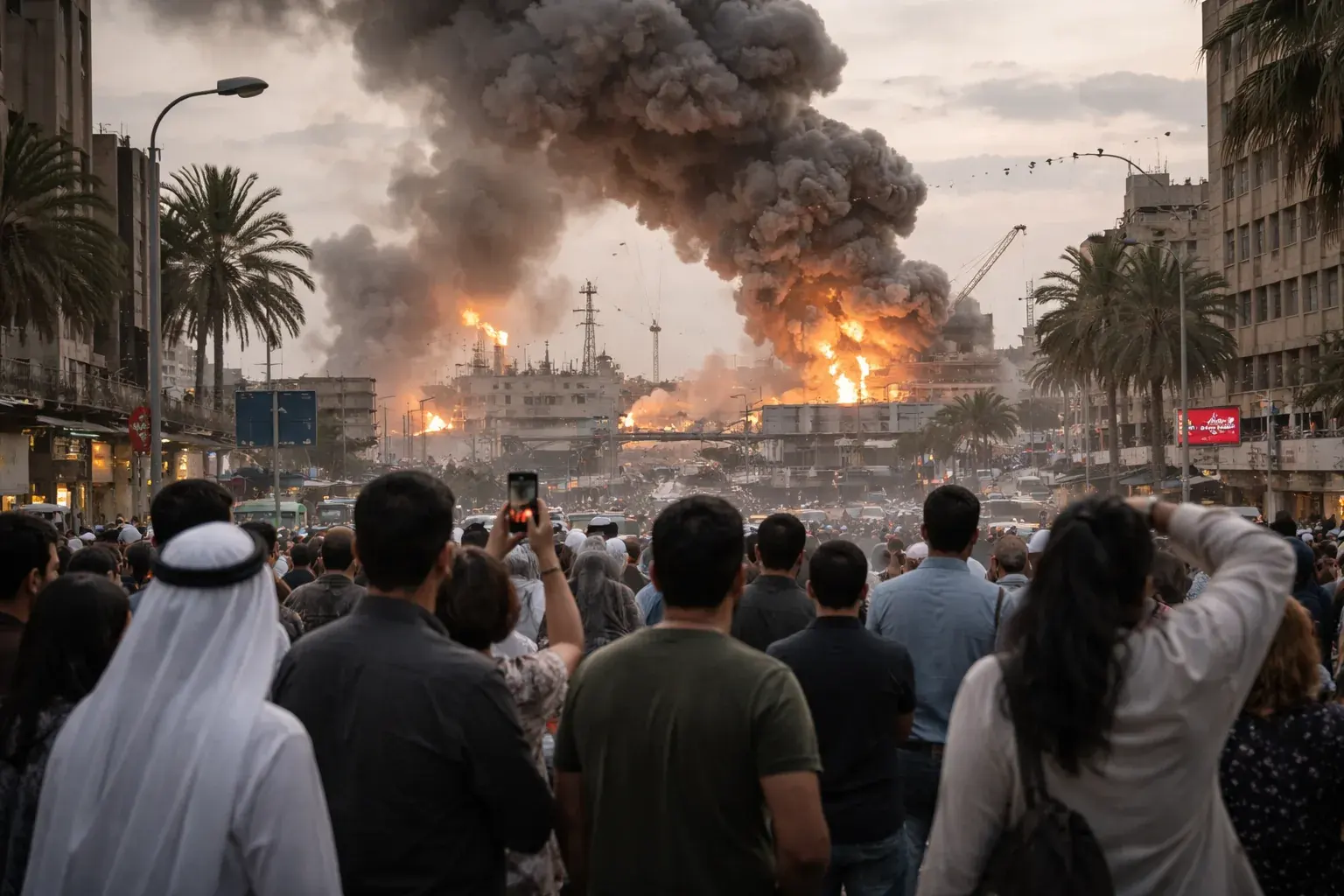
Tensions in the Middle East reached a critical flashpoint on Saturday as US and Iranian forces engaged in a direct exchange of military strikes, casting significant doubt on the future of a recently established ceasefire. US Central Command (Centcom) confirmed it launched precision strikes against ten Iranian military targets, including drone storage facilities, communication systems, and air defense sites, following a "one-way" drone attack on the MT Kiku, a Panama-flagged tanker transiting the Strait of Hormuz. In swift retaliation, Iran's Islamic Revolutionary Guard Corps (IRGC) claimed to have launched ballistic missiles and drones at American military infrastructure located in Kuwait and Bahrain. While the IRGC asserted they had destroyed eight key targets, US officials reported no casualties or significant damage to their facilities, though the escalation marks one of the most serious direct confrontations between the two nations in years.
What's new in this update
The latest development is a war of words over the validity of a ceasefire agreement signed earlier this month. Both Washington and Tehran have officially accused the other of breaching the Memorandum of Understanding intended to stabilize the region. Centcom stated that Iran was "given a chance to honor the agreement" but chose aggression instead by targeting commercial shipping. Conversely, the Iranian Foreign Ministry condemned the US strikes as "brutal attacks" and a clear violation of sovereign commitments. Adding a layer of political volatility, Donald Trump issued a stern warning via Truth Social, suggesting that Tehran "would never learn" and threatening that the Islamic Republic might "no longer exist" if US forces are compelled to "militarily complete the job." This rhetoric suggests a hardening of the US position as diplomatic efforts appear to be unraveling under the pressure of renewed maritime hostilities.
Key details
The specific targets of the US operation included military equipment and drone facilities near the strategic Strait of Hormuz, which is a vital artery for global energy supplies. The IRGC specifically identified the Ali al-Salem base in Kuwait and the Fifth Naval Fleet in Port Salman, Bahrain, as the primary targets of their retaliatory missile barrage. Following these Iranian strikes, both Kuwaiti and Bahraini authorities confirmed that their respective air defense systems were activated to intercept incoming threats. The Kuwaiti Armed Forces issued an official statement urging the public to follow security protocols, while Bahrain's Ministry of Interior advised citizens to remain calm and seek safe locations. Despite the exchange, Centcom maintains that commercial vessels are still attempting to operate within the Strait, although the security environment has become increasingly perilous for international shipping interests.
Background and context
This weekend's violence follows a series of escalating maritime incidents that have strained the fragile Memorandum of Understanding. Just 24 hours prior to the latest strikes, the US had conducted retaliatory operations against Iran in response to a June 25 drone attack on the Singapore-flagged vessel MV Ever Lovely. Tehran defended that initial attack by claiming the cargo ship was using an "unauthorized route" through the Gulf waterway. The ceasefire agreement, which many hoped would provide a pathway toward long-term regional stability, gave Iran certain arrangements for controlling navigation in the Strait. However, the IRGC now claims that the US used the pretext of maritime enforcement to attack Iranian coastal posts. This cycle of strike and counter-strike mirrors the "tanker wars" of previous decades, highlighting the persistent difficulty in securing the world’s most sensitive maritime chokepoints during periods of heightened geopolitical friction.
What to watch next
The primary concern for international observers is whether the Memorandum of Understanding can survive what Iran has called a "complete halt to the process." If the ceasefire is formally declared dead, the frequency of attacks on commercial shipping is likely to increase, potentially leading to a spike in global oil prices and insurance premiums for tankers. Diplomatic channels between Washington and Tehran are expected to be under immense strain as both sides evaluate the strategic cost of further escalation. Additionally, the role of regional allies like Kuwait and Bahrain will be critical; their involvement as targets for Iranian missiles may force a rethink of their security cooperation with the United States. Observers will also be monitoring for any further official statements from the White House regarding the "crushing response" Iran has promised for any future American military actions, as the situation remains highly volatile.
Why it matters
This rapid escalation threatens to collapse a recent diplomatic breakthrough and risks a broader regional conflict involving key US allies in the Persian Gulf.
Read next
Follow this story through the topic hub, more world coverage, and the latest updates.
Weekly briefing
Get the week's key developments in one concise email.
Get a fast catch-up on the biggest stories, the context behind them, and the links worth your time.
Cadence
Weekly, for a quick catch-up
Coverage
AI, business, world, security, sports
Format
Clear takeaways and useful context
Request the briefing
Leave your email to open a prepared request and get on the list for the weekly briefing.
About the byline
World correspondent
Leila Haddad covers world affairs, diplomacy, and humanitarian crises, with a focus on how fast-moving international developments affect public policy, conflict response, and cross-border institutions.
Sources and methodology