US and Iran Sign 14-Point Agreement to End Military Conflict
The performance-based memorandum initiates a 60-day negotiation window and the removal of the U.S. naval blockade to reopen the Strait of Hormuz.

World correspondent
Reports on international affairs, diplomacy, and humanitarian developments with an emphasis on official statements, multilateral institutions, and regional context.
Editorial responsibility: Lead reviewer for geopolitics, international institutions, and crisis coverage
Primary source: BBC World News. Full source links and update notes are below.
Fast summary
Start here
- President Trump formally signed a 14-point Memorandum of Understanding at the G7 summit to end military operations on all fronts.
- The agreement includes a 60-day timeline for a final deal and the lifting of the U.S. naval blockade within 30 days.
- Iran has committed to never possessing a nuclear weapon, while a $300 billion fund is established for the country's reconstruction.
What happened
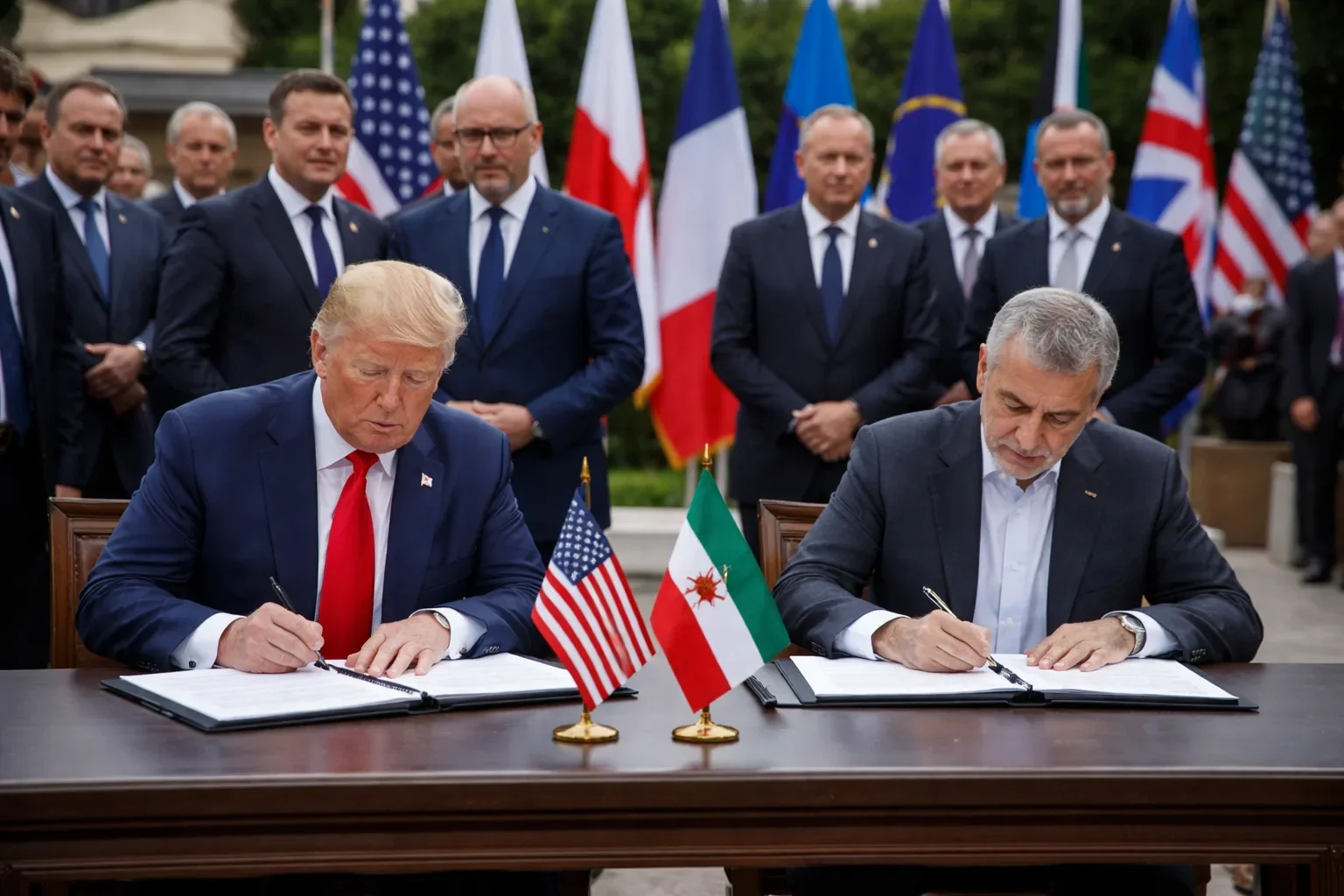
The United States and Iran have signed a 14-point memorandum of understanding at the G7 summit, creating a formal diplomatic framework aimed at ending a four-month military confrontation and reopening key regional trade routes. The signing by President Donald Trump and Iranian President Masoud Pezeshkian marks a sharp shift from direct confrontation toward a conditional de-escalation process that now hinges on whether both sides carry out what the agreement requires.
At the center of the memorandum is a promise to halt military operations on all fronts, including flashpoints connected to the wider regional conflict. The document also lays out a 60-day window to negotiate a more permanent settlement and begins the process of rolling back the U.S. naval blockade that has disrupted shipping and raised alarm over the security of the Strait of Hormuz.
What's new in this update
The new development is that the agreement is no longer a rumored or draft diplomatic concept. White House officials said the memorandum became active once both leaders signed it at the G7 gathering. That matters because earlier reporting had suggested a possible Geneva signing or a slower negotiating path. Instead, the framework appears to have been activated more quickly and at a more politically symbolic venue.
Officials have also described the arrangement as performance-based, meaning Iran will not simply receive the benefits automatically. Its access to sanctions relief, maritime normalization, and economic stabilization measures is tied to compliance with core terms, especially around non-proliferation and military restraint. That structure is meant to reassure skeptics who believe Tehran could use negotiations to gain time or leverage without materially changing behavior.
Key details
The memorandum reportedly includes a commitment from Iran not to acquire a nuclear weapon, a phased removal of the U.S. naval blockade within 30 days, and the creation of a $300 billion reconstruction and economic-development fund. The U.S. is not required to finance that fund directly, an important political detail for Washington, where large foreign reconstruction commitments often trigger domestic backlash.
The Strait of Hormuz is one of the most strategically important waterways in the world, and that gives the agreement an immediate global economic dimension. Any reduction in shipping risk there affects oil flows, insurance costs, and broader market stability. For that reason, the maritime clauses may be just as important internationally as the headline political breakthrough.
Other core elements appear to include:
- Mutual recognition of sovereignty and non-interference in internal affairs.
- A requirement to move from temporary de-escalation to a fuller negotiated settlement.
- Coverage of regional fronts, including Lebanon-related instability.
- Linkage between Iranian compliance and the pace of U.S. rollback measures.
Background and context
The agreement comes after months of direct and proxy confrontation involving the United States, Iran, and Israel. One of the most delicate aspects of the broader conflict has been the overlap between U.S.-Iran tensions and the fighting connected to Hezbollah and Lebanon. That is why the MoU's language about sovereignty and conflict containment outside the immediate bilateral channel may prove so important.
Diplomatic breakthroughs between Washington and Tehran have historically been fragile even when they produce signed documents. Domestic opposition in both countries, regional mistrust, and disputes over sequencing often complicate implementation. That history is relevant here because the memorandum is not a final peace agreement. It is a bridge document, and such bridges can collapse if either side feels the other is slowing, cheating, or redefining obligations.
What to watch next
The next major question is implementation. Observers will watch whether the blockade rollback begins on schedule, whether shipping patterns through the Strait of Hormuz actually normalize, and whether Israel accepts the practical meaning of an "all fronts" de-escalation. The 60-day clock also creates pressure: the memorandum needs to produce visible progress quickly or risk becoming another short-lived diplomatic paper victory.
Why this matters
This agreement matters because it is not only about U.S.-Iran relations. It is about energy security, nuclear risk, regional war containment, and whether a fast-moving military crisis can still be pulled back into structured diplomacy before wider escalation becomes irreversible.
Why it matters
This agreement seeks to de-escalate a four-month regional conflict and secure the Strait of Hormuz, a critical global energy corridor that has been disrupted by recent hostilities.
Read next
Follow this story through the topic hub, more world coverage, and the latest updates.
Weekly briefing
Get the week's key developments in one concise email.
Get a fast catch-up on the biggest stories, the context behind them, and the links worth your time.
Cadence
Weekly, for a quick catch-up
Coverage
AI, business, world, security, sports
Format
Clear takeaways and useful context
Request the briefing
Leave your email to open a prepared request and get on the list for the weekly briefing.
About the byline
World correspondent
Leila Haddad covers world affairs, diplomacy, and humanitarian crises, with a focus on how fast-moving international developments affect public policy, conflict response, and cross-border institutions.
Sources and methodology