UN IMO Launches Evacuation of 11,000 Stranded Sailors from the
The International Maritime Organization is coordinating with regional powers to secure the release of mariners as US Secretary of State Marco Rubio warns

World correspondent
Reports on international affairs, diplomacy, and humanitarian developments with an emphasis on official statements, multilateral institutions, and regional context.
Editorial responsibility: Lead reviewer for geopolitics, international institutions, and crisis coverage
Primary source: BBC World News. Full source links and update notes are below.
Fast summary
Start here
- The International Maritime Organization is organizing a large-scale evacuation for more than 11,000 sailors stranded by the US-Israel conflict with Iran.
- Secretary of State Marco Rubio affirmed that the Strait of Hormuz is an international waterway where no tolls or fees are legally permitted under international law.
- Despite an interim peace deal, significant disagreements persist between Washington and Tehran regarding the scope of IAEA nuclear inspections and ballistic missile limits.
What happened
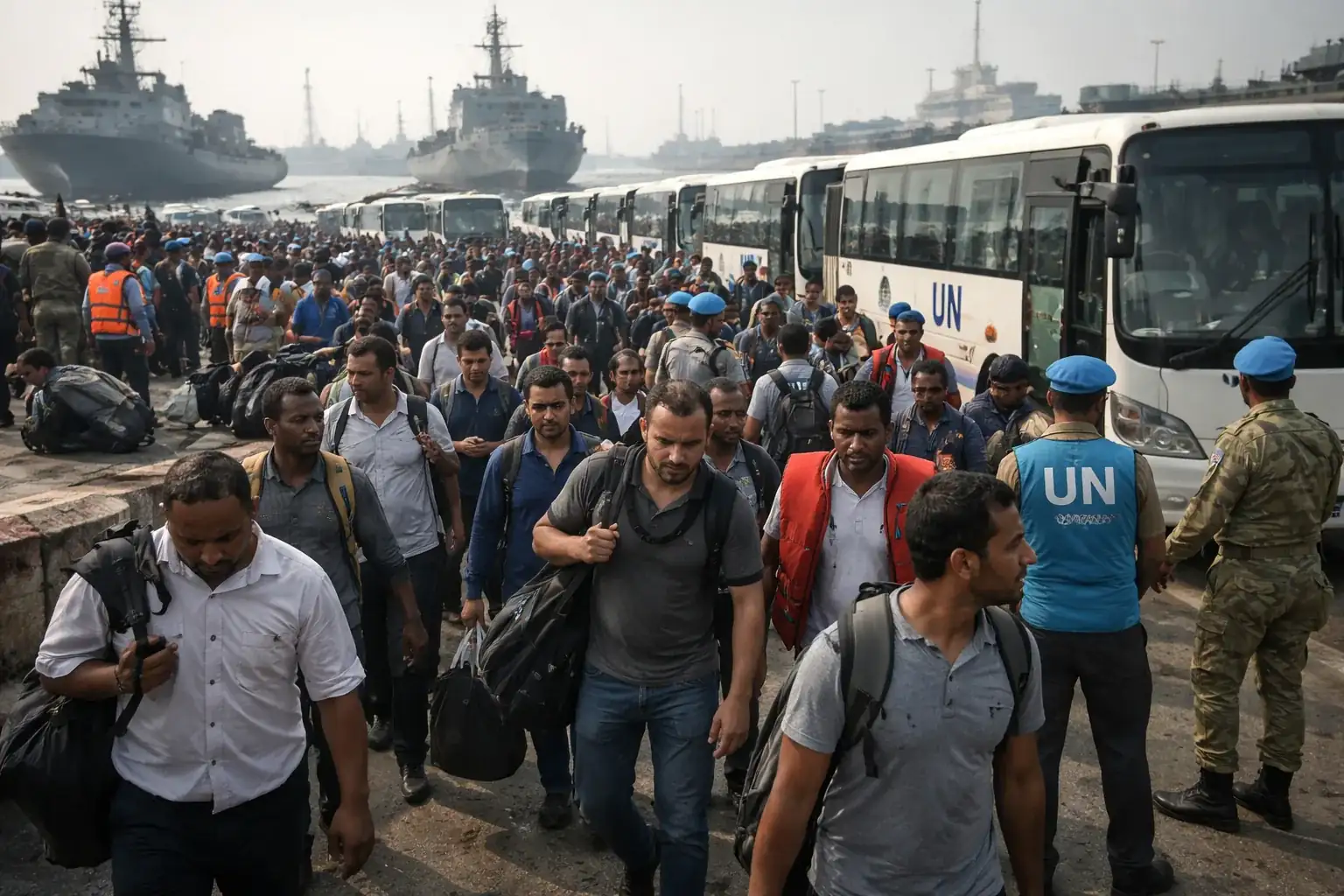
The International Maritime Organization has announced a large-scale effort to evacuate more than 11,000 stranded sailors from the Strait of Hormuz, one of the most strategically important waterways in global trade. The move follows a fragile de-escalation agreement linked to the recent conflict involving the United States, Iran, and regional partners, but the situation remains highly unstable.
For the shipping industry, the problem is immediate and human as well as economic. Thousands of mariners have been stuck in or near one of the world's most sensitive maritime chokepoints, waiting for assurances that passage is safe enough for movement or extraction.
What's new in this update
The IMO says it is coordinating with Iran, Oman, the United States, and other coastal states to establish safe conditions for evacuation and limited navigation. At the same time, U.S. Secretary of State Marco Rubio has warned Iran against trying to impose tolls or fees on vessels using the strait, arguing that the Strait of Hormuz is an international waterway where such charges would violate accepted international rules.
That warning matters because it shows that even as evacuation planning begins, the diplomatic argument over control of the waterway is far from settled. The immediate objective may be humanitarian and logistical, but the larger struggle over maritime access, legal authority, and post-conflict leverage is still underway.
Key details
According to the reported plan, the evacuation operation will rely on temporary routes and daily navigation assessments. The goal is to move stranded sailors and stabilize maritime traffic without triggering a new confrontation in the narrow corridor that links Gulf shipping lanes to the open sea.
Several issues make the operation unusually delicate:
- The number of stranded seafarers is exceptionally high
- Security guarantees must come from parties that do not fully trust one another
- Commercial shipping routes remain vulnerable to renewed disruption
- Political disagreements over inspections and enforcement are unresolved
Rubio's comments add another layer of tension. By publicly rejecting any future toll regime, Washington is signaling that it does not intend to let a short-term reopening evolve into a new Iranian bargaining tool over one of the world's most critical energy routes.
Background and context
The Strait of Hormuz carries a significant share of global oil and energy shipments, which is why any interruption quickly affects fuel prices, insurance costs, and shipping schedules far beyond the Middle East. When hostilities earlier in 2026 raised fears that the route could remain closed or militarized, Brent crude surged and wider supply chains came under pressure.
The current reopening has therefore become about more than ships moving again. It is also about restoring confidence that the waterway can function without ad hoc restrictions, retaliatory enforcement, or sudden military escalation. That is difficult because the broader U.S.-Iran dispute has not been resolved. Reports suggest major disagreements remain over the scope of IAEA nuclear inspections, access to damaged facilities, and whether ballistic missile issues are part of any broader understanding.
In that sense, the sailor evacuation effort is both a relief operation and a test. If the corridor can be managed safely even while major political disagreements persist, that could calm markets. If new disputes emerge during the evacuation phase, it could quickly reverse the fragile progress.
What to watch next
The first question is whether the IMO can carry out the Strait of Hormuz evacuation without major disruption or renewed confrontation. Daily route management, ship movement data, and any incidents involving inspections or escort activity will be watched closely by governments and shipping companies alike.
Three follow-up issues stand out:
- Whether Iran attempts to impose practical or financial conditions on passage
- Whether the temporary navigation routes remain open long enough to complete the evacuation
- Whether U.S. and Iranian interpretations of the interim peace framework diverge further
If those tensions sharpen, the sailors may become only the first part of a larger maritime crisis.
Why this matters
The effort to evacuate 11,000 stranded sailors from the Strait of Hormuz matters because the waterway is a core artery of global trade and energy transport. Protecting seafarers and restoring predictable passage are essential steps toward stabilizing fuel markets, shipping reliability, and regional security.
Just as importantly, the crisis shows how quickly geopolitical confrontation can become a humanitarian and commercial emergency in a chokepoint that affects the entire world.
Why it matters
The Strait of Hormuz is a critical global trade artery; its reopening and the safety of thousands of seafarers are essential for stabilizing global energy prices and shipping routes.
Read next
Follow this story through the topic hub, more world coverage, and the latest updates.
Weekly briefing
Get the week's key developments in one concise email.
Get a fast catch-up on the biggest stories, the context behind them, and the links worth your time.
Cadence
Weekly, for a quick catch-up
Coverage
AI, business, world, security, sports
Format
Clear takeaways and useful context
Request the briefing
Leave your email to open a prepared request and get on the list for the weekly briefing.
About the byline
World correspondent
Leila Haddad covers world affairs, diplomacy, and humanitarian crises, with a focus on how fast-moving international developments affect public policy, conflict response, and cross-border institutions.
Sources and methodology