Ukraine Pivots to Drone Diplomacy as Middle East Tensions Rise
Kyiv is transforming its battlefield experience with Iranian drones into a strategic asset, signing defense agreements with Gulf nations and European allies.
Primary source: BBC World News. Full source links and update notes are below.
Fast summary
Start here
- Ukraine has signed drone technology and expertise sharing deals with Saudi Arabia, the UAE, and Qatar.
- President Zelensky reports that Iranian-designed drones can be intercepted for roughly $10,000, a fraction of their production cost.
- Donald Trump has expressed confidence in a solution to the conflict following a conversation with Vladimir Putin.
What happened
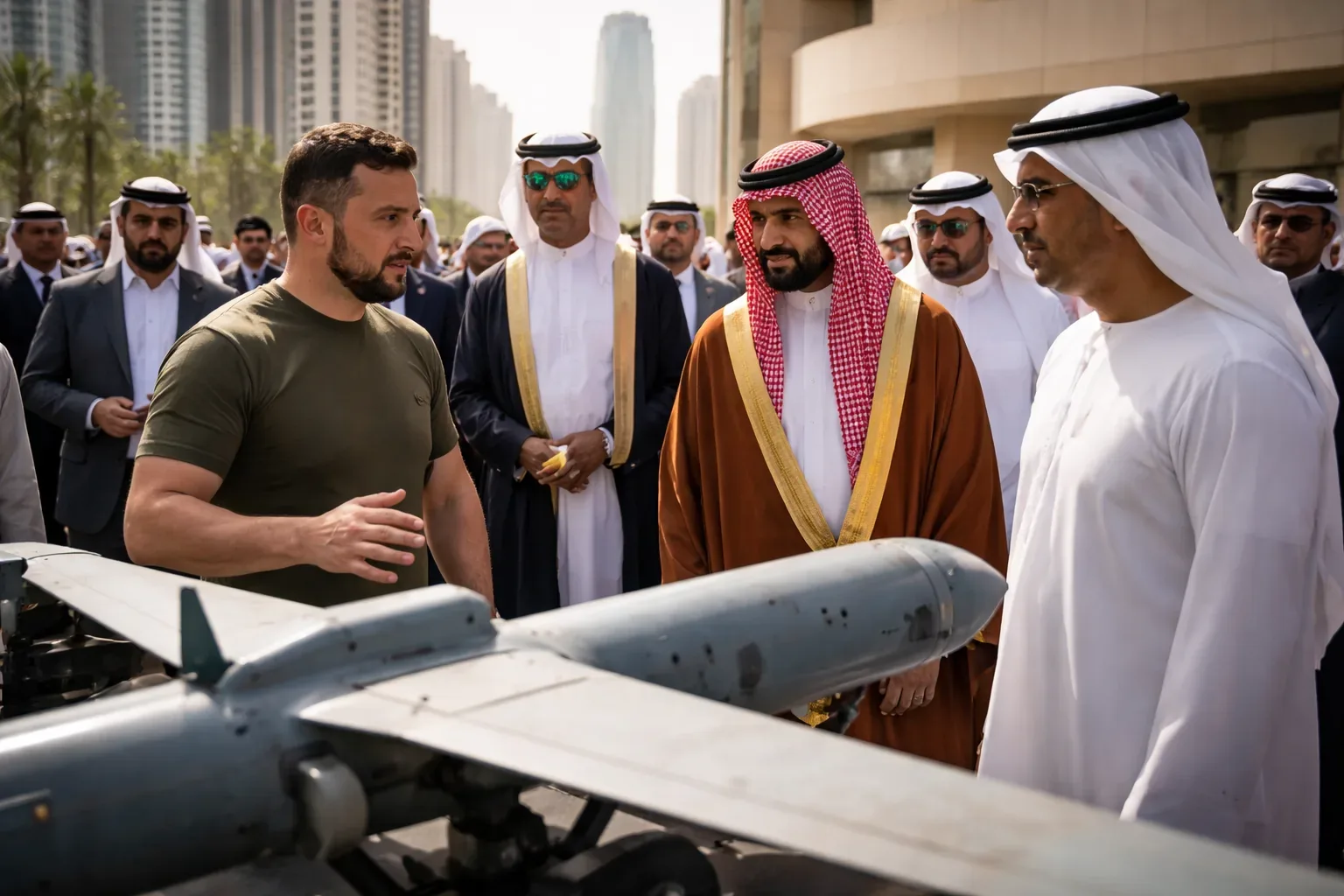
President Volodymyr Zelensky has successfully pivoted the impact of the Middle East conflict to Ukraine’s advantage by marketing the country's drone warfare expertise to Gulf nations. During visits to Saudi Arabia and other Gulf states, Zelensky secured defense cooperation deals aimed at countering Iranian-designed drone threats, which have targeted both Ukraine and the Middle East in recent weeks.
What's new in this update
Ukraine confirmed new agreements with Saudi Arabia, the UAE, and Qatar to share military insights gained from defending against Iranian-designed Shahed-136 drones. Simultaneously, Donald Trump stated he believes a solution to the Russia-Ukraine conflict could be reached relatively quickly following a conversation with Vladimir Putin, though he did not provide a specific timeline or framework for a ceasefire.
Key details
Ukraine is showcasing its ability to intercept expensive Iranian-designed drones—which cost between $80,000 and $130,000—using systems that cost as little as $10,000. This battlefield efficiency has attracted significant European investment, including a $8.6bn defense agreement with Norway and a $4.7bn package from Germany focused on drones and modern defense systems.
Background and context
The conflict between Iran and Israel initially appeared to weaken Ukraine's position by diverting international attention and allowing Russia to profit from rising oil prices. Moscow has leveraged the closure of the Strait of Hormuz to sell sanctioned oil at higher rates, filling its war chest. However, Kyiv has countered this by positioning itself as a vital security partner for countries facing similar aerial threats from Iranian technology.
What to watch next
Observers are monitoring whether Ukraine's new partnerships with wealthy Gulf states will lead to substantial defense contracts or direct financial support. Additionally, the international community is watching for any concrete diplomatic movement following Trump's claims of a potential 'solution' with Putin, as Zelensky continues to bolster Ukraine's defensive posture ahead of any potential negotiations.
Why it matters
Ukraine is diversifying its alliances and proving its military value beyond traditional Western aid, potentially strengthening its position in future peace negotiations.
Read next
Follow this story through the topic hub, more world coverage, and the latest updates.
Weekly briefing
Get the week's key developments in one concise email.
Get a fast catch-up on the biggest stories, the context behind them, and the links worth your time.
Cadence
Weekly, for a quick catch-up
Coverage
AI, business, world, security, sports
Format
Clear takeaways and useful context
Request the briefing
Leave your email to open a prepared request and get on the list for the weekly briefing.
Author
See who assembled this story and follow more of their work.
Sources and methodology