Top Republicans Warn Germany Troop Cuts 'Send Wrong Signal' to
Senate and House armed services chairs oppose the Pentagon's plan to withdraw 5,000 troops, suggesting they should be moved further east instead.

World correspondent
Reports on international affairs, diplomacy, and humanitarian developments with an emphasis on official statements, multilateral institutions, and regional context.
Editorial responsibility: Lead reviewer for geopolitics, international institutions, and crisis coverage
Primary source: BBC World News. Full source links and update notes are below.
Fast summary
Start here
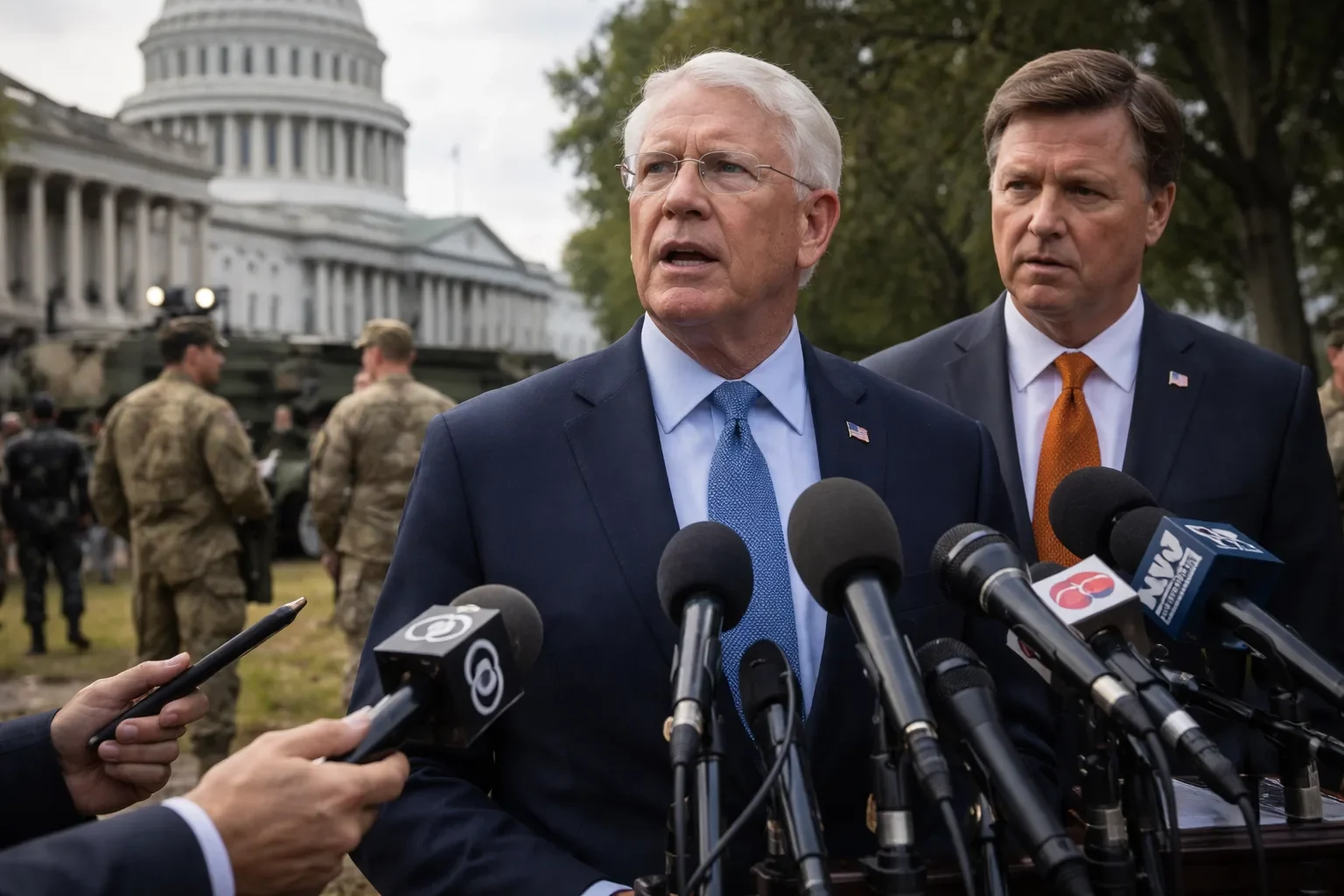
- Senate and House armed services committee chairs Roger Wicker and Mike Rogers issued a joint statement opposing the withdrawal of a US brigade.
- President Trump stated on Saturday that the 5,000-troop reduction is a starting point and further cuts are expected.
- NATO is seeking clarification from Washington while the Polish Prime Minister warns of the 'disintegration' of the transatlantic alliance.
What happened
The Pentagon's plan to withdraw 5,000 U.S. troops from Germany has opened a sharp debate inside Washington about deterrence, NATO credibility, and the future of America's military posture in Europe. Two of the most senior Republican voices on defense policy, Senate Armed Services Committee chair Roger Wicker and House Armed Services Committee chair Mike Rogers, publicly criticized the move, arguing that cutting forward-deployed forces in Germany sends the wrong message to Russia at a time when European security remains under pressure.
Their argument is not simply that troop numbers matter in the abstract. It is that troop location carries political and strategic meaning. U.S. forces in Germany do more than occupy bases. They support logistics, command operations, rapid reinforcement, training, and the broader architecture that allows the United States to project power across Europe. Reducing that footprint, critics say, risks weakening deterrence precisely because adversaries read force posture as a signal of seriousness.
Why Germany matters in U.S. military strategy
Germany has long served as the central hub of American military presence in Europe. With more than 36,000 active-duty personnel already based there, it hosts infrastructure that is difficult to replace quickly elsewhere. Troops in Germany are tied to transport networks, maintenance systems, headquarters functions, medical support, and rotational operations that affect the wider NATO theater.
That is why the Republican criticism goes beyond a simple objection to withdrawing one brigade. Wicker and Rogers suggested that if force adjustments are necessary, units should be repositioned further east rather than removed from the European theater altogether. In their view, the issue is not just quantity but geography. Forces closer to NATO's eastern flank may better reassure allies and complicate Russian planning, whereas outright cuts risk being interpreted as a step back from the continent.
Trump's role and the political backdrop
President Donald Trump confirmed that the 5,000-troop reduction is intended as a starting point, suggesting more cuts could follow. That comment intensified concerns in both Europe and Washington because it implied the Pentagon move may be part of a broader rethinking of the U.S. role in European defense rather than a narrow force-management adjustment.
The policy also arrives amid longstanding friction over burden sharing. Trump has repeatedly criticized Germany for past defense spending levels and for relying too heavily on American protection. But the context has changed. Berlin has significantly increased defense commitments and is projected to spend around 3.1% of GDP on defense by 2027. That makes the troop-cut debate harder to frame purely as a response to German underinvestment.
How NATO allies are reading the move
European allies want clarity because uncertainty itself can be destabilizing. NATO depends not only on treaty language but also on practical confidence that the United States will remain materially engaged in European defense. When Washington signals a possible retrenchment, frontline allies such as Poland and the Baltic states begin asking whether they need to prepare for a weaker American footprint over time.
Polish Prime Minister Donald Tusk's warning about the possible "disintegration" of the transatlantic alliance reflects that anxiety. Even if the phrase is politically charged, it captures the deeper fear that alliance cohesion can erode incrementally through force reductions, ambiguous messaging, and strategic drift rather than through any single dramatic rupture.
Arguments from both sides
Supporters of the troop cut argue that the United States must adapt to changing priorities, including greater focus on the Indo-Pacific and more pressure on allies to shoulder their own defense burden. Pentagon officials have described the move as the result of a broader review of military requirements and operational conditions.
Critics counter that timing is everything. With Russia still central to European security calculations, reducing troops in Germany may save little politically while costing a great deal in perception and readiness. Even some Republicans who usually support a tougher burden-sharing line worry that a visible cut now could be read in Moscow as a weakening of Western resolve.
What comes next
The next phase of the debate will turn on details. Allies want to know which units are leaving, whether they will be relocated elsewhere in Europe, and how fast any broader reduction could proceed. Those specifics matter because not all troop cuts carry the same strategic effect. A relocation eastward would send one message. A net withdrawal from Europe would send another.
For now, the controversy reveals a deeper dispute inside the United States about how to balance global commitments without hollowing out deterrence in a region where military posture still shapes political credibility. Germany sits at the center of that argument because changes there are never just about Germany. They are about NATO, Russia, and whether America's allies believe Washington still intends to anchor Europe's security in material, visible terms.
Why it matters
The reduction of US forces in Germany represents a significant shift in American military presence in Europe and has sparked an internal political debate over the effectiveness of current deterrence strategies against Russia.
Read next
Follow this story through the topic hub, more world coverage, and the latest updates.
Weekly briefing
Get the week's key developments in one concise email.
Get a fast catch-up on the biggest stories, the context behind them, and the links worth your time.
Cadence
Weekly, for a quick catch-up
Coverage
AI, business, world, security, sports
Format
Clear takeaways and useful context
Request the briefing
Leave your email to open a prepared request and get on the list for the weekly briefing.
About the byline
World correspondent
Leila Haddad covers world affairs, diplomacy, and humanitarian crises, with a focus on how fast-moving international developments affect public policy, conflict response, and cross-border institutions.
Sources and methodology