Cuba Denounces New US Sanctions Amid Crippling Fuel Crisis
Foreign Minister Bruno Rodriguez says the new measures aim to impose 'collective punishment' as President Trump targets Cuba's energy and defense sectors.

World correspondent
Reports on international affairs, diplomacy, and humanitarian developments with an emphasis on official statements, multilateral institutions, and regional context.
Editorial responsibility: Lead reviewer for geopolitics, international institutions, and crisis coverage
Primary source: BBC World News. Full source links and update notes are below.
Fast summary
Start here
- President Donald Trump signed an executive order targeting Cuban officials in the energy, defense, financial, and security sectors.
- A US-led oil blockade has caused severe fuel shortages, leading to widespread blackouts that have disrupted hospitals and public transport.
- Cuban President Miguel Díaz-Canel condemned the move as 'intimidating' behavior from a military power despite recent attempts at negotiation.
What happened
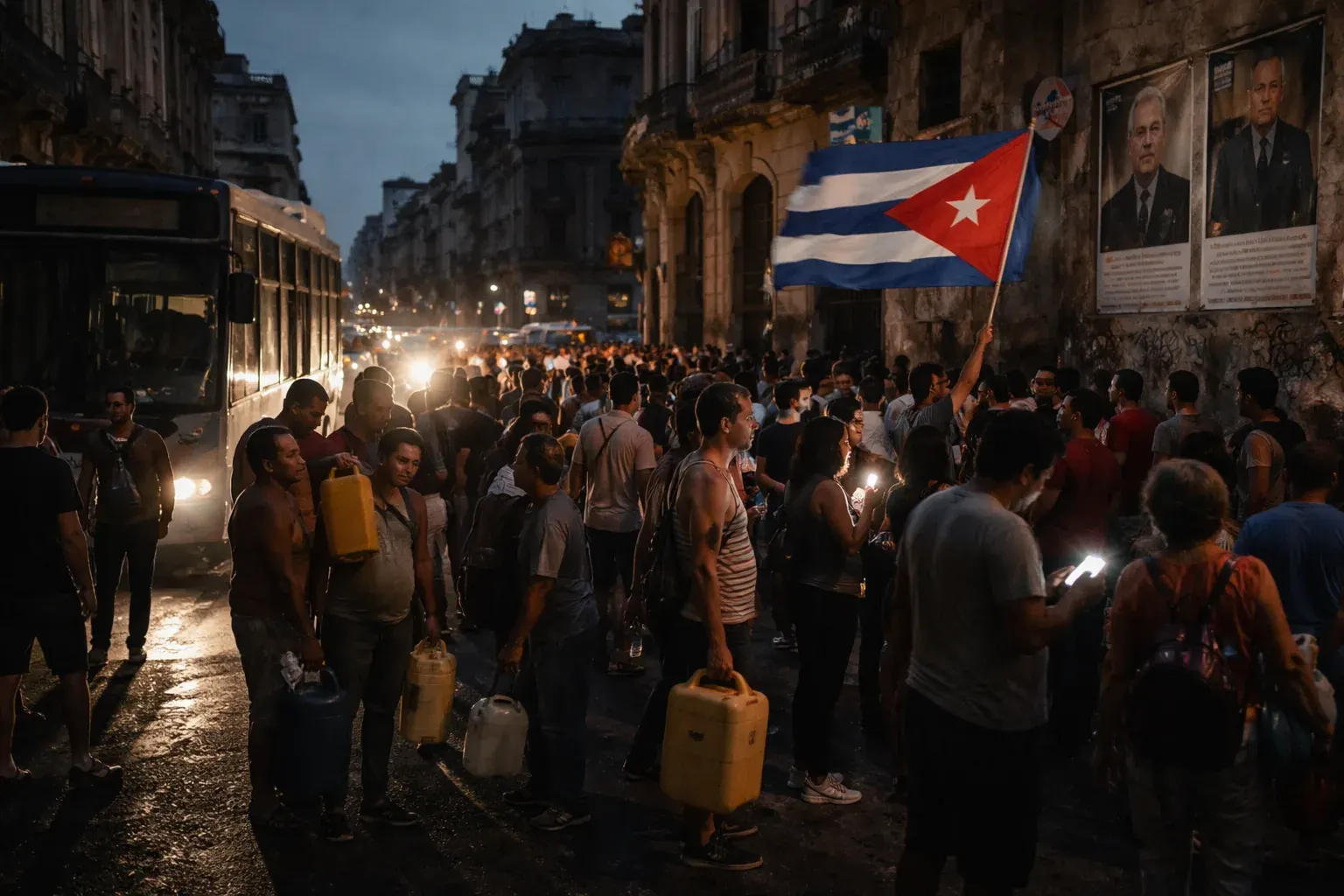
Cuba has denounced a new round of U.S. sanctions as illegal and abusive after President Donald Trump signed measures targeting Cuban officials and institutions tied to the energy, defense, financial, and security sectors. Havana says the move amounts to collective punishment at a moment when the country is already suffering through severe fuel shortages, recurring blackouts, and mounting pressure on basic public infrastructure.
The sanctions matter because Cuba's energy crisis is no longer an abstract macroeconomic problem. It has become a daily constraint on hospitals, schools, transportation, and household life. When new restrictions hit fuel supply at a time of systemic shortage, the effect is not merely diplomatic symbolism. It can directly deepen social stress and state fragility.
What's new in this update
The latest executive action expands pressure on precisely the sectors Cuba needs most to stabilize its internal situation. Cuban Foreign Minister Bruno Rodriguez called the policy unlawful under international norms, while President Miguel Diaz-Canel described it as coercive behavior designed to bend the island through economic pain rather than negotiation.
The sanctions also arrive amid reports of a broader U.S.-driven oil squeeze that has made fuel deliveries to Cuba far more difficult. Only limited shipments have reportedly reached the island, and Washington has threatened secondary consequences for countries or firms that continue supplying oil. That threat matters because Cuba depends heavily on external energy flows and has limited short-term room to replace them.
Key details
The immediate impact of the fuel crisis is visible in rolling blackouts, transport disruption, and pressure on essential services. In countries with fragile grids, energy shortages do not stay contained to one sector. They cascade across the entire system, affecting refrigeration, communications, clinics, manufacturing, and the ability of the state to maintain normal rhythms of civic life.
Several important dynamics now intersect:
- Sanctions are targeting sectors central to state control and economic survival.
- Fuel shortages are already undermining everyday life across the island.
- Cuba has limited access to alternative financing and energy support.
- The U.S. is increasing pressure even after signals that some dialogue had been possible.
That means the dispute is no longer only about foreign policy posture. It is also about how far Washington is willing to intensify economic coercion despite clear humanitarian spillover.
Background and context
The U.S. embargo against Cuba has existed in one form or another for decades, but policy intensity has varied by administration. Every new round of sanctions is interpreted in Havana through the longer history of American attempts to isolate and pressure the revolutionary state. Cuba routinely frames these measures as extraterritorial punishment that violates the UN Charter and broader international law.
At the same time, Washington argues that sanctions are aimed at the Cuban government rather than ordinary civilians. Critics challenge that distinction, especially in an energy-constrained environment where restricting fuel flows predictably affects the broader population. That disagreement lies at the heart of the current dispute: whether economic pressure can be separated from humanitarian consequence in practice.
What to watch next
The next question is whether Cuba can secure enough external fuel supply to avoid deeper infrastructure breakdown. International reactions will also matter. If secondary sanctions or tariff threats deter suppliers further, the crisis could intensify rapidly. If other states step in or publicly resist U.S. pressure, the confrontation could widen diplomatically.
Why this matters
This matters because sanctions policy is being tested against a real-world humanitarian threshold. As energy shortages deepen, the distinction between strategic pressure and social harm becomes harder to sustain, and the cost of U.S.-Cuba confrontation is increasingly being paid inside Cuba's basic public systems.
Reader context
This story belongs to Northstar Herald's International Relations and US Foreign Policy coverage, with related entities including Cuba, United States, Donald Trump, Sanctions. The report is based on BBC World News source material.
Related coverage
Why it matters
The escalation of sanctions and the oil blockade have intensified a humanitarian crisis in Cuba, threatening to collapse public infrastructure and undo recent diplomatic progress.
Read next
Follow this story through the topic hub, more world coverage, and the latest updates.
Weekly briefing
Get the week's key developments in one concise email.
Get a fast catch-up on the biggest stories, the context behind them, and the links worth your time.
Cadence
Weekly, for a quick catch-up
Coverage
AI, business, world, security, sports
Format
Clear takeaways and useful context
Request the briefing
Leave your email to open a prepared request and get on the list for the weekly briefing.
About the byline
World correspondent
Leila Haddad covers world affairs, diplomacy, and humanitarian crises, with a focus on how fast-moving international developments affect public policy, conflict response, and cross-border institutions.
Sources and methodology