Easter Truce Shatters as Ukraine and Russia Alleged Thousands of
Despite a brief cessation of hostilities for Orthodox Easter, both nations reported heavy combat activity, alleged war crimes, and a major prisoner swap.

World correspondent
Reports on international affairs, diplomacy, and humanitarian developments with an emphasis on official statements, multilateral institutions, and regional context.
Editorial responsibility: Lead reviewer for geopolitics, international institutions, and crisis coverage
Primary source: BBC World News. Full source links and update notes are below.
Fast summary
Start here
- Ukraine reported over 2,200 Russian violations, including the alleged execution of four disarmed soldiers in Kharkiv and a drone strike on an ambulance.
- Russia claimed nearly 2,000 Ukrainian violations, citing counter-attacks in the Dnipropetrovsk region and thwarted advances in Sumy and Donetsk.
- A significant humanitarian exchange occurred during the window, with 175 prisoners of war released by each side.
What happened
An Orthodox Easter ceasefire meant to create a brief humanitarian pause in the Russia-Ukraine war instead became another bitter point of dispute, with both Kyiv and Moscow accusing each other of thousands of violations. Ukrainian officials said Russian forces continued drone strikes, infantry assaults, and attacks on emergency services, while the Russian defense ministry claimed Ukrainian units launched multiple operations during the truce window in areas including Sumy and Donetsk.
The collapse of the Easter ceasefire was notable not only because of the number of alleged violations, but because it involved one of the rare moments when both sides publicly acknowledged a temporary pause in fighting. Rather than building confidence, the truce appeared to deepen the public record of mistrust that already surrounds every discussion of a broader ceasefire.
What's new in this update
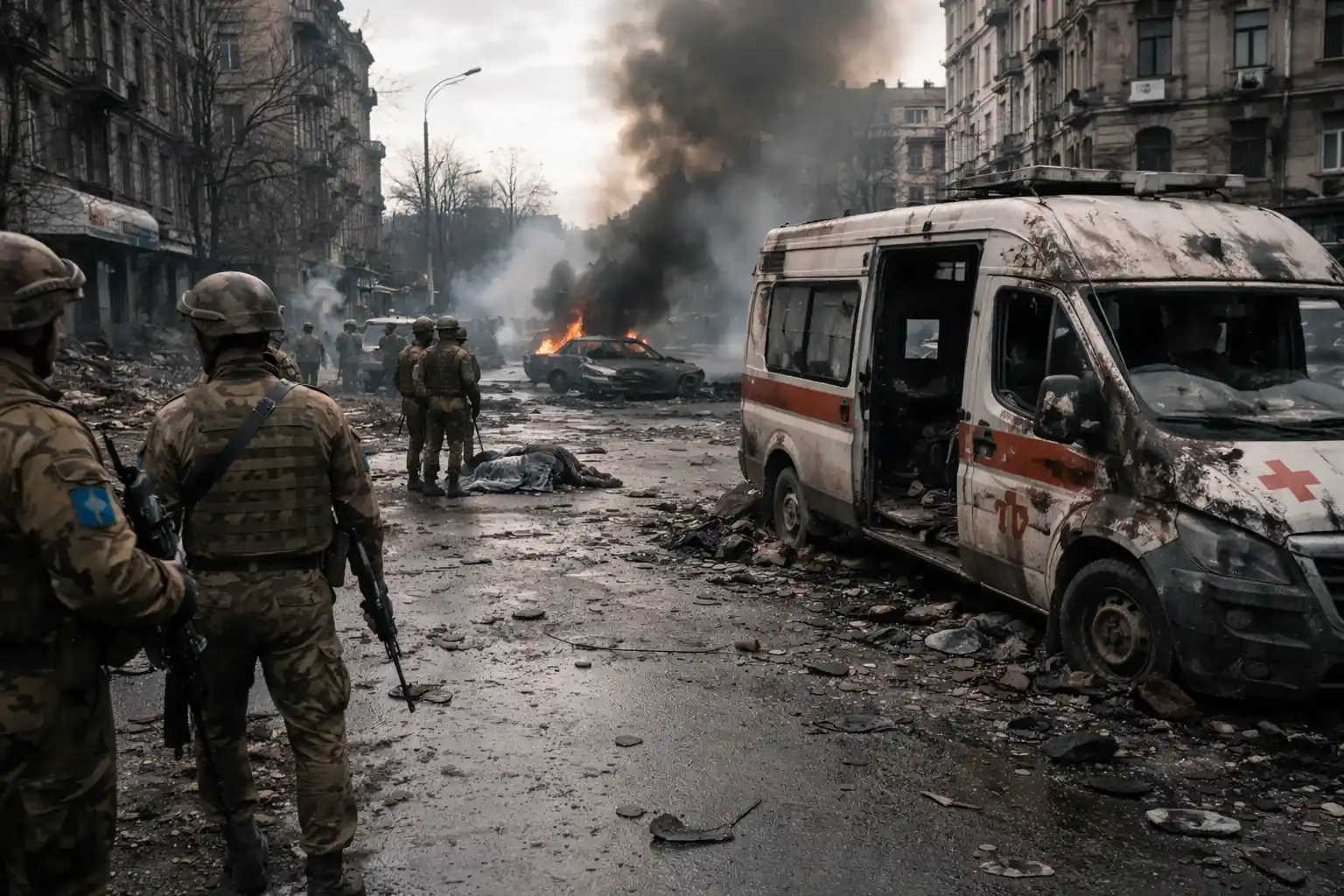
Among the most serious claims was a Ukrainian allegation that Russian forces executed four disarmed soldiers in the Kharkiv region shortly after the truce began. Prosecutors cited drone footage that they said showed the aftermath of the killings. Ukraine also said a Russian drone struck an ambulance in Sumy, injuring medics during what was supposed to be a reduced-intensity period.
Russia, for its part, reported nearly 2,000 Ukrainian violations and said its troops had to repel attempted advances and answer repeated attacks. The conflicting claims underline a pattern seen throughout the war: temporary agreements may be announced at the political level, but neither side appears willing to suspend battlefield advantage or accept exposure without immediate retaliation.
Key details
Ukraine said Russian forces relied heavily on drones during the ceasefire, even if the use of some heavier long-range weapons appeared more limited than during normal operations. Kyiv framed this as proof that Moscow wanted the optics of an Easter truce without giving up real tactical pressure. Russian officials offered the mirror image, arguing that their own forces were forced to respond after Ukrainian units tried to exploit the pause.
At the same time, the ceasefire period did produce one concrete humanitarian outcome: a prisoner exchange involving 175 personnel from each side, along with civilians. That development showed that some coordination remained possible even while both armies accused the other of violating the spirit and terms of the truce.
Background and context
Short-term pauses in the Russia-Ukraine war have repeatedly failed to evolve into wider de-escalation. The underlying reason is not hard to identify. Both governments continue to doubt the intentions of the other, and both military commands fear that even a limited pause can be used to regroup, reposition, or test vulnerable sectors of the line.
Orthodox Easter gave the proposed truce symbolic and religious importance, but symbolism alone has not been strong enough to overcome the military logic of a war that remains highly contested. That is especially true in regions such as Kharkiv and Sumy, where front-line pressure and cross-border risk remain acute.
What to watch next
The immediate question is whether any of the alleged incidents, especially the reported execution of disarmed soldiers, are documented in enough detail to drive formal international legal action. Humanitarian law observers will also watch whether future prisoner exchanges continue even in the absence of more durable ceasefire progress.
Diplomatically, the failed Easter truce makes broader negotiations harder rather than easier. Every publicly alleged violation becomes another reason for each side to argue that the other cannot be trusted to observe even limited humanitarian arrangements.
Why this matters
This episode matters because it illustrates the central problem at the heart of the war: even a ceasefire framed around religion and humanitarian need could not hold. The Easter truce exposed how deeply entrenched the mistrust is between Ukraine and Russia, and how far the conflict remains from the kind of verified, enforceable pause that could support serious peace diplomacy.
Reader context
This story belongs to Northstar Herald's Russia-Ukraine War and Humanitarian Law coverage, with related entities including Volodymyr Zelensky, Vladimir Putin, Orthodox Easter, Ceasefire. The report is based on BBC World News source material.
Related coverage
Why it matters
The failure of even a brief religious truce underscores the deep mistrust and stalled diplomatic progress between the two nations as the full-scale invasion enters its third year.
Read next
Follow this story through the topic hub, more world coverage, and the latest updates.
Weekly briefing
Get the week's key developments in one concise email.
Get a fast catch-up on the biggest stories, the context behind them, and the links worth your time.
Cadence
Weekly, for a quick catch-up
Coverage
AI, business, world, security, sports
Format
Clear takeaways and useful context
Request the briefing
Leave your email to open a prepared request and get on the list for the weekly briefing.
About the byline
World correspondent
Leila Haddad covers world affairs, diplomacy, and humanitarian crises, with a focus on how fast-moving international developments affect public policy, conflict response, and cross-border institutions.
Sources and methodology