Russia and Ukraine Exchange 205 Prisoners as Kyiv Mourns 24 Killed in Apartment Strike
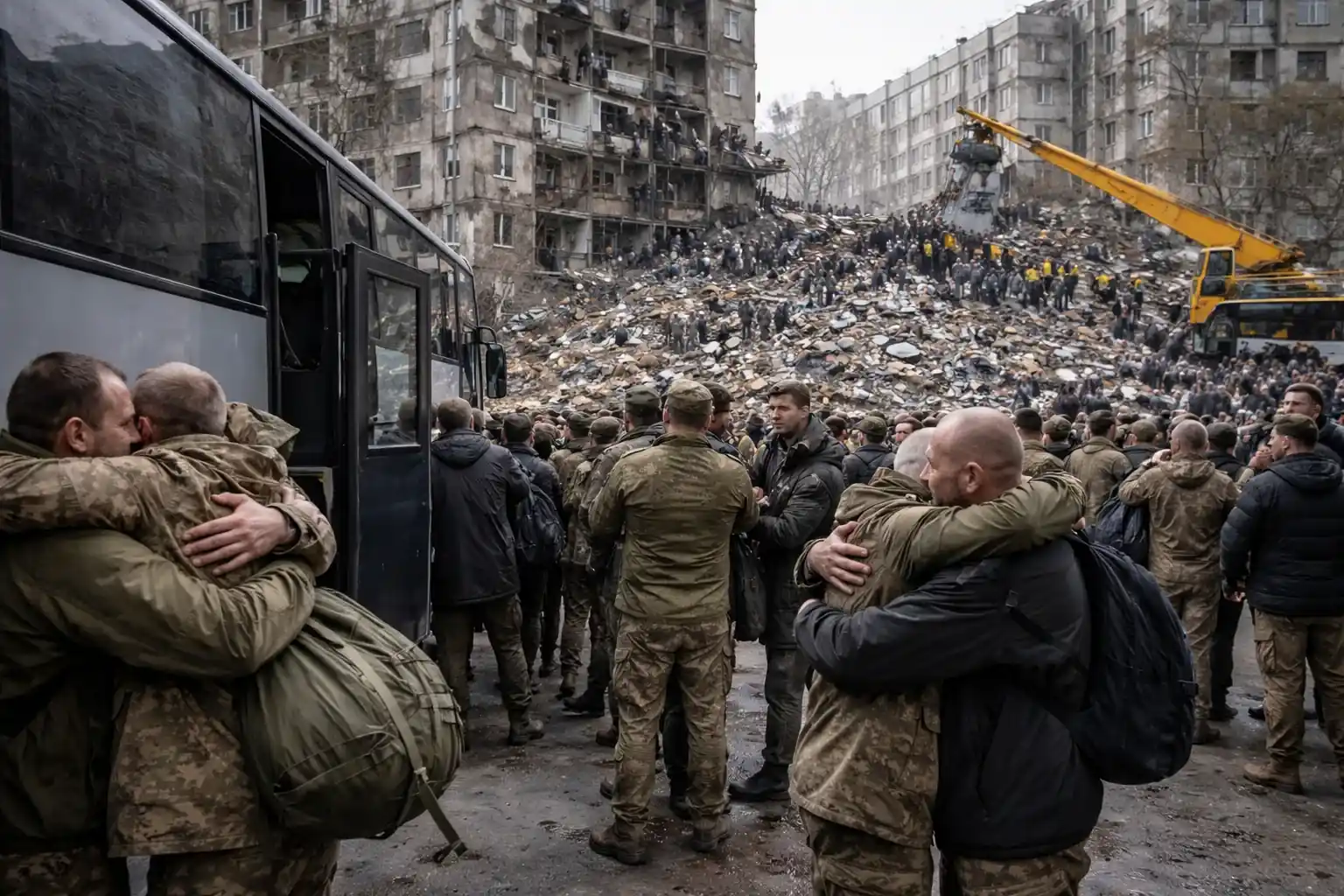
Rescue operations concluded at a devastated nine-story building in Kyiv as both nations carried out the first stage of a major prisoner swap brokered by the US and UAE.
Primary source: BBC World News. Full source links and update notes are below.
Fast summary
Start here
- 205 prisoners of war were exchanged on Friday in the first phase of a planned 1,000-person swap.
- Kyiv rescue workers ended a 28-hour search of a destroyed apartment block, confirming 24 deaths including three girls.
- President Zelensky stated the Russian X-101 cruise missile used in the attack was produced recently, indicating successful sanction circumvention.
What happened
Russia and Ukraine successfully exchanged 205 prisoners of war on Friday. The exchange coincided with a national day of mourning in Kyiv following a devastating Russian missile strike on a residential apartment block in the Darnytskyi district. Rescue services concluded their 28-hour operation at the site, confirming that 24 people, including three girls aged 12 and 15, were killed when the building was reduced to rubble.
What's new in this update
This swap is identified as the first stage of a broader agreement to exchange 1,000 people on each side, a deal brokered by the United States and the United Arab Emirates. While the exchange proceeded, Ukraine also launched drone strikes against Russian infrastructure; officials in Ryazan reported four deaths and damage to an oil refinery, which Ukrainian forces claimed as a successful hit on one of Russia's largest processing facilities.
Key details
Most of the 205 Ukrainians returned in the swap had been in Russian captivity since 2022. On the ground in Kyiv, President Volodymyr Zelensky visited the destroyed apartment complex to lay flowers and pay tribute to the victims, who included a former hockey player, an English teacher, and a kindergarten teacher. Zelensky noted that the building was leveled by an X-101 cruise missile manufactured in recent weeks, calling for increased global pressure to block the flow of components required for Russian missile production.
Background and context
The prisoner exchange follows the collapse of a brief ceasefire that ended earlier this week with a massive wave of Russian strikes across Ukraine. The strike on the Kyiv apartment block destroyed 18 individual units. This period of intensified aerial warfare comes as both nations continue to target energy infrastructure and residential areas, despite international calls for civilian protection.
What to watch next
Observers are monitoring the implementation of the remaining phases of the 1,000-person swap. Additionally, the disclosure that Russia is using freshly manufactured missiles will likely lead to renewed calls from the Ukrainian government for stricter enforcement of international sanctions and export controls on dual-use technology and electronic components.
Why it matters
The exchange demonstrates that high-level diplomatic channels for humanitarian efforts remain functional even as civilian casualties mount and short-lived ceasefires collapse.
Read next
Follow this story through the topic hub, more world coverage, and the latest updates.
Weekly briefing
Get the week's key developments in one concise email.
Get a fast catch-up on the biggest stories, the context behind them, and the links worth your time.
Cadence
Weekly, for a quick catch-up
Coverage
AI, business, world, security, sports
Format
Clear takeaways and useful context
Request the briefing
Leave your email to open a prepared request and get on the list for the weekly briefing.
Author
See who assembled this story and follow more of their work.
Sources and methodology