TSMC Does Not Rule Out Chip Price Increases as Production Costs
The world's largest contract chipmaker says inflation is driving up business costs, but executives insist the AI-driven demand remains a sustainable

World correspondent
Reports on international affairs, diplomacy, and humanitarian developments with an emphasis on official statements, multilateral institutions, and regional context.
Editorial responsibility: Lead reviewer for geopolitics, international institutions, and crisis coverage
Primary source: BBC World News. Full source links and update notes are below.
Fast summary
Start here
- TSMC CFO Wendell Huang stated that inflation is impacting costs and price adjustments may be necessary to reflect the company's value.
- The company reaffirmed that its most advanced manufacturing will remain in Taiwan despite multi-billion dollar expansions in the US, Japan, and Germany.
- Management dismissed fears of an AI bubble, citing strong conviction from major hyper-scaler customers and sustained demand for high-end processors.
What happened
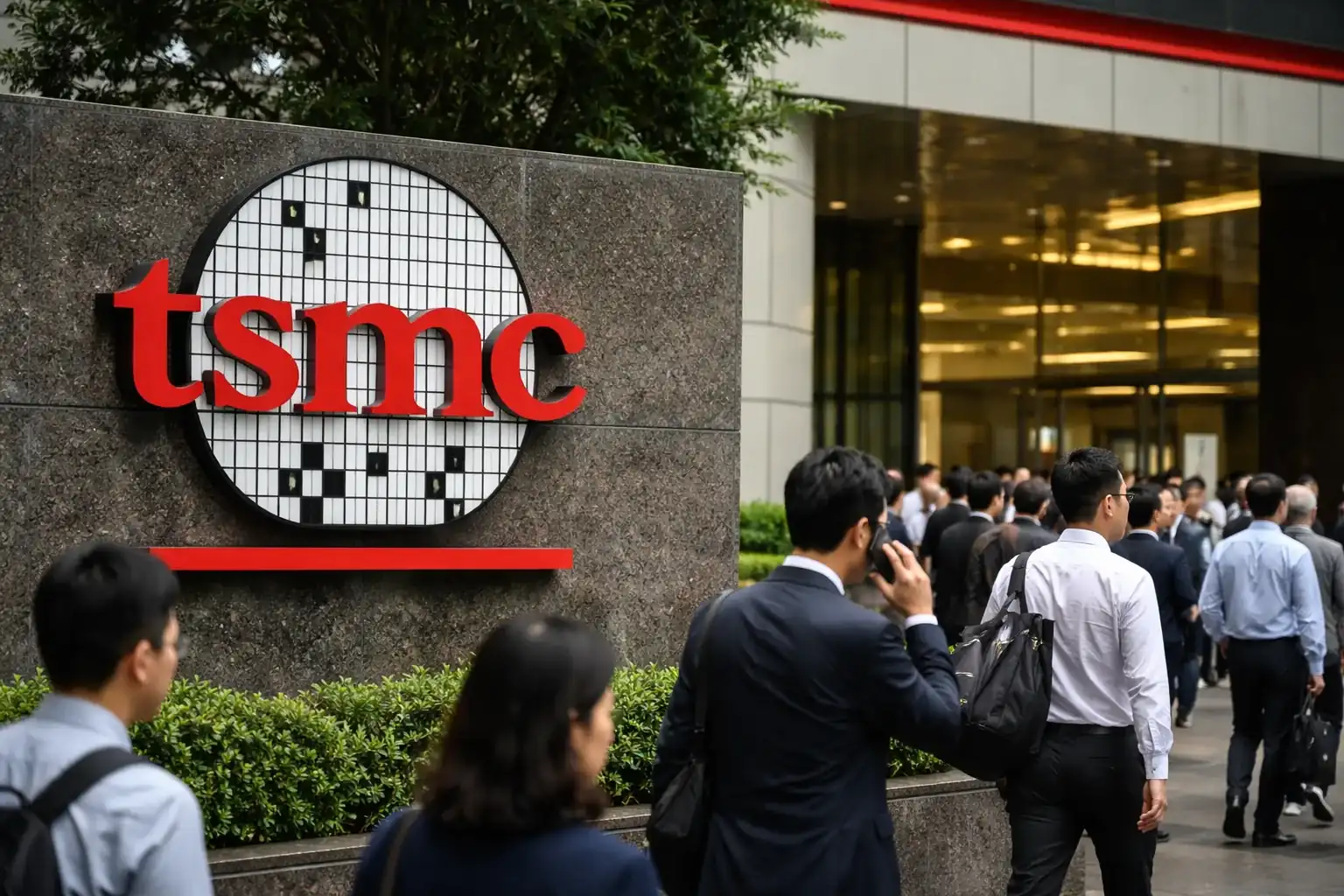
TSMC has signaled that chip price hikes may be possible as inflation and rising operating costs put pressure on the world's most important contract semiconductor manufacturer. The warning matters because TSMC sits at the center of the global electronics and AI hardware supply chain. When TSMC talks about prices, the effects can ripple outward through smartphones, data centers, servers, advanced AI chips, and the financial planning of some of the largest technology companies in the world.
That is why even a cautious statement about TSMC chip prices draws such close attention. It is not a niche industry note. It is a broader signal about the economics of modern computing.
Why TSMC has so much pricing power
TSMC occupies an unusually powerful position because it manufactures the advanced chips designed by companies such as Apple, Nvidia, AMD, and many others. It is not just a large supplier. It is the key fabrication partner behind much of the highest-performance computing stack. That gives TSMC pricing leverage that most industrial suppliers do not have, especially when customer demand remains strong and advanced-node capacity is strategically scarce.
In practical terms, if TSMC raises prices, many customers may have little choice but to absorb at least part of the increase.
Why rising costs matter now
The company has pointed to inflation and broader cost pressure, and that explanation makes sense in context. Advanced semiconductor manufacturing requires massive capital expenditure, highly specialized tooling, energy, water, talent, and geographically complex support networks. At the same time, TSMC is expanding outside Taiwan into the United States, Japan, and Germany, each of which brings additional cost complexity compared with concentrating everything at home.
This means TSMC is balancing two realities at once: customers need more advanced chips than ever, and the global cost of building them is not getting easier.
The AI demand backdrop
The discussion around TSMC chip prices cannot be separated from the AI boom. Advanced AI models have created intense demand for cutting-edge processors, and those processors depend on manufacturing nodes and packaging capabilities that few companies can provide at scale. TSMC executives have pushed back on the idea that AI demand is a short-lived bubble, instead framing it as a durable structural trend.
That stance matters because sustained AI demand strengthens the case for firmer pricing. If customers believe they must secure supply to remain competitive, TSMC gains room to defend margins more aggressively.
Why Taiwan still matters most
Even as TSMC expands globally, the company continues to emphasize that its most advanced manufacturing ecosystem remains anchored in Taiwan. That is not just a patriotic statement. It reflects the reality that semiconductor leadership depends on dense industrial concentration, supplier proximity, experienced labor, and institutional repetition that are very hard to recreate quickly elsewhere.
This also means that discussions about TSMC chip prices intersect with geopolitics. The global economy remains heavily dependent on an industrial base concentrated in Taiwan, even while governments elsewhere try to diversify risk.
Who pays if prices rise
Higher TSMC prices would not hit every customer equally, but the effects would likely travel through the chain. Some large clients may accept lower margins. Others may pass costs onward through device pricing, infrastructure billing, or reduced product flexibility. In the AI world, where compute costs are already enormous, even moderate input inflation can matter.
That is why TSMC's language is being watched so carefully. A price increase at the foundry level can become a price increase across multiple technology markets over time.
Why the market is listening closely
Investors care about this issue for two reasons. First, it says something about TSMC's own margin confidence and strategic discipline. Second, it provides a real-world test of whether the AI and advanced-computing boom is strong enough to support higher foundational costs without shaking demand.
If customers keep spending aggressively even after a TSMC price shift, that would reinforce the idea that advanced semiconductor supply remains one of the most valuable bottlenecks in the world economy.
What comes next
The next important signals will come from contract negotiations, customer commentary, and future TSMC guidance on margin expectations and capex. Markets will also watch whether expansion in Arizona and other overseas locations changes the company's cost base in a way that makes pricing pressure more persistent.
For now, TSMC signaling potential chip price hikes is a reminder that the global AI and semiconductor boom runs through a manufacturing system that is expensive, concentrated, and increasingly strategic. The world wants more advanced chips, but getting them is likely to cost more.
Why it matters
As the primary manufacturer for Apple, Nvidia, and AMD, any pricing shift by TSMC directly influences the cost of consumer electronics and the global push for AI infrastructure.
Read next
Follow this story through the topic hub, more world coverage, and the latest updates.
Weekly briefing
Get the week's key developments in one concise email.
Get a fast catch-up on the biggest stories, the context behind them, and the links worth your time.
Cadence
Weekly, for a quick catch-up
Coverage
AI, business, world, security, sports
Format
Clear takeaways and useful context
Request the briefing
Leave your email to open a prepared request and get on the list for the weekly briefing.
About the byline
World correspondent
Leila Haddad covers world affairs, diplomacy, and humanitarian crises, with a focus on how fast-moving international developments affect public policy, conflict response, and cross-border institutions.
Sources and methodology