Trump Anticipates Stronger Relationship with Colombia Under New
Following a razor-thin preliminary lead for Abelardo de la Espriella, US President Donald Trump signals a diplomatic reset after years of friction with

World correspondent
Reports on international affairs, diplomacy, and humanitarian developments with an emphasis on official statements, multilateral institutions, and regional context.
Editorial responsibility: Lead reviewer for geopolitics, international institutions, and crisis coverage
Primary source: BBC World News. Full source links and update notes are below.
Fast summary
Start here
- Preliminary results show right-wing candidate Abelardo de la Espriella leading the presidential run-off by 0.96 percentage points.
- President Trump endorsed de la Espriella and expects a much better relationship than with the outgoing left-wing administration.
- De la Espriella’s security platform includes increased military cooperation with the US and a crackdown on cocaine production.
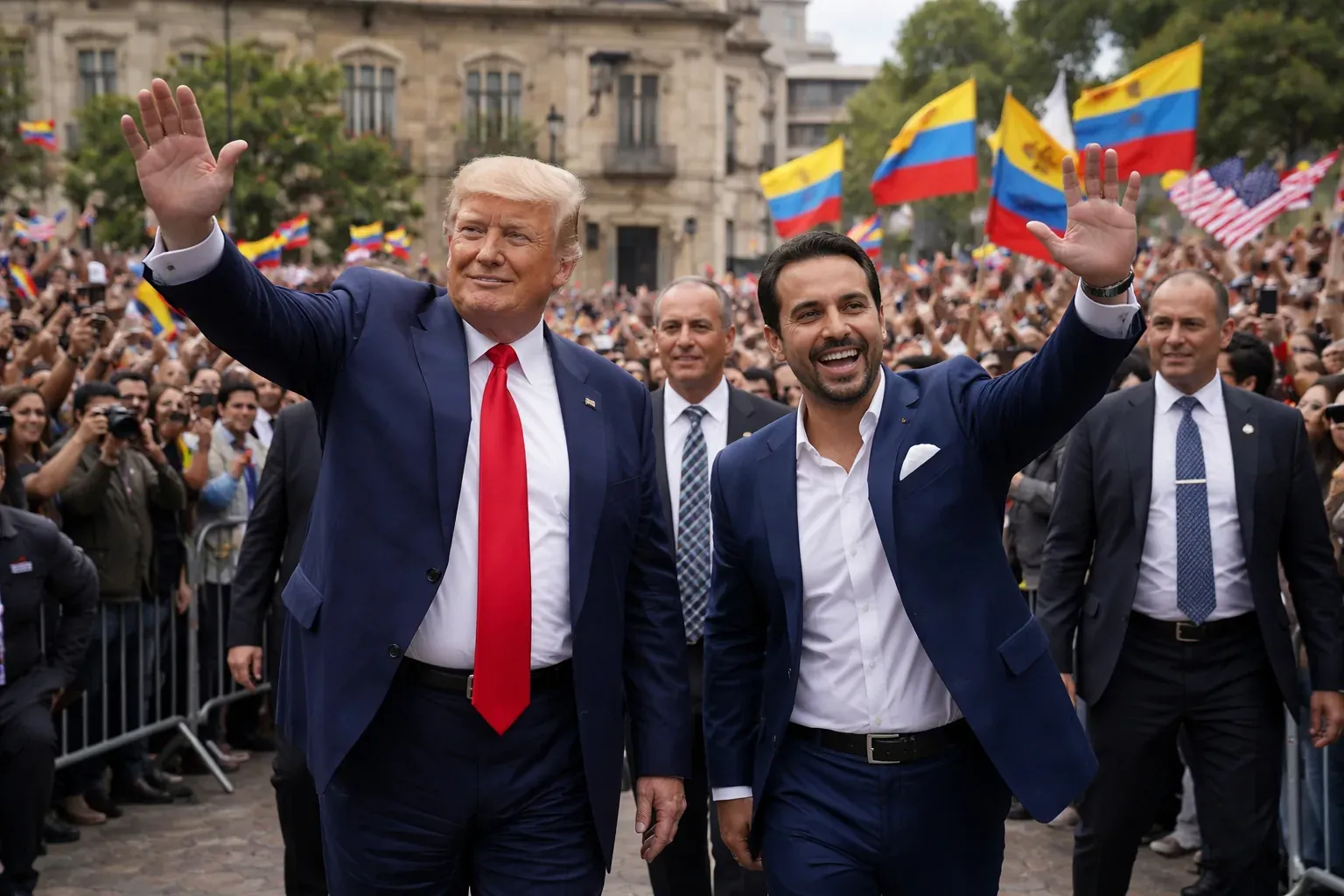
What happened
Preliminary results from Colombia's presidential runoff show right-wing candidate Abelardo de la Espriella holding a narrow lead over left-wing rival Iván Cepeda, and U.S. President Donald Trump has already signaled that he expects relations with Bogotá to improve if that lead holds. Although the result has not yet been legally certified, Trump's response makes clear that Washington sees the election as more than a domestic Colombian contest. It is also being read as a potential turning point in U.S.-Colombia diplomacy after years of tension with outgoing President Gustavo Petro.
What's new in this update
Trump moved quickly to frame de la Espriella's preliminary advantage as the beginning of a diplomatic reset. In public remarks and on social media, he suggested that a de la Espriella government would restore closer ties, especially on security, counter-narcotics policy, and regional cooperation. That rhetoric stands in direct contrast to the Trump administration's strained relationship with Petro, whose presidency was marked by disagreements over drug policy, migration, and the tone of bilateral engagement.
What is new here is not only the narrow election margin, but the speed with which the White House has attached geopolitical meaning to it. Before Colombia has fully certified the vote, Washington is already signaling the type of partnership it hopes to rebuild.
Key details
The preliminary count puts de la Espriella ahead by roughly 250,000 votes, a very tight margin in a highly polarized election. Cepeda has not conceded and is expected to wait for the formal verification process before recognizing any final result. That means the political transition remains contingent, even if the early numbers have energized supporters of a harder security line.
De la Espriella campaigned on a platform that emphasizes stronger military cooperation with the United States, a more aggressive anti-cartel strategy, and renewed alignment with a U.S.-backed regional security architecture. His stated interest in rejoining the Shield of the Americas and deepening anti-narcotics operations speaks directly to traditional Washington priorities in Colombia.
Those proposals also raise obvious controversy. Advocates of a hardline security approach see them as a return to disciplined state authority and more effective cocaine interdiction. Critics warn that a militarized strategy could revive abuses associated with earlier eras of Colombian counterinsurgency and anti-drug campaigns.
Background and context
For decades, Colombia has been one of Washington's most important partners in Latin America, especially on security and drug enforcement. That relationship was reshaped under Petro, whose left-wing administration questioned older U.S.-led strategies and sought a different balance between enforcement, peacebuilding, and social policy. Personal friction between Petro and Trump only intensified the distance.
A de la Espriella presidency would likely be interpreted as a return to a more traditional model of alliance. That includes closer military coordination, tougher anti-drug posture, and stronger rhetorical alignment with the United States. But Colombia's internal history complicates that prospect. Human rights groups and many voters remain deeply sensitive to the memory of the "false positives" scandal, in which civilians were killed and falsely presented as enemy combatants by the military.
That history explains why the election is being watched through two lenses at once. For Washington and security hawks, it may signal renewed strategic partnership. For critics, it raises the question of whether Colombia could revisit a model that prioritized military metrics over civilian protection.
What to watch next
The immediate focus is on the certification process. Because the margin is so narrow, every stage of verification matters, and any challenge from Cepeda's camp could delay final clarity. If de la Espriella's lead survives, the next signal will be the composition of his transition team and how quickly he moves to define his relationship with Washington.
The broader issue is what "improved U.S.-Colombia ties" will actually mean in practice. If it translates into deeper anti-narcotics cooperation, more military support, and tighter strategic alignment, the bilateral relationship could change quickly. But if those policies revive fears about state violence or democratic backsliding, Colombia's election could also reopen older debates about the cost of security-first politics in Latin America.
Why it matters
A shift to a right-wing administration in Colombia could restore the nation's status as a primary US security partner in Latin America, focusing on military-led anti-narcotics efforts.
Read next
Follow this story through the topic hub, more world coverage, and the latest updates.
Weekly briefing
Get the week's key developments in one concise email.
Get a fast catch-up on the biggest stories, the context behind them, and the links worth your time.
Cadence
Weekly, for a quick catch-up
Coverage
AI, business, world, security, sports
Format
Clear takeaways and useful context
Request the briefing
Leave your email to open a prepared request and get on the list for the weekly briefing.
About the byline
World correspondent
Leila Haddad covers world affairs, diplomacy, and humanitarian crises, with a focus on how fast-moving international developments affect public policy, conflict response, and cross-border institutions.
Sources and methodology