Trump and Iran’s Top Negotiator Exchange Threats as Peace Talks Open
Direct negotiations in Lucerne began with a trade of warnings regarding proxy activity in Lebanon and potential military strikes.

World correspondent
Reports on international affairs, diplomacy, and humanitarian developments with an emphasis on official statements, multilateral institutions, and regional context.
Editorial responsibility: Lead reviewer for geopolitics, international institutions, and crisis coverage
Primary source: BBC World News. Full source links and update notes are below.
Fast summary
Start here
- President Trump threatened to hit Iran "very hard" unless the country restrains Hezbollah proxies currently clashing with Israeli forces.
- Iran's lead negotiator Mohammad Bagher Ghalibaf dismissed the warnings, claiming the U.S. is in a "desperate situation" and stating Iran's forces are prepared.
- The talks follow an initial agreement to end the regional war, which includes a 60-day window for a final deal and the reopening of the Strait of Hormuz.
What happened
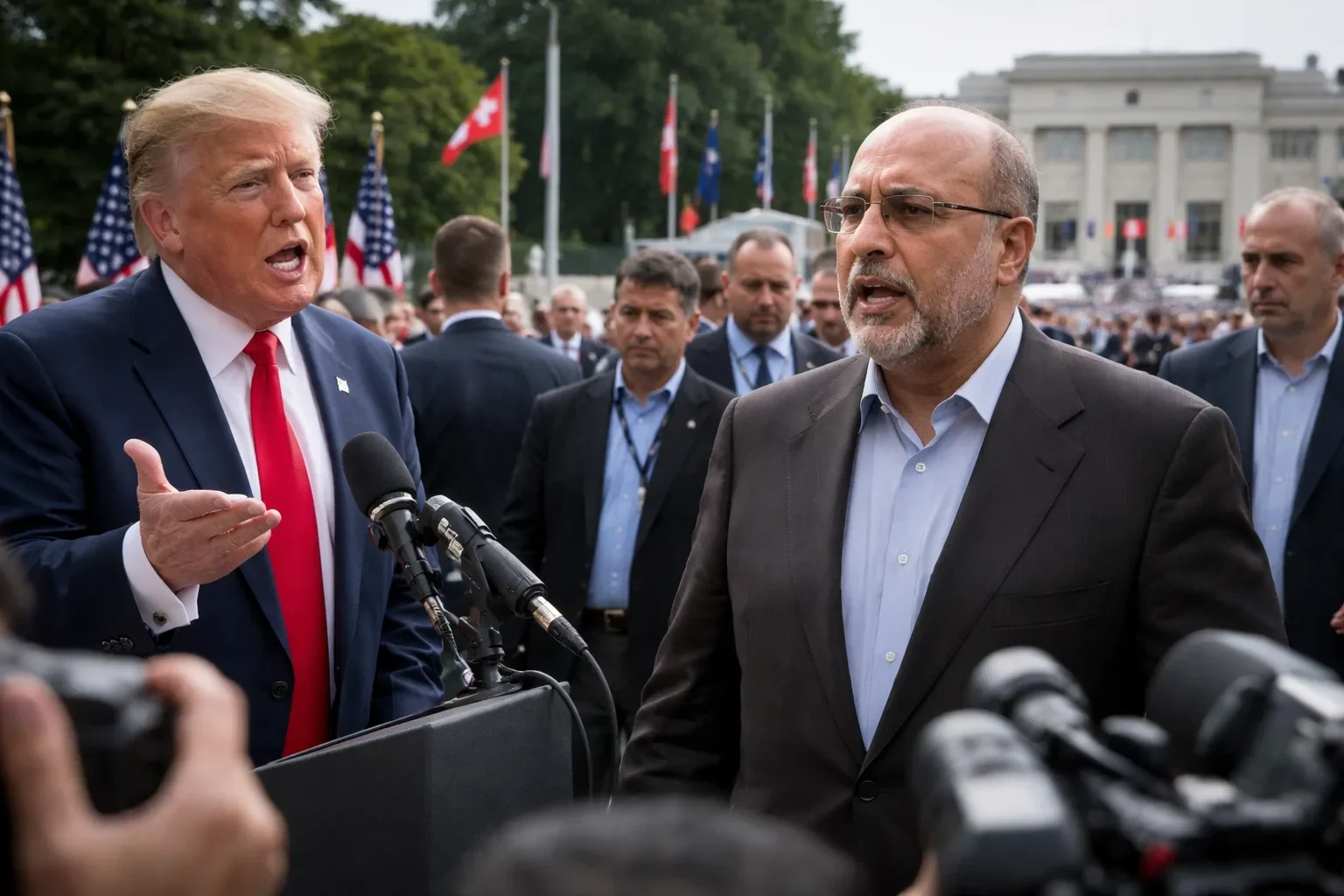
The first round of direct U.S.-Iran peace talks in Switzerland opened under immediate strain, with President Donald Trump and Iranian negotiator Mohammad Bagher Ghalibaf publicly exchanging threats even as delegations entered the room. The talks in Lucerne are supposed to turn a preliminary understanding into a more durable regional settlement, but the opening tone made clear that diplomacy is unfolding alongside live military pressure rather than in place of it. In practical terms, the talks began not with trust-building, but with each side reminding the other that escalation remains available.
What's new in this update
Trump has warned that the United States could hit Iran "very hard" if Tehran does not restrain Hezbollah activity in Lebanon, while Ghalibaf has dismissed the warning and claimed the United States is negotiating from weakness. That rhetorical exchange matters because it frames the talks as coercive bargaining rather than classical peacemaking. Each side is trying to use the start of negotiations to improve leverage, not simply to create diplomatic calm.
The contradiction at the center of the process is now obvious: there is a 60-day path toward a fuller agreement, but the actors involved are still speaking as if renewed confrontation could begin at any moment.
Key details
The U.S. side includes Vice President JD Vance, Jared Kushner, and special envoy Steve Witkoff, while Iran's team is led by Ghalibaf alongside Foreign Minister Abbas Araghchi. Mediators from Pakistan and Qatar are helping structure the discussions, reflecting how multilayered the process has become.
One of the biggest practical stakes is the Strait of Hormuz. Although earlier announcements and threats raised concern about closure, shipping data suggests traffic has continued through the corridor. That does not mean the issue is resolved. It means the market is still watching whether political threats convert into actual energy disruption.
Lebanon remains the most immediate operational fault line. The U.S. has signaled that proxy activity by Hezbollah will affect its willingness to move forward, while Iran and its allies continue to frame regional armed actors as responses to Israeli and American pressure rather than as side issues separable from the negotiation.
Background and context
These talks emerge from a preliminary agreement meant to halt a broader regional war, ease sanctions, and create a path toward de-escalation. But the surrounding political conditions remain extremely unstable. Israeli activity in Lebanon, Iran's regional relationships, and debates over sanctions relief all make it difficult to isolate the negotiation from the battlefield.
This is also why Switzerland matters. Talks there are being used to create neutral physical distance from the conflict, but no amount of geographic neutrality can remove the strategic distrust built over years of confrontation.
The U.S.-Iran relationship has rarely produced easy diplomatic sequencing. Each side usually wants the other to prove restraint first. That dynamic remains visible now, with threats being used as bargaining tools even while peace language stays formally on the table.
What to watch next
The next question is whether the talks produce even a narrow confidence-building measure, such as verifiable restraint around Lebanon, clearer shipping guarantees in the Strait of Hormuz, or movement on sanctions timing. Without some concrete early gain, the negotiation risks looking like a public theater of threats rather than the beginning of a settlement track.
The second issue is whether the 60-day framework survives contact with events on the ground. If Hezbollah activity intensifies, if Israel expands operations, or if Hormuz disruptions become real, political space for compromise could shrink rapidly.
For now, the Switzerland talks remain historically important but deeply fragile. Their success depends not just on what negotiators say at the table, but on whether the region can be held still long enough for diplomacy to matter.
Why it matters
The success of these talks determines whether a fragile preliminary agreement can transition into a lasting regional peace and secure global energy supply lines through the Strait of Hormuz.
Read next
Follow this story through the topic hub, more world coverage, and the latest updates.
Weekly briefing
Get the week's key developments in one concise email.
Get a fast catch-up on the biggest stories, the context behind them, and the links worth your time.
Cadence
Weekly, for a quick catch-up
Coverage
AI, business, world, security, sports
Format
Clear takeaways and useful context
Request the briefing
Leave your email to open a prepared request and get on the list for the weekly briefing.
About the byline
World correspondent
Leila Haddad covers world affairs, diplomacy, and humanitarian crises, with a focus on how fast-moving international developments affect public policy, conflict response, and cross-border institutions.
Sources and methodology