Nigeria's President Orders Probe Into Fake Agency Inside His Office
President Bola Tinubu demands answers after a fake agency with $950,000 in funding was found operating within the federal government complex.

World correspondent
Reports on international affairs, diplomacy, and humanitarian developments with an emphasis on official statements, multilateral institutions, and regional context.
Editorial responsibility: Lead reviewer for geopolitics, international institutions, and crisis coverage
Primary source: BBC World News. Full source links and update notes are below.
Fast summary
Start here
- President Tinubu ordered the ICPC to produce a report within 30 days regarding the unauthorized Presidential Foreign Intervention Promotion Council.
- The agency allegedly secured $950,000 in public funding and office space in Abuja by forging the signature of the president's chief of staff.
- Suspect Adeniyi Adeyemi Matthew claims the body was legal and accuses high-level officials of attempting to extort bribes from the organization.
What happened
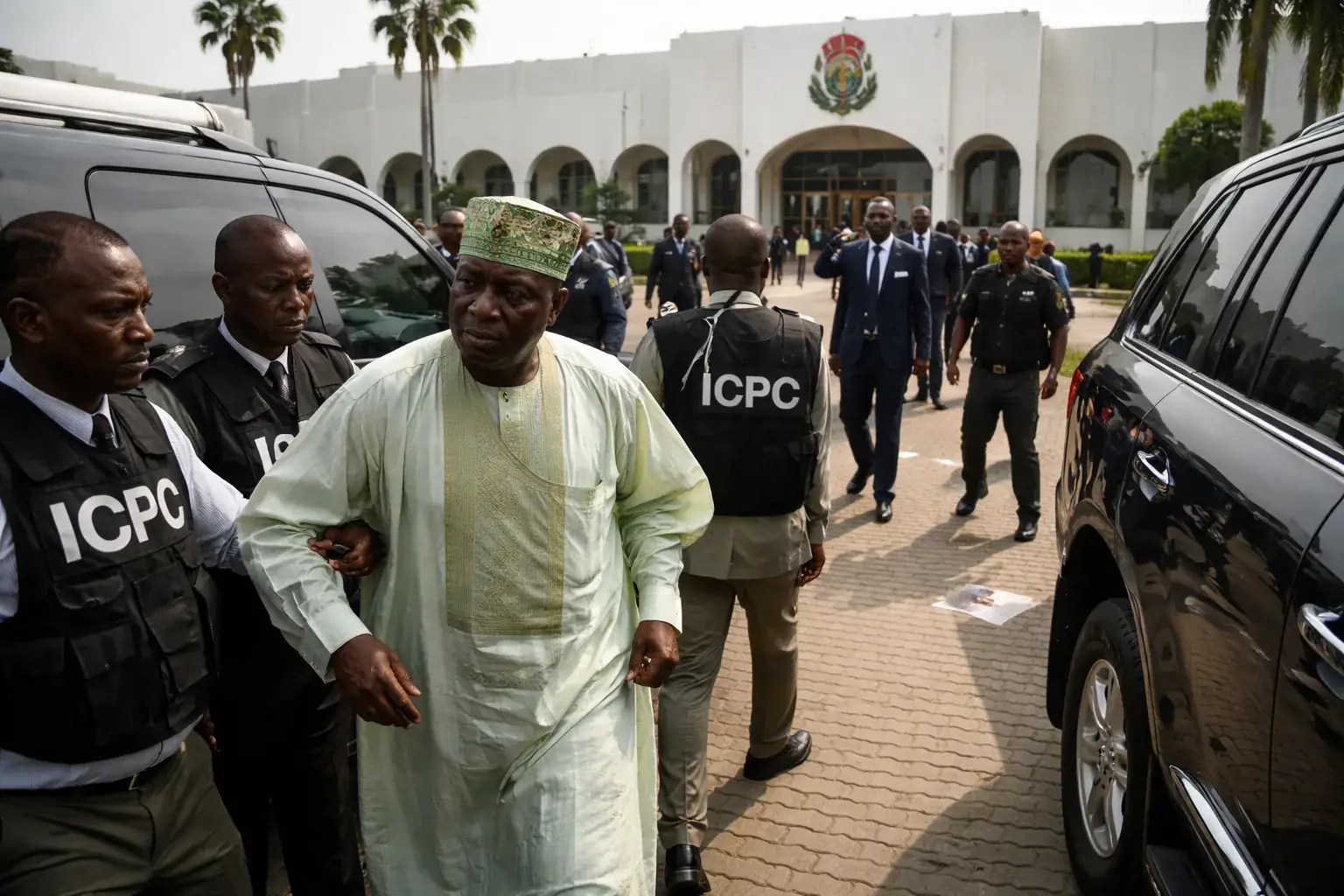
President Bola Tinubu has launched a formal investigation into a major administrative scandal involving a fictitious government agency that reportedly operated from within his own executive office. The entity, known as the Presidential Foreign Intervention Promotion Council (PFIPC), was allegedly established using forged documents and had successfully integrated itself into the federal bureaucracy without official authorization. Tinubu has directed the Independent Corrupt Practices and Other Related Offences Commission (ICPC) to lead the probe and uncover how the group gained access to government resources. This discovery has shocked the Nigerian political establishment, as it suggests that a non-existent body was able to function with the appearance of total legitimacy. The investigation aims to determine the extent of the deception and identify any internal collaborators who may have facilitated the scheme within the capital's central administrative hubs.
What's new in this update
In a decisive move on Tuesday, President Tinubu set a strict 30-day deadline for the ICPC to deliver a comprehensive report on the fraudulent council. This update follows the identification of the agency's alleged mastermind, Adeniyi Adeyemi Matthew, who is currently the subject of a nationwide police manhunt. Matthew, who presented himself as the council's director general, is accused of forgery, impersonation, and multiple financial crimes. While the presidency maintains that the agency's foundational letters were forged, Matthew has publicly asserted his innocence from an undisclosed location. He claims that the PFIPC was lawfully established in 2024 to boost foreign investment and alleges that senior government officials are framing him after their attempts to extort bribes from the agency failed. The presidency has since issued a firm denial of these bribery allegations.
Key details
Evidence gathered so far reveals a startling level of sophistication in the operation of the PFIPC. The agency managed to secure a physical office within the Federal Secretariat in Abuja, the high-security complex that houses many of Nigeria's federal ministries. Furthermore, the council successfully opened official bank accounts with the Central Bank of Nigeria and was included in the 2026 Appropriation Act with a budget allocation of 1.3 billion naira, roughly equivalent to $950,000. Police forensic experts have reportedly confirmed that the signature of Femi Gbajabiamila, the president's chief of staff, was forged on the appointment letter used to give the council a veneer of authority. Beyond financial fraud, the council is accused of using its false status to seek diplomatic support and facilitate visa applications, further complicating the international implications of the scandal.
Background and context
The PFIPC was supposedly created in 2024 under the guise of an investment promotion body, yet investigators have found no record of any legitimate deals or diplomatic achievements credited to the organization. It operated with a small staff of three individuals who have already been detained and questioned by the police. The scandal has emerged at a time when the Tinubu administration is facing increased scrutiny over government spending and transparency. Civil society organizations and opposition figures have quickly condemned the security breach, demanding a fully independent inquiry to ensure that the investigation is not handled solely by internal agencies. The presidency has countered these concerns by emphasizing that the ICPC probe will be thorough and that the integrity of the nation's federal institutions remains a top priority for the current leadership.
What to watch next
The immediate priority for federal authorities is the apprehension of Adeniyi Adeyemi Matthew and the recovery of the 1.3 billion naira allocated to the PFIPC. As the ICPC moves toward its 30-day reporting deadline, the public will be looking for answers regarding how an unauthorized body could bypass multiple layers of government oversight to appear in the national budget. Legal proceedings are currently pending at the Federal High Court in Abuja, where the government has already filed charges against Matthew and two associates. The outcome of this case may trigger a wider audit of other government councils and commissions to ensure their legitimacy. Additionally, the administration is expected to introduce new verification protocols for official appointments and budgetary allocations to prevent a recurrence of such a high-profile administrative failure.
Why it matters
The presence of a fraudulent agency within the presidential complex suggests significant administrative and security lapses that could undermine public trust.
Read next
Follow this story through the topic hub, more world coverage, and the latest updates.
Weekly briefing
Get the week's key developments in one concise email.
Get a fast catch-up on the biggest stories, the context behind them, and the links worth your time.
Cadence
Weekly, for a quick catch-up
Coverage
AI, business, world, security, sports
Format
Clear takeaways and useful context
Request the briefing
Leave your email to open a prepared request and get on the list for the weekly briefing.
About the byline
World correspondent
Leila Haddad covers world affairs, diplomacy, and humanitarian crises, with a focus on how fast-moving international developments affect public policy, conflict response, and cross-border institutions.
Sources and methodology