Thirteen Killed in Israeli Strikes on Southern Lebanon Amid
The Lebanese health ministry reported casualties in multiple districts as the IDF confirmed approximately 50 strikes within a 24-hour period.

World correspondent
Reports on international affairs, diplomacy, and humanitarian developments with an emphasis on official statements, multilateral institutions, and regional context.
Editorial responsibility: Lead reviewer for geopolitics, international institutions, and crisis coverage
Primary source: BBC World News. Full source links and update notes are below.
Fast summary
Start here
- At least 13 people, including four women and a child, were killed in air strikes targeting Haboush, Zrarieh, and Ain Baal.
- The fatalities occur during a three-week extension of a US-backed ceasefire intended to pause hostilities between Israel and Hezbollah.
- Since the current phase of conflict began in early March, 2,659 people have been killed in Lebanon and 17 Israeli soldiers have died.
What happened
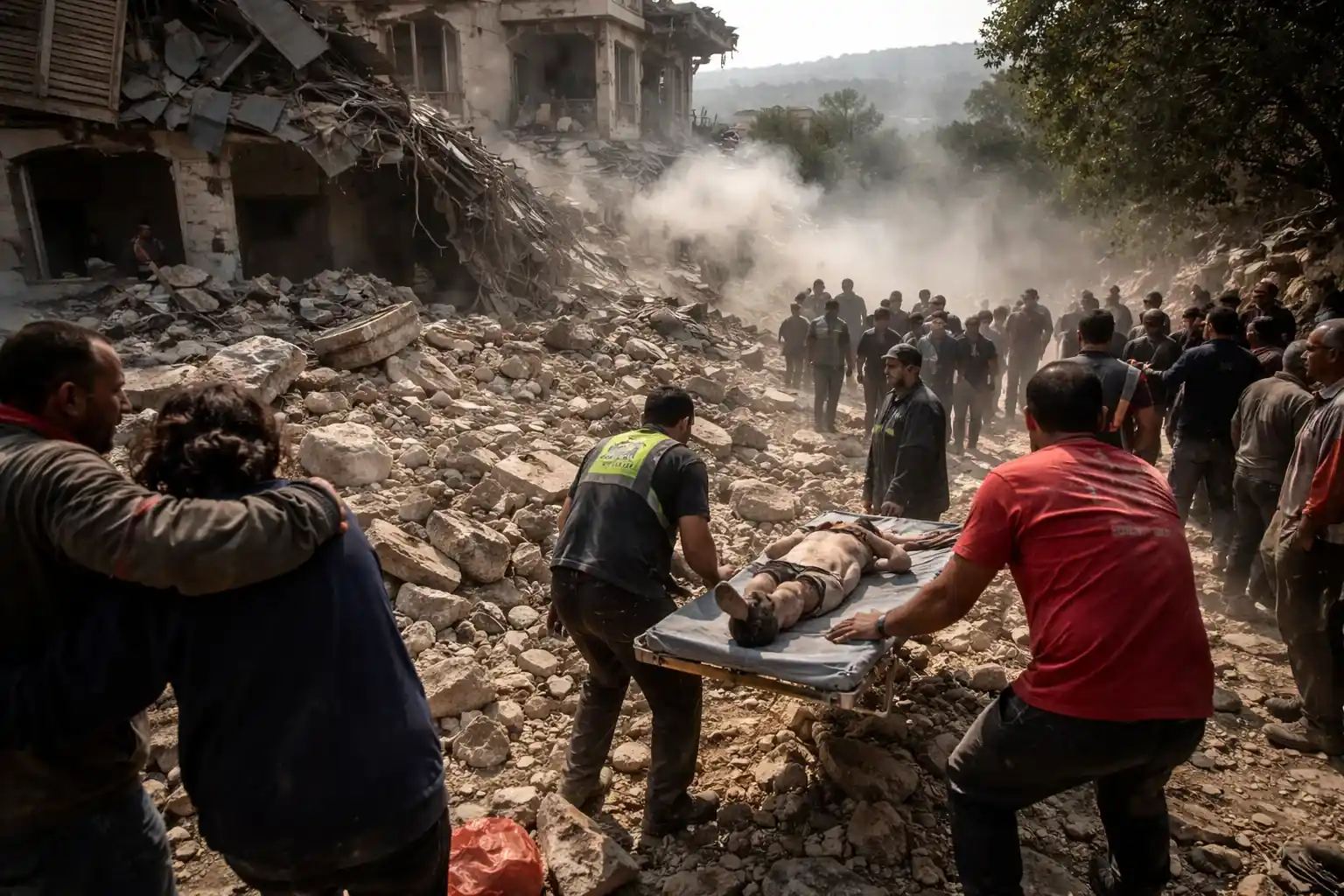
At least 13 people were killed in Israeli air strikes across southern Lebanon despite an ongoing extension of a US-backed ceasefire meant to reduce hostilities between Israel and Hezbollah. Lebanese health officials said the dead included women and a child, with casualties reported in Haboush, Zrarieh, and Ain Baal as the latest round of strikes hit multiple districts.
The scale of the Israeli air strikes is notable not only because of the immediate death toll, but because the attacks took place while a ceasefire extension was still supposed to create diplomatic space. When dozens of strikes occur during a declared pause, the meaning of the ceasefire itself comes under question.
What's new in this update
The Israel Defense Forces said they carried out roughly 50 strikes in southern Lebanon within a 24-hour period. At the same time, senior Lebanese military officials met with the US-led ceasefire monitoring side, underlining the disconnect between diplomatic mechanisms on paper and military realities on the ground.
That diplomatic-military gap matters. A ceasefire that cannot stop large-scale Israeli air strikes or meaningfully constrain Hezbollah-related escalation begins to look less like a truce and more like a temporary political label attached to an active conflict.
Key details
The deadliest reported strike occurred in Haboush in the Nabatieh district, where most of the fatalities were recorded. Other deaths were reported in Zrarieh and Ain Baal. Lebanese authorities have continued to stress the impact on civilians, while Israeli officials frame ongoing operations as necessary responses within a still-volatile security environment tied to Hezbollah activity.
Hezbollah was not a formal signatory to the ceasefire, but it had indicated it would observe the arrangement if Israel did so as well. That conditional logic has helped keep the truce structurally weak from the start. If one side believes the other is acting outside the agreement, the incentive to maintain restraint quickly erodes.
Background and context
Southern Lebanon has repeatedly become the site where regional escalation, local sovereignty, and proxy conflict converge. Israeli operations there are tied to the perceived threat posed by Hezbollah, while Lebanon's state institutions continue to struggle to impose full control over territory where armed groups and foreign pressure both remain powerful.
The current phase of violence followed wider regional escalation involving Iran, Hezbollah, and Israel earlier in the year. Since then, the Lebanese death toll has climbed dramatically, and even periods described as ceasefires have not reliably prevented further strikes, re-entry, or territorial pressure.
What to watch next
The next question is whether US and international mediators can transform the ceasefire extension into something enforceable or whether it will continue to degrade under repeated air strikes and mutual accusations. Any direct meeting involving Lebanese and Israeli leadership would carry significant symbolic importance, but symbolism alone will not stabilize the south without practical enforcement.
Observers will also watch whether the Lebanese army gains any stronger role in asserting state authority. That issue remains central because lasting de-escalation depends not only on outside diplomacy, but on whether Lebanon can restore effective control in contested areas.
Why this matters
This matters because a ceasefire that coincides with mass-casualty Israeli air strikes in southern Lebanon is not functioning as a durable peace instrument. The continued violence exposes the fragility of the Lebanon ceasefire, the limits of external mediation, and the ongoing vulnerability of Lebanese civilians and sovereignty in a conflict shaped by Hezbollah, Israel, and wider regional confrontation.
Reader context
This story belongs to Northstar Herald's Middle East Conflict and International Relations coverage, with related entities including Lebanon, Israel, IDF, Hezbollah. The report is based on BBC World News source material.
Related coverage
Why it matters
The persistent violence despite a US-brokered ceasefire extension underscores the difficulty of maintaining a durable truce and the precarious state of Lebanese sovereignty.
Read next
Follow this story through the topic hub, more world coverage, and the latest updates.
Weekly briefing
Get the week's key developments in one concise email.
Get a fast catch-up on the biggest stories, the context behind them, and the links worth your time.
Cadence
Weekly, for a quick catch-up
Coverage
AI, business, world, security, sports
Format
Clear takeaways and useful context
Request the briefing
Leave your email to open a prepared request and get on the list for the weekly briefing.
About the byline
World correspondent
Leila Haddad covers world affairs, diplomacy, and humanitarian crises, with a focus on how fast-moving international developments affect public policy, conflict response, and cross-border institutions.
Sources and methodology