Twelve Killed as Israeli Drone Strikes Hit Vehicles Across Southern
Strikes occurred on the coastal highway near Beirut and in southern towns, killing two children as regional tensions escalate.

World correspondent
Reports on international affairs, diplomacy, and humanitarian developments with an emphasis on official statements, multilateral institutions, and regional context.
Editorial responsibility: Lead reviewer for geopolitics, international institutions, and crisis coverage
Primary source: BBC World News. Full source links and update notes are below.
Fast summary
Start here
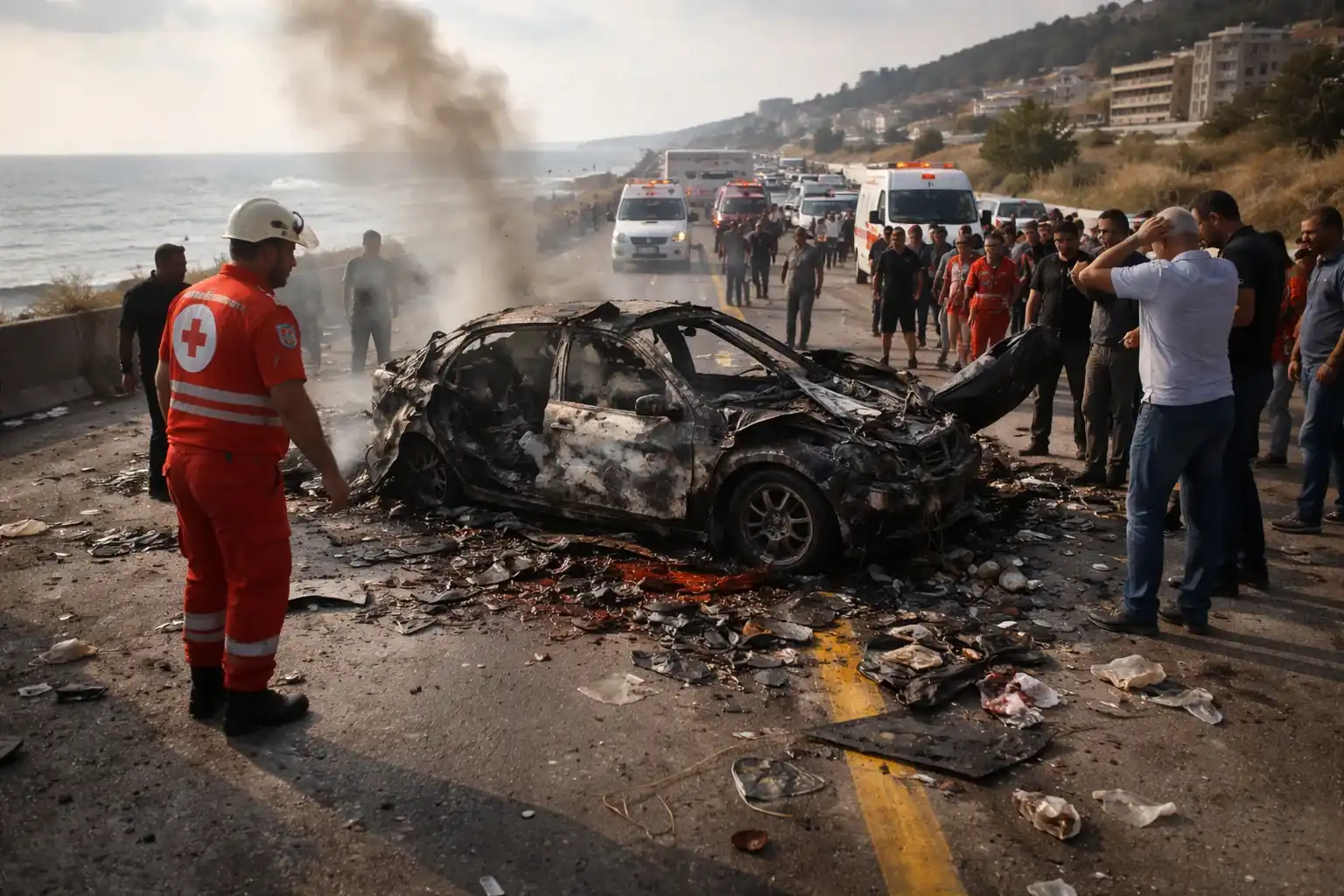
- Seven separate Israeli air strikes on cars resulted in at least 12 deaths, including two children on the coastal highway.
- The Israeli military reported hitting Hezbollah infrastructure and ordered evacuations in nine southern Lebanese towns.
- The Lebanese health ministry reports over 400 people have been killed across the country since a ceasefire was announced nearly a month ago.
What happened
At least 12 people were killed in a series of Israeli airstrikes targeting vehicles across southern Lebanon, in one of the clearest examples of how the conflict continues to burn through ceasefire language without actually stopping. According to Lebanese officials, seven separate strikes hit cars on the coastal highway near Beirut as well as deeper into the south, killing civilians that included two children. Israel said it was targeting Hezbollah infrastructure and associated threats, but the pattern of strikes across moving vehicles immediately raised fears about civilian vulnerability on roads that remain essential for everyday movement.
This is one reason the attacks stand out. Vehicle strikes create a sense that nowhere is reliably safe, not even transit corridors outside direct front-line battle zones. When roads become suspected kill zones, displacement increases, ordinary commerce collapses, and fear spreads well beyond the immediate blast sites.
Why vehicle strikes are so destabilizing
Airstrikes on vehicles carry a particular kind of terror because they turn mobility into exposure. In southern Lebanon, people still need to travel for medical care, work, evacuation, and family survival even when areas are under warning. If cars and motorcycles become recurring targets, every trip begins to carry the logic of risk assessment usually associated with battlefields.
That is what makes the southern Lebanon strikes more than another casualty report. They reshape how civilians navigate daily life and deepen the sense that the conflict is expanding beyond identifiable military positions.
The ceasefire problem
The strikes also expose the fragility of the ceasefire framework that was supposed to reduce violence. A truce that coexists with multiple deadly drone attacks on vehicles, evacuation orders, and fresh Hezbollah activity may still exist on paper, but it is not functioning as a dependable shield for civilians. Lebanon's health ministry figures underline that point: hundreds of people have reportedly been killed even after the ceasefire was announced.
This creates a severe credibility problem for diplomacy. Mediators can continue talks, but communities in southern Lebanon will measure success by whether they can drive, return home, and sleep without expecting the next strike.
Why UNIFIL's concern matters
The warning from UNIFIL about increased drone activity and blasts near UN positions is an important signal. International peacekeepers are not just observers; they are part of the architecture meant to help stabilize southern Lebanon. If their operating environment becomes more dangerous, the already thin buffer between political management and open escalation becomes weaker.
That matters because once peacekeepers themselves are endangered, the conflict begins to threaten the mechanisms designed to contain it.
Civilians, paramedics, and repeated exposure
Reports of child deaths and previous accusations involving strikes on emergency personnel reinforce the humanitarian dimension of the conflict. Even if Israel insists it is targeting militant networks and weapons systems, the visible outcome in Lebanon remains repeated civilian exposure and recurring public anger. Each new strike on transport routes feeds the narrative that southern Lebanon is enduring punishment at a scale wider than narrow tactical targeting would suggest.
For Hezbollah, that environment can become politically useful even amid battlefield pressure, because civilian suffering strengthens its argument that deterrence and retaliation remain necessary.
What comes next
A third round of talks in Washington may still offer a diplomatic opening, but their success depends on whether violence actually declines rather than simply being rhetorically managed. If vehicle strikes continue and Hezbollah maintains rocket or drone launches, the ceasefire will look less like a pathway to calm and more like a collapsing holding pattern.
For now, the Israeli airstrikes targeting vehicles in southern Lebanon show how unstable the conflict remains. Twelve deaths across multiple car strikes, including the killing of children, illustrate that the road network of southern Lebanon has become part of the battlefield. That is a serious escalation in civilian insecurity and another warning that the ceasefire structure may not survive much longer without a stronger political intervention.
Why it matters
The intensification of strikes threatens the fragile ceasefire and underscores the ongoing risk to civilians and international peacekeepers in the region.
Read next
Follow this story through the topic hub, more world coverage, and the latest updates.
Weekly briefing
Get the week's key developments in one concise email.
Get a fast catch-up on the biggest stories, the context behind them, and the links worth your time.
Cadence
Weekly, for a quick catch-up
Coverage
AI, business, world, security, sports
Format
Clear takeaways and useful context
Request the briefing
Leave your email to open a prepared request and get on the list for the weekly briefing.
About the byline
World correspondent
Leila Haddad covers world affairs, diplomacy, and humanitarian crises, with a focus on how fast-moving international developments affect public policy, conflict response, and cross-border institutions.
Sources and methodology