At Least 12 Dead as Firefighters Battle Wildfires in Southern Spain
Hundreds of firefighters are working to contain a massive wildfire in Andalusia that has killed 12 people and left 23 others missing near Bedar.

World correspondent
Reports on international affairs, diplomacy, and humanitarian developments with an emphasis on official statements, multilateral institutions, and regional context.
Editorial responsibility: Lead reviewer for geopolitics, international institutions, and crisis coverage
Primary source: BBC World News. Full source links and update notes are below.
Fast summary
Start here
- The death toll has risen to 12 confirmed fatalities, including four British nationals, with 23 people still missing in the Almería region.
- High winds and 40C temperatures caused the fire to spread with unbelievable speed, creating what witnesses described as a mushroom cloud.
- Weather conditions are expected to improve Saturday with cooler air and moderate winds, potentially aiding containment efforts in Bedar.
What happened
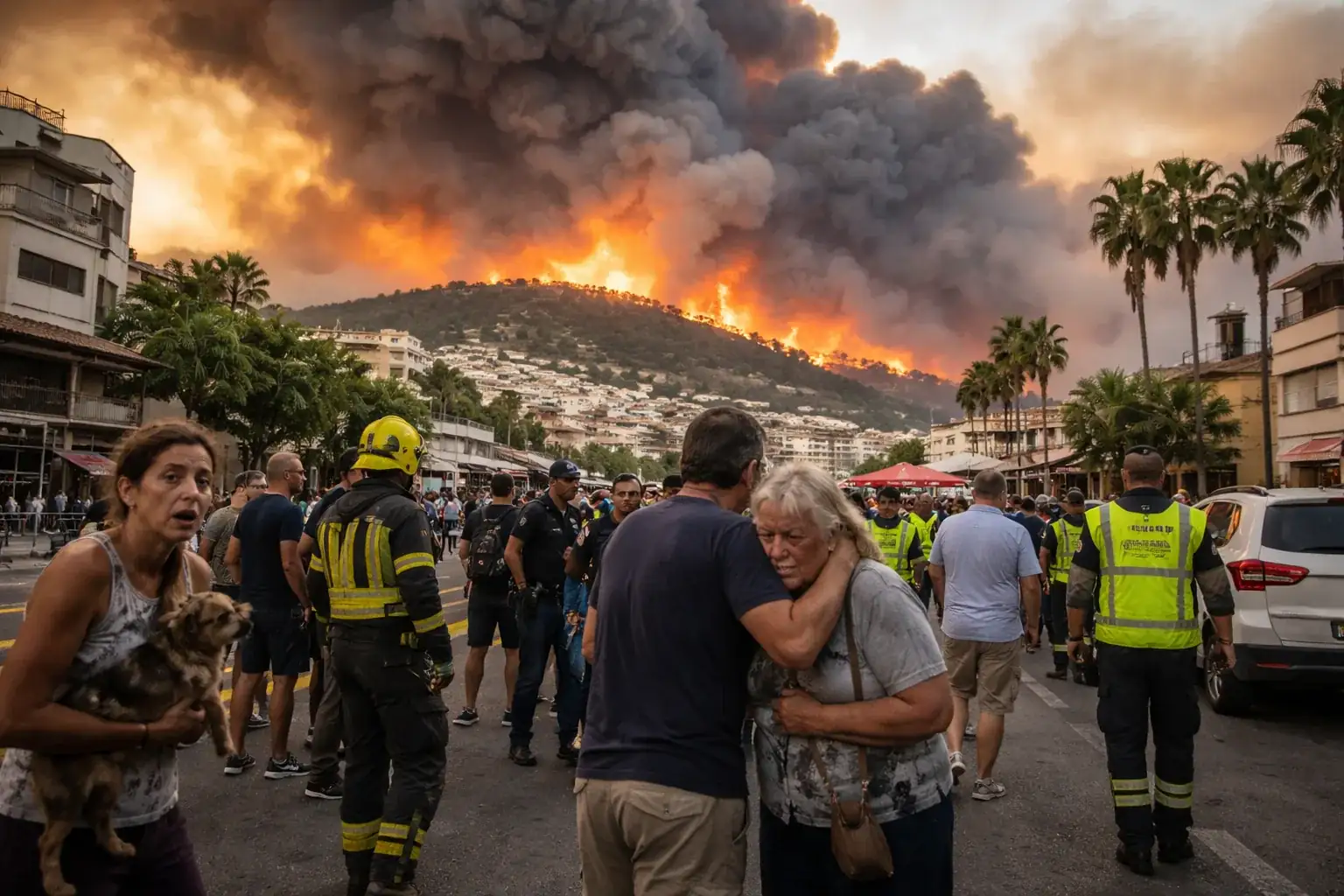
Emergency crews in southern Spain are struggling to contain a devastating wildfire that has claimed at least 12 lives in the Almería province. The fire, which surged through the Los Gallardos and Bedar areas on Thursday, was fueled by a punishing heatwave and high winds. Among the dead are at least four British nationals, though officials fear that number could rise as search operations continue for 23 people still reported missing. Hundreds of firefighters are currently deployed across the Andalusia region, focusing on pockets of flames that persist despite cooling temperatures. This disaster is being categorized as one of the deadliest wildfire events in Spanish history, overwhelming local resources and prompting urgent evacuations in several municipalities across the south east.
What's new in this update
Recent updates from Andalusian health and emergency minister Antonio Sanz suggest that the majority of the victims may be foreign nationals. Along with the four confirmed British fatalities, Belgian authorities are working to locate several of their citizens who own property in the affected region. The newest confirmed developments include the discovery of a burnt-out vehicle near Bedar containing four bodies; the car's right-hand steering wheel indicates the occupants were likely of British origin. Additionally, the national weather agency AEMET has provided a cautiously optimistic forecast for Saturday, predicting moderate winds and cooler air that may finally give fire crews the upper hand in containing the perimeter. However, the immediate priority remains the search for nearly two dozen individuals who disappeared as the blaze advanced.
Key details
Witnesses described the fire's arrival as a sudden and violent event, with some comparing the massive smoke plumes to a mushroom cloud from a bomb. The blaze moved with unbelievable speed through the parched landscape, cutting off escape routes for residents in rural areas. While local officials initially attributed the fire to a fallen power line near Los Gallardos, regional electricity companies have disputed this claim, leaving the official cause under investigation. The complexity of the fire was exacerbated by record-breaking temperatures reaching 40C, which have turned much of southern Europe into a tinderbox this summer. Survivors noted that some victims may have inadvertently moved toward the danger after failing to receive or follow recommended evacuation routes, highlighting the chaotic nature of the fast-moving front.
Background and context
This current crisis occurs against a backdrop of extreme weather across Europe, which is now the fastest-warming continent on the planet. This summer has seen France recording over 2,000 excess deaths due to heat, while Portugal and Greece have also battled significant forest fires. Historically, Spain has seen similar tragedies, such as the 1979 Lloret de Mar fire and the 1984 La Gomera disaster, but the frequency and intensity of these events are increasing. Scientists from the Copernicus climate service emphasize that climate change is driving twice the global average temperature increase in Europe, leading to more intense heatwaves and severe pressure on water supplies. These conditions create a dangerous environment where wildfires can spread beyond the control of conventional firefighting techniques.
What to watch next
Moving forward, the focus shifts to the identification of the 12 deceased and the high-stakes search for the 23 missing persons. Spanish authorities and the British Foreign Office have yet to release names, pending formal notification of kin and forensic confirmation. Consular services from multiple European nations are expected to arrive in Almería to assist families of foreign residents and holidaymakers. Investigators will also conduct a thorough forensic analysis of the electrical infrastructure to settle the dispute regarding the fire's origin. While cooler air is anticipated over the weekend, the long-term outlook for the region remains concerning as the heatwave continues to grip the Mediterranean basin. Public safety officials are likely to review emergency communication protocols to ensure evacuation orders reach isolated rural properties more effectively in the future.
Why it matters
This wildfire represents one of Spain's deadliest environmental disasters and highlights the increasing vulnerability of southern Europe to extreme heatwaves exacerbated by climate change.
Read next
Follow this story through the topic hub, more world coverage, and the latest updates.
Weekly briefing
Get the week's key developments in one concise email.
Get a fast catch-up on the biggest stories, the context behind them, and the links worth your time.
Cadence
Weekly, for a quick catch-up
Coverage
AI, business, world, security, sports
Format
Clear takeaways and useful context
Request the briefing
Leave your email to open a prepared request and get on the list for the weekly briefing.
About the byline
World correspondent
Leila Haddad covers world affairs, diplomacy, and humanitarian crises, with a focus on how fast-moving international developments affect public policy, conflict response, and cross-border institutions.
Sources and methodology