Family of Former Zambian President Lungu Wins Legal Battle to Bury
The Supreme Court of Appeal overturned a previous ruling that would have allowed the Zambian government to repatriate Lungu's remains against his family's

World correspondent
Reports on international affairs, diplomacy, and humanitarian developments with an emphasis on official statements, multilateral institutions, and regional context.
Editorial responsibility: Lead reviewer for geopolitics, international institutions, and crisis coverage
Primary source: BBC World News. Full source links and update notes are below.
Fast summary
Start here
- The South African Supreme Court of Appeal ruled that Edgar Lungu’s family has the right to bury him in South Africa, where he died in 2025.
- The decision overturns a previous High Court ruling that favored the Zambian government's request for repatriation and a state funeral.
- Judges cited Lungu's own wishes to avoid his successor, President Hakainde Hichilema, being present at his funeral.
What happened
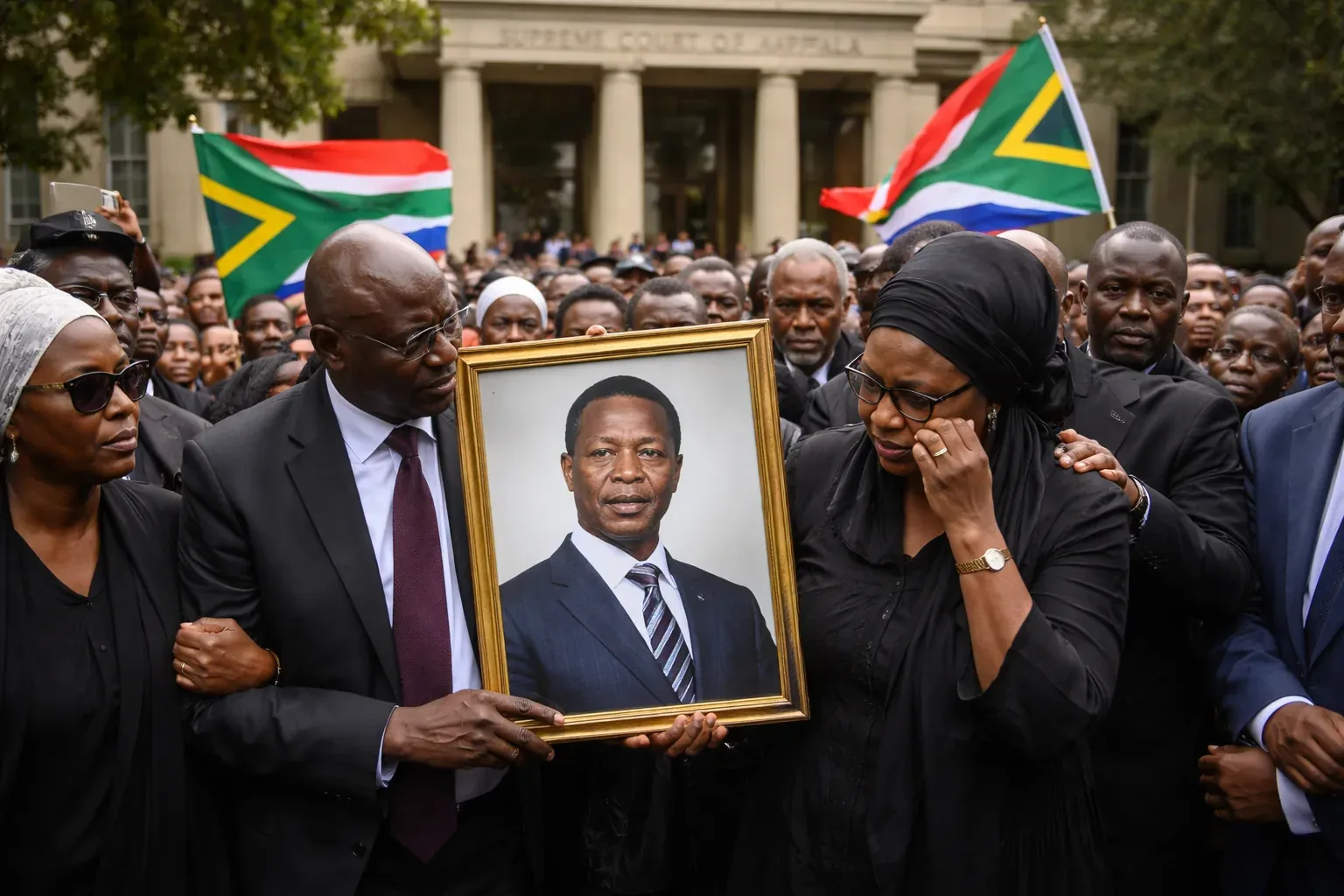
South Africa's Supreme Court of Appeal has ruled that former Zambian President Edgar Lungu can be buried in South Africa, siding with his family after a prolonged dispute over where his remains should be laid to rest. The judgment ends a year-long legal battle that drew in the Zambian government, the Lungu family, and South African courts, turning a funeral decision into a regional political and diplomatic story. At the center of the case was a basic question with major symbolic weight: whether the family had the final say, or whether the state could insist that a former president be returned to Zambia for burial.
What's new in this update
The appeal court overturned an earlier Pretoria High Court ruling that had backed the Zambian government's effort to repatriate Lungu's body. That reversal matters because it establishes that the family's position, and the late president's stated wishes, outranked the state's argument for an official burial in Lusaka. After the judgment, Zambian authorities said they disagreed with the outcome but would not continue pursuing the matter, effectively bringing the legal fight to a close.
The ruling also underscored how far the dispute had escalated. What should have been a private mourning process became a cross-border court fight shaped by party rivalry, questions of dignity, and disagreements over who had the moral right to represent Lungu's final wishes.
Key details
Edgar Lungu died in Pretoria at age 68 after an undisclosed illness. Court filings indicated that he did not want President Hakainde Hichilema present at his funeral and believed he would not receive a dignified send-off if the current administration controlled the ceremony. That claim became central to the family's case. Relatives argued that Lungu's personal wishes had to be respected even though he had served as Zambia's head of state.
The Zambian government took the opposite view. It argued that a former president belonged in a national burial framework and that the country had a legitimate interest in hosting official funeral rites. But the appeal court accepted that public office does not automatically cancel personal autonomy after death, especially when the deceased's family is aligned on the issue and can show that clear preferences existed.
Background and context
Lungu served as Zambia's president from 2015 to 2021. During those years, he repeatedly clashed with Hichilema, who was then the opposition leader. When Hichilema defeated him in the 2021 election, the rivalry did not fade. Instead, it remained one of the defining tensions in Zambian politics, shaping how supporters of both men interpreted later events.
That history explains why the burial issue became so combustible. To Lungu's family and allies in the Patriotic Front, the case was not only about funeral arrangements. It was also about mistrust of the current government and concern that a state-managed ceremony would be politically loaded. To the government, however, repatriation could be presented as a matter of national protocol, continuity, and respect for a former leader.
The dispute created visible confusion inside Zambia. Competing mourning periods, rival condolence arrangements, and conflicting public messages left many citizens watching a funeral process split between family authority and state authority. South African judges were then left to decide a case that carried emotional, constitutional, and diplomatic consequences well beyond the burial itself.
What to watch next
With the legal challenge resolved, the family is now expected to move ahead with a private burial in South Africa. That means Lungu's final resting place will remain outside Zambia, a result that is unusual for a former president and likely to remain politically sensitive.
The next issue is whether the ruling lowers the temperature between the Hichilema administration and the Patriotic Front or simply closes one chapter in a deeper feud. Lungu's supporters are likely to treat the decision as vindication. Government supporters may continue to argue that a former president should have been buried at home. Even so, the court has now set a clear endpoint: the family's legal rights prevailed, and the Zambian state has chosen not to push the matter further.
Why it matters
The ruling concludes a bitter legal and political standoff that highlights the deep-seated rivalry between Zambia's current and former administrations.
Read next
Follow this story through the topic hub, more world coverage, and the latest updates.
Weekly briefing
Get the week's key developments in one concise email.
Get a fast catch-up on the biggest stories, the context behind them, and the links worth your time.
Cadence
Weekly, for a quick catch-up
Coverage
AI, business, world, security, sports
Format
Clear takeaways and useful context
Request the briefing
Leave your email to open a prepared request and get on the list for the weekly briefing.
About the byline
World correspondent
Leila Haddad covers world affairs, diplomacy, and humanitarian crises, with a focus on how fast-moving international developments affect public policy, conflict response, and cross-border institutions.
Sources and methodology