Somali Referee Omar Artan Dropped from World Cup After U.S. Entry
FIFA has confirmed that the 2025 CAF Referee of the Year will miss the tournament after being barred at Miami International Airport.

World correspondent
Reports on international affairs, diplomacy, and humanitarian developments with an emphasis on official statements, multilateral institutions, and regional context.
Editorial responsibility: Lead reviewer for geopolitics, international institutions, and crisis coverage
Primary source: BBC World News. Full source links and update notes are below.
Fast summary
Start here
- Omar Artan was denied entry at Miami International Airport and subsequently repatriated to Turkey.
- FIFA confirmed Artan is officially unable to officiate the 2026 World Cup due to the host country's immigration decision.
- US officials cited undisclosed derogatory information for the denial, despite Artan traveling with a diplomatic passport.
What happened
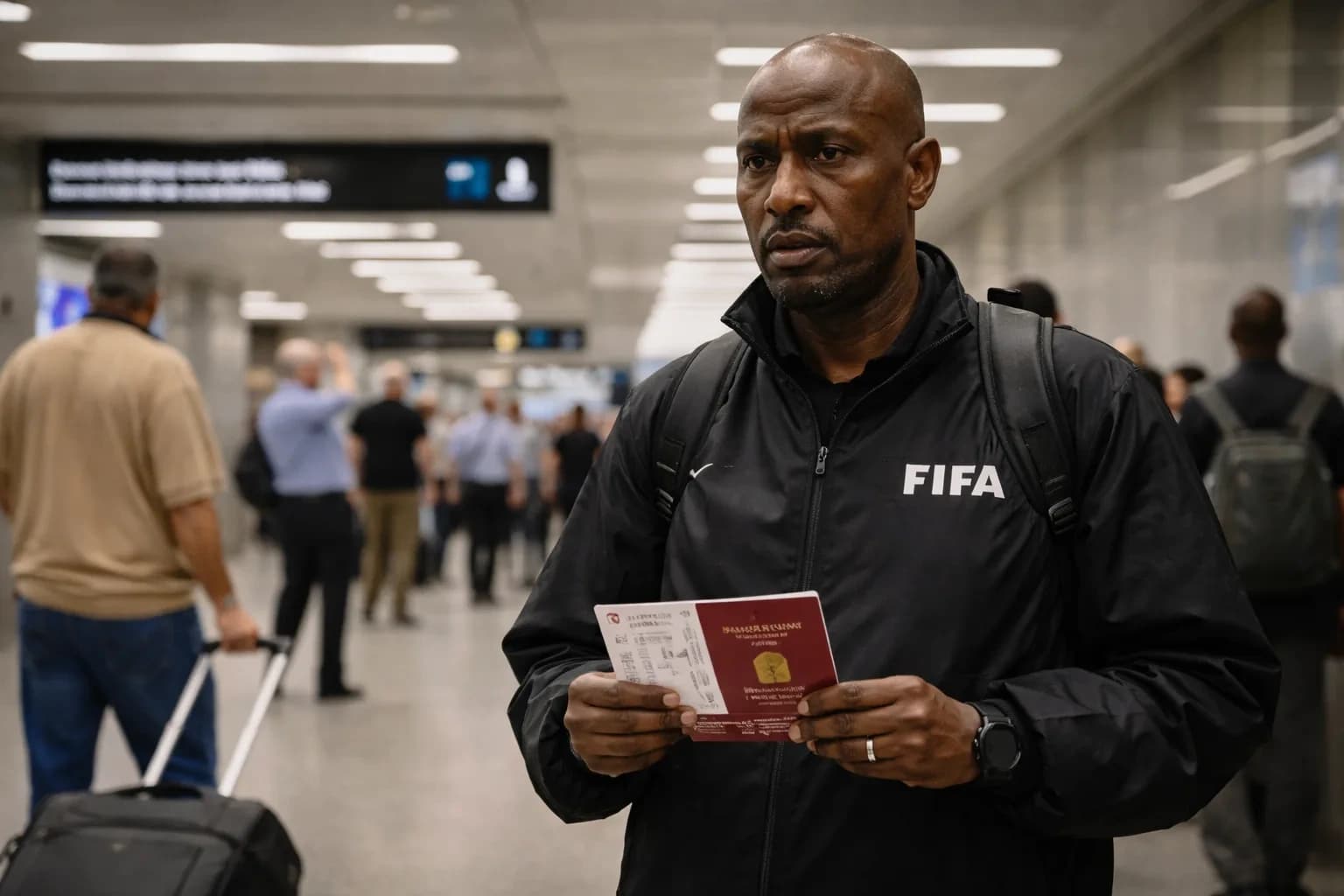
Somali referee Omar Artan has been barred from entering the United States and, as a result, will miss the 2026 World Cup despite being selected to officiate at the tournament. FIFA has confirmed that the immigration decision effectively removes him from participation, turning what should have been a career milestone into a high-profile collision between global sport and host-country border authority.
That is why the Omar Artan World Cup story matters. It is not just a visa problem. It is a test of how credible international tournament access can be when one host nation's immigration rules override FIFA's sporting selections.
Why Omar Artan's exclusion is so significant
Artan was not a marginal figure unexpectedly seeking entry. He was a recognized referee, a FIFA-listed official, and a representative of a country that saw his appointment as a major achievement. For Somalia and for African football more broadly, the idea of a Somali referee reaching the World Cup carried symbolic importance well beyond one officiating slot.
That is what makes the exclusion so damaging. It removes not just an individual official, but a broader moment of sporting representation.
Why the U.S. entry denial matters beyond one person
World Cups depend on the assumption that qualified participants, not just teams but referees, staff, media, and support personnel, can enter host countries under workable tournament arrangements. If a selected referee can be barred despite valid travel documentation, it raises uncomfortable questions about whether FIFA's authority over tournament operations can actually guarantee participation across politically sensitive nationalities.
This matters because the 2026 World Cup is a multinational event. If access uncertainty grows, the issue may not stop with one referee.
The travel-ban and immigration-policy issue
The reported role of U.S. immigration policy is central here. The Omar Artan case highlights how travel restrictions, security screening, and undisclosed derogatory information can override the expectations of international sports governance. Even if host governments insist they are acting within sovereign legal authority, the practical effect is that sporting merit becomes conditional on border discretion.
That tension is especially sharp when participants come from countries already affected by travel restrictions or heightened security scrutiny.
Why FIFA looks constrained
FIFA can choose referees, structure tournaments, and negotiate with host governments, but it does not control sovereign immigration systems. The Omar Artan case exposes that limit very clearly. Once a host state denies entry, FIFA's options are narrow unless it has already secured stronger guarantees in advance.
That creates a reputational problem. Fans and federations may ask whether World Cup participation is truly global if access can be blocked after selection by forces outside the sport.
Why the symbolic impact is large
Referees are often overlooked compared with players, but their inclusion matters deeply to national representation in elite tournaments. For a Somali official to be denied entry after reaching this level can be read as a personal injustice, but also as a sign that certain nationalities remain more vulnerable to exclusion even in supposedly universal sporting spaces.
That is what gives this story broader emotional and political force. It touches fairness, recognition, and the meaning of global competition itself.
What this means for the 2026 World Cup
The 2026 World Cup will already face logistical complexity because it spans the United States, Canada, and Mexico. The Omar Artan exclusion now adds another type of concern: whether entry barriers could affect not just supporters, but tournament personnel. If so, FIFA and the host governments may need to answer more detailed questions about guarantees, exemptions, and contingency plans.
This issue could become especially sensitive if additional cases emerge involving players, officials, or staff from restricted or politically scrutinized countries.
What comes next
The next questions are whether Somali football authorities receive fuller explanations, whether FIFA pushes privately for stronger access assurances in future cases, and whether the incident triggers wider review of World Cup immigration coordination. Artan's tournament opportunity is already gone, but the policy implications remain open.
For now, Omar Artan being barred from U.S. entry ahead of the 2026 World Cup stands as a stark reminder that in global sport, qualification is not always enough. Selection by FIFA can still be undone by the political and legal power of a host nation's border system.
Why it matters
The incident highlights the collision between international sporting governance and host-nation immigration policies, specifically regarding participants from countries under travel bans.
Read next
Follow this story through the topic hub, more world coverage, and the latest updates.
Weekly briefing
Get the week's key developments in one concise email.
Get a fast catch-up on the biggest stories, the context behind them, and the links worth your time.
Cadence
Weekly, for a quick catch-up
Coverage
AI, business, world, security, sports
Format
Clear takeaways and useful context
Request the briefing
Leave your email to open a prepared request and get on the list for the weekly briefing.
About the byline
World correspondent
Leila Haddad covers world affairs, diplomacy, and humanitarian crises, with a focus on how fast-moving international developments affect public policy, conflict response, and cross-border institutions.
Sources and methodology