Global Football Fans Denounce 'Segregation' in US World Cup Visa Process
Stricter immigration policies and suspended consular services are preventing supporters from qualifying nations like Iraq and Ivory Coast from attending the tournament.
Primary source: BBC World News. Full source links, newsroom standards, and correction details are below.
Fast summary
Start here
- Analysis of travel data shows fans from more than 25% of qualifying countries face travel bans, tighter restrictions, or high rejection rates.
- US consular services in Iraq have been suspended due to regional security concerns, forcing fans to seek interviews in neighboring countries.
- Specific bans affect citizens of Haiti, Iran, Senegal, and Ivory Coast, preventing them from obtaining standard visitor visas.
What happened
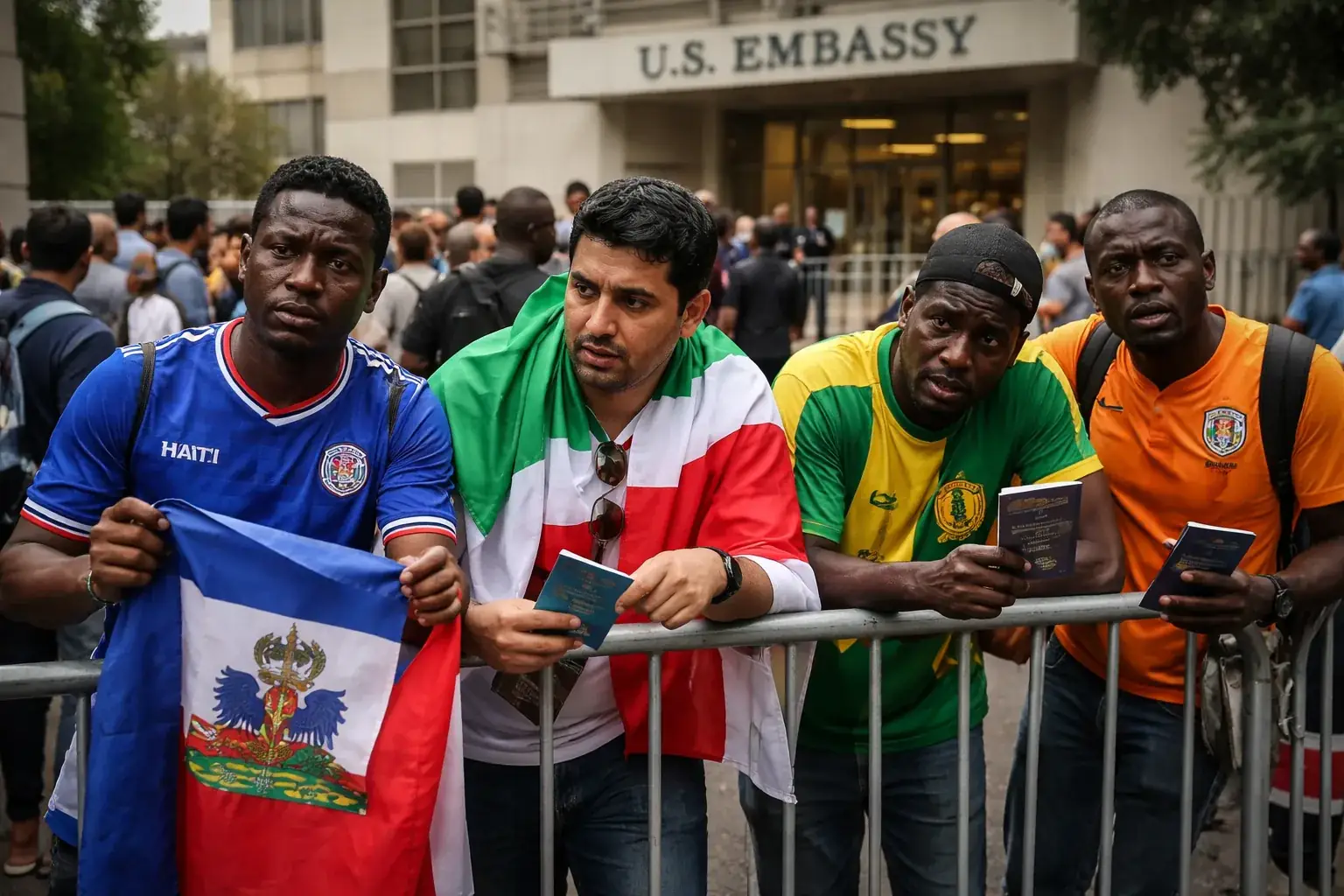
Fans from several countries that qualified for the upcoming World Cup in the United States are expressing outrage over restrictive visa policies and travel bans that are preventing them from attending matches. Analysis of travel data conducted by the BBC World Service shows that fans from more than a quarter of the participating nations are currently facing significant hurdles to entry, ranging from high visa rejection rates to outright bans.
What's new in this update
New reports highlight the specific impact of suspended consular services and the re-implementation of travel restrictions. For example, Iraqi fans have been unable to secure visas because the US suspended routine consular services in Iraq following regional security concerns, requiring them to attend in-person interviews in other countries where they are often turned away for not being residents. Additionally, Haiti, Iran, Senegal, and Ivory Coast remain on restricted lists that bar their citizens from receiving typical visitor visas.
Key details
The financial and logistical barriers are substantial; a visitor visa application costs $185 and requires an in-person interview, whereas citizens of 42 mostly European and wealthier nations can use the $40 online Electronic System for Travel Authorization (Esta). Fans from Africa and the Middle East are disproportionately excluded from the visa waiver program, leading to accusations of systemic bias in how supporters are treated based on their nationality.
Background and context
The current difficulties are rooted in strict immigration policies and a clampdown on undocumented migration that have been central to the current US political landscape. For nations like Iraq, which has only qualified for the World Cup once before in 1986, the inability to attend represents a lost historic opportunity. Ivory Coast's fan association, the National Committee for the Support of the Elephants, has described the current restrictions as a form of segregation that unfairly targets African nations.
What to watch next
Critics and fan associations are calling for a reassessment of how FIFA selects host nations, suggesting that countries unable to welcome all qualifying supporters should not be allowed to host. The US State Department's ability to process a surge of international applications and potentially reopen consular services in affected regions will be a critical factor in determining the diversity of the crowd at the tournament.
Why it matters
The controversy raises questions about the inclusivity of global sporting events and whether hosting rights should be contingent on equitable visa access for all qualifying nations.
Read next
Follow this story through the topic hub, more world coverage, and the latest updates.
Weekly briefing
Get the week's key developments in one concise email.
Get a fast catch-up on the biggest stories, the context behind them, and the links worth your time.
Cadence
Weekly, for a quick catch-up
Coverage
AI, business, world, security, sports
Format
Clear takeaways and useful context
Request the briefing
Leave your email to open a prepared request and get on the list for the weekly briefing.
Author

The Northstar Herald editorial desk assembles wire-driven and source-linked coverage, verifies core facts against published materials, and updates stories as new reporting becomes available.
Sources and methodology