Three Red Cross Volunteers Die as WHO Raises Ebola Risk to 'Very High' in DR Congo
The fatalities occurred in the eastern Ituri region, where the rare Bundibugyo strain of the virus has spread to hundreds of people.
Primary source: BBC World News. Full source links, newsroom standards, and correction details are below.
Fast summary
Start here
- Three Red Cross volunteers died in Mongwalu after likely contracting Ebola while managing deceased victims.
- The World Health Organization has upgraded the health risk in the Democratic Republic of Congo from high to very high.
- Commercial and private flights to Bunia have been suspended to curb the cross-border spread of the virus.
What happened
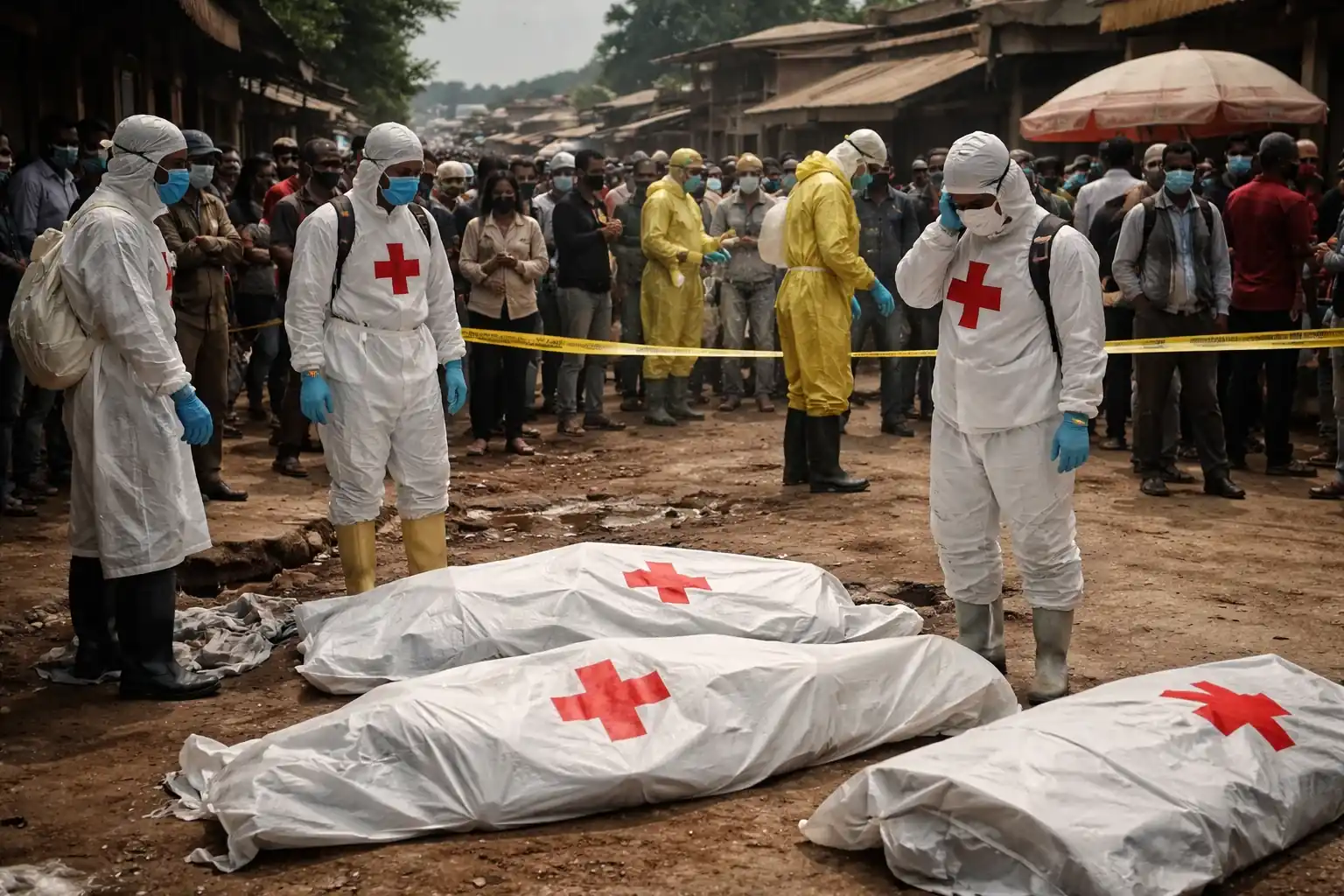
Three volunteers for the International Federation of Red Cross and Red Crescent Societies (IFRC) have died in the Democratic Republic of Congo from suspected Ebola. The victims, identified as Alikana Udumusi Augustin, Sezabo Katanabo, and Ajiko Chandiru Viviane, were working in the eastern town of Mongwalu. They are believed to have been infected on March 27 while handling bodies during a project unrelated to the virus, occurring before the current outbreak was officially identified. They passed away between May 5 and May 16.
What's new in this update
Following the deaths and the continued rise in cases, the World Health Organization (WHO) has raised the public health risk in DR Congo to "very high." Additionally, the Congolese transport ministry announced the suspension of all commercial and private flights to and from Bunia, the capital of Ituri province, to prevent further transmission. Emergency medical and humanitarian flights now require special authorization from both aviation and health authorities.
Key details
The current outbreak involves the Bundibugyo species of Ebola, a rare strain for which there is no proven vaccine. The virus currently has a mortality rate of approximately one-third among those infected in this region. To date, there have been more than 170 suspected deaths and 750 suspected cases. Health experts warn that the bodies of those who succumb to the virus remain highly infectious, making safe burial protocols essential but difficult to implement.
Background and context
Containment efforts are facing significant hurdles due to local insecurity and community resistance. Parts of the North and South Kivu regions are currently controlled by the M23 rebel group, limiting the reach of health workers. Trust remains a critical issue; recently, a medical tent was burned in Mongwalu, and a hospital in Ituri was attacked by a crowd after families were prevented from taking a body for traditional burial. The Africa Centres for Disease Control has warned ten other countries on the continent, including Rwanda and South Sudan, of potential risk.
What to watch next
Regional containment is the immediate priority as neighbor Uganda has confirmed its total number of infections has reached five. Health organizations are focusing on sustained community engagement to rebuild trust, which is viewed as vital for effective contact tracing and safe burials. Observers are also monitoring whether the flight bans and travel restrictions will successfully prevent the virus from spreading to more densely populated urban centers.
Why this matters
The deaths of front-line workers and the spread into Uganda highlight the difficulty of containing a high-mortality virus in a region complicated by active conflict and community mistrust.
Reader context
This story belongs to Northstar Herald's International Relations and Human Rights coverage, with related entities including Ebola, Democratic Republic of Congo, Red Cross, Public Health. The report is based on BBC World News source material.
Related coverage
Why it matters
The deaths of front-line workers and the spread into Uganda highlight the difficulty of containing a high-mortality virus in a region complicated by active conflict and community mistrust.
Read next
Follow this story through the topic hub, more world coverage, and the latest updates.
Weekly briefing
Get the week's key developments in one concise email.
Get a fast catch-up on the biggest stories, the context behind them, and the links worth your time.
Cadence
Weekly, for a quick catch-up
Coverage
AI, business, world, security, sports
Format
Clear takeaways and useful context
Request the briefing
Leave your email to open a prepared request and get on the list for the weekly briefing.
Author

The world desk follows geopolitics, humanitarian crises, diplomacy, and major international developments with an emphasis on fast updates and public-interest context.
Sources and methodology