WHO Escalates Ebola Risk to 'Very High' in DR Congo as Vaccine Research Accelerates
Health officials cite regional spread and the lack of a proven vaccine for the rare Bundibugyo strain as key factors in the heightened risk assessment.
Primary source: BBC World News. Full source links, newsroom standards, and correction details are below.
Fast summary
Start here
- The WHO raised the national risk level in DR Congo to 'very high' and the regional risk to 'high'.
- A rare Ebola species known as Bundibugyo has caused 177 suspected deaths and 750 suspected cases.
- Insecurity and local violence, including an attack on a hospital in Ituri, are hampering containment efforts.
What happened
The World Health Organization (WHO) has elevated the public health risk from the current Ebola outbreak in the Democratic Republic of Congo (DRC) from 'high' to 'very high'. WHO Director-General Dr. Tedros Adhanom Ghebreyesus announced the change on Friday, emphasizing that while the global risk remains low, the regional threat in Africa is now considered 'high'. The outbreak is driven by the Bundibugyo species of Ebola, a rare strain for which there is currently no proven vaccine.
What's new in this update
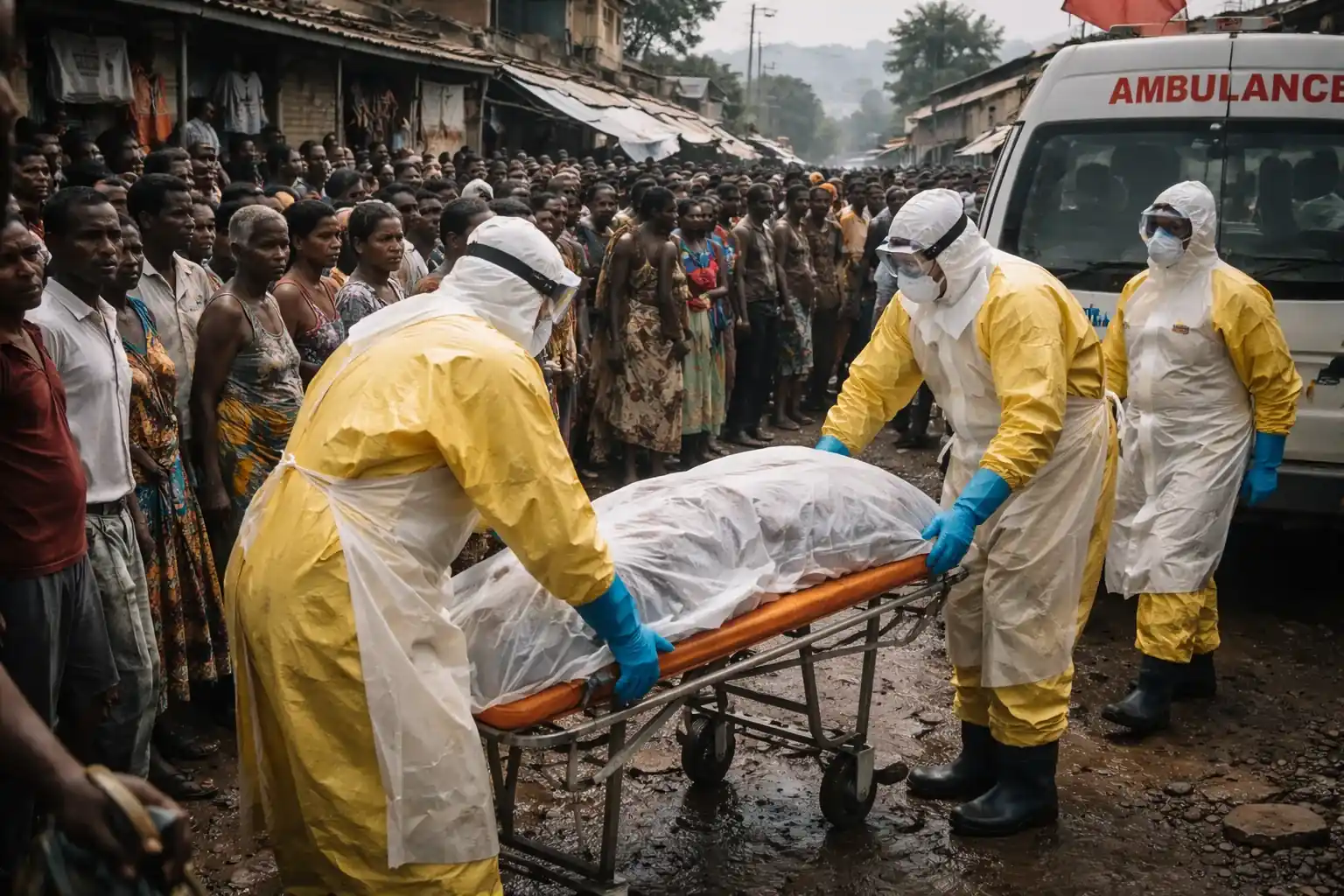
Confirmed cases in the DRC have risen to 82, with seven confirmed deaths, though total suspected cases have reached approximately 750. In neighboring Uganda, two cases have been confirmed, both involving individuals who traveled from the DRC. Dr. Tedros also highlighted that civil unrest is directly impacting the medical response, citing an incident where relatives set fire to tents at Rwampara General Hospital in Ituri province after health workers followed safety protocols regarding a deceased patient.
Key details
The Bundibugyo strain kills approximately one-third of those infected. Unlike the more common Zaire species, there are fewer medical tools available to combat it. Scientists at Oxford University are currently fast-tracking a new vaccine based on technology used for the AstraZeneca Covid-19 vaccine. Animal testing is already underway in Oxford, and the Serum Institute of India is prepared to begin mass production once medical-grade material is finalized. Clinical trials could potentially begin within two to three months.
Background and context
Ebola viruses typically originate in animals, such as fruit bats, and spread to humans through the handling or consumption of infected meat. The WHO recently declared the situation a public health emergency of international concern (PHEIC). This specific outbreak is centered in eastern DRC, a region long plagued by rebel activity and insecurity. The difficulty of ensuring safe burials—which are critical to stopping transmission from highly infectious bodies—has previously led to friction between health authorities and local communities.
What to watch next
The immediate focus remains on containing the spread in Ituri province and stabilizing the situation in Uganda. Researchers are tracking the progress of two experimental vaccines; the Oxford-led project is on a two-to-three-month timeline, while a separate candidate is expected to take six to nine months to reach testing stages. International health officials are also working to build community trust to prevent further violence against medical facilities and staff.
Why this matters
The lack of an existing vaccine for the Bundibugyo strain makes this outbreak particularly difficult to manage, especially within a conflict-affected region.
Reader context
This story belongs to Northstar Herald's International Relations coverage, with related entities including Ebola outbreak, WHO, DR Congo, Bundibugyo strain. The report is based on BBC World News source material.
Related coverage
Why it matters
The lack of an existing vaccine for the Bundibugyo strain makes this outbreak particularly difficult to manage, especially within a conflict-affected region.
Read next
Follow this story through the topic hub, more world coverage, and the latest updates.
Weekly briefing
Get the week's key developments in one concise email.
Get a fast catch-up on the biggest stories, the context behind them, and the links worth your time.
Cadence
Weekly, for a quick catch-up
Coverage
AI, business, world, security, sports
Format
Clear takeaways and useful context
Request the briefing
Leave your email to open a prepared request and get on the list for the weekly briefing.
Author

The world desk follows geopolitics, humanitarian crises, diplomacy, and major international developments with an emphasis on fast updates and public-interest context.
Sources and methodology