Senior Humanitarian Official Warns of Massive Resource Gaps in DR Congo Ebola Response
Kate White of Médecins Sans Frontières highlights difficulties in tracking transmission chains and securing logistics for a rare Ebola strain without an approved vaccine.
Primary source: BBC World News. Full source links and update notes are below.
Fast summary
Start here
- The Ebola outbreak in the Democratic Republic of Congo has caused more than 200 suspected deaths and over 850 suspected cases.
- A rare species of the virus is involved, for which there are currently no approved vaccines or targeted drug treatments available.
- International aid efforts face significant hurdles including logistical delays, conflict zones, and poorly understood chains of transmission.
What happened
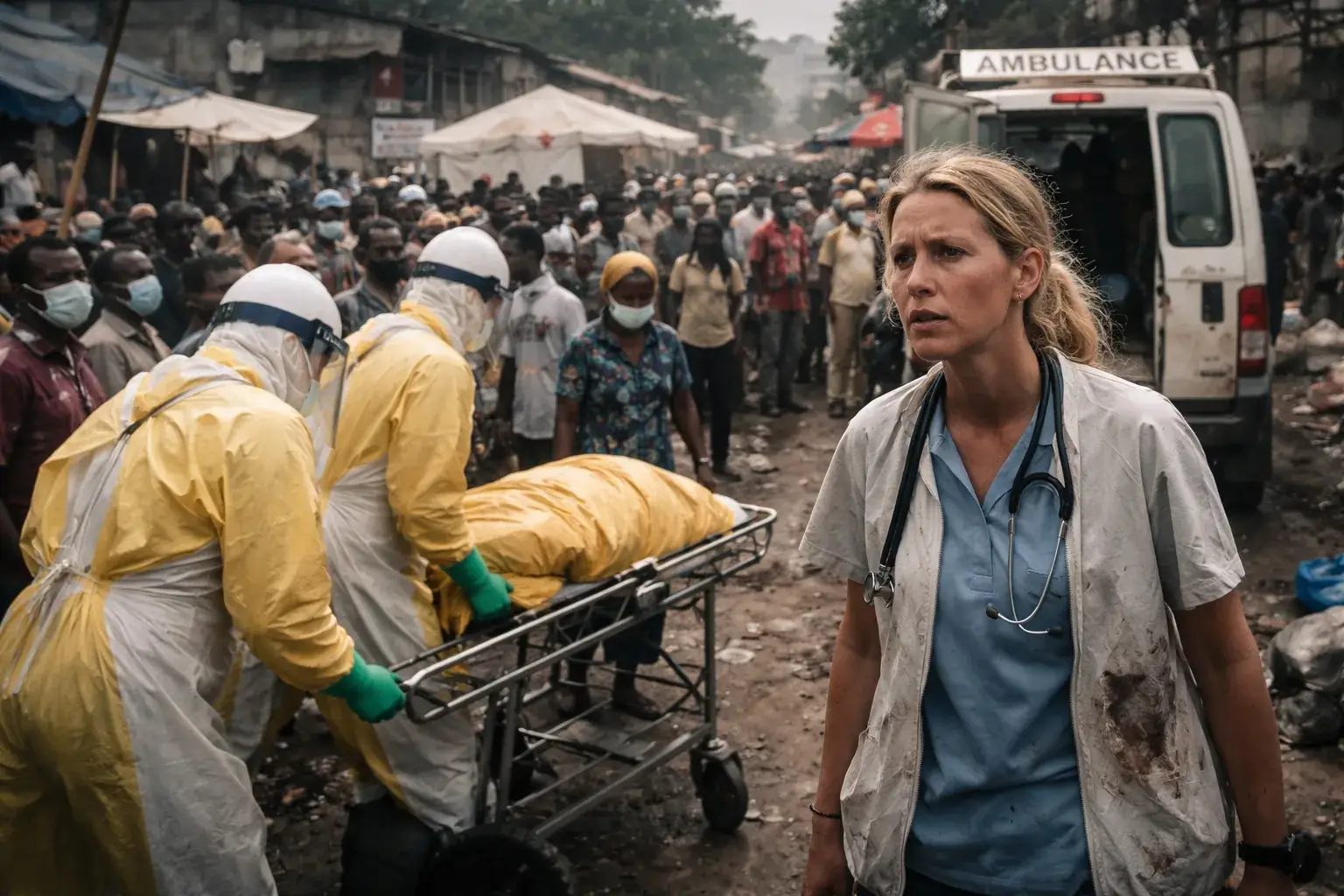
Kate White, a programme manager for Médecins Sans Frontières (MSF), has deployed to the Democratic Republic of Congo to support international relief efforts against a worsening Ebola outbreak. The crisis has already resulted in more than 200 suspected deaths and affected over 850 people as medical teams struggle to scale their response.
What's new in this update
Humanitarian workers are raising alarms over the inability to get vital resources to the affected regions due to closing airspace and logistical bottlenecks. This specific outbreak is particularly challenging because it involves a rare species of Ebola that lacks standard medical countermeasures, such as rapid diagnostic testing or approved vaccines, making it significantly harder to treat and contain than previous epidemics.
Key details
The World Health Organization (WHO) recently elevated the status of the outbreak to a public health emergency of international concern. Three Red Cross volunteers are among the early victims, likely infected while managing deceased bodies. Health workers are currently prioritizing temperature monitoring at transit points to identify symptoms which often mimic flu or malaria, such as fever, headache, and tiredness, before progressing to organ failure.
Background and context
The current outbreak is centered in an area already destabilized by conflict, which complicates the movement of healthcare workers and the delivery of supplies. Unlike many historical outbreaks that remained contained in remote rural areas, increasing urbanization is pushing larger populations closer to natural virus reservoirs, raising the risk of rapid transmission in densely populated zones.
What to watch next
Medical teams are working to improve the speed of case confirmation across all impacted geographic areas to allow for the rapid discharge of recovered patients. A critical priority remains the mapping of transmission chains, which White noted were not fully understood because the outbreak had been occurring for a substantive period before it was officially detected.
Why this matters
The World Health Organization has declared this a public health emergency of international concern, signaling a high risk of transborder spread if containment fails.
Reader context
This story belongs to Northstar Herald's International Relations and Human Rights coverage, with related entities including Ebola, DR Congo, Médecins Sans Frontières, World Health Organization. The report is based on BBC World News source material.
Related coverage
Why it matters
The World Health Organization has declared this a public health emergency of international concern, signaling a high risk of transborder spread if containment fails.
Read next
Follow this story through the topic hub, more world coverage, and the latest updates.
Weekly briefing
Get the week's key developments in one concise email.
Get a fast catch-up on the biggest stories, the context behind them, and the links worth your time.
Cadence
Weekly, for a quick catch-up
Coverage
AI, business, world, security, sports
Format
Clear takeaways and useful context
Request the briefing
Leave your email to open a prepared request and get on the list for the weekly briefing.
Author
See who assembled this story and follow more of their work.
Sources and methodology