Gas Explosion at Qatar's Barzan Facility Kills 13 and Injures Dozens
A technical accident at the world's largest gas processing site has claimed the lives of migrant workers during a facility restart.

World correspondent
Reports on international affairs, diplomacy, and humanitarian developments with an emphasis on official statements, multilateral institutions, and regional context.
Editorial responsibility: Lead reviewer for geopolitics, international institutions, and crisis coverage
Primary source: BBC World News. Full source links and update notes are below.
Fast summary
Start here
- At least 13 people were killed and 66 injured in an explosion at the Barzan local gas supply facility.
- Qatari Energy Minister Saad Sherida al-Kaabi stated the blast was a technical accident and not sabotage.
- The victims were identified as nationals from India and Pakistan, prompting diplomatic outreach from the Indian Embassy.
What happened
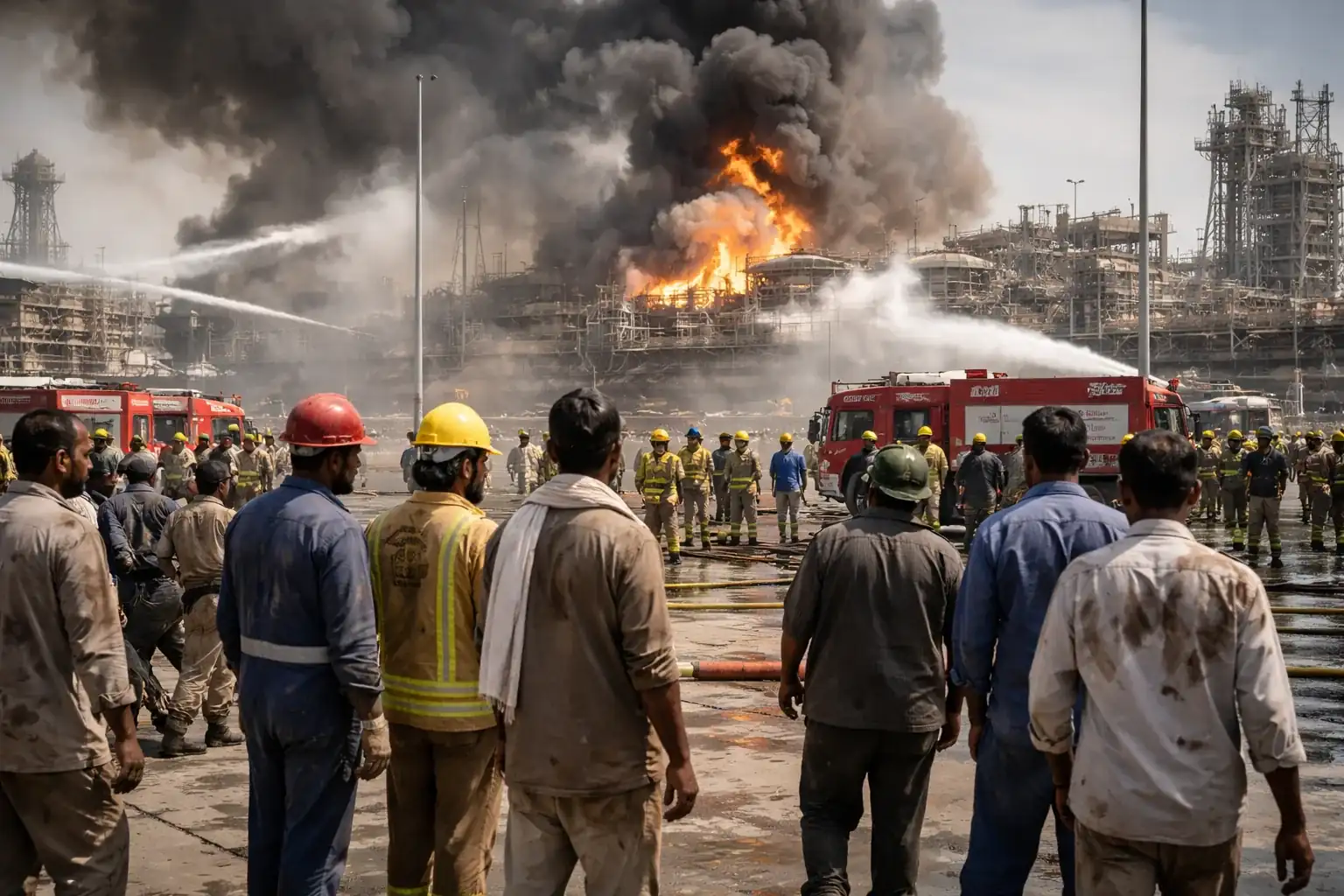
At least 13 workers were killed and 66 others injured after an explosion at Qatar's Barzan gas facility in the Ras Laffan industrial zone, one of the most important energy hubs in the world. Officials said the blast was the result of a technical accident rather than sabotage, and it occurred as the facility was being brought back into operation following an extended maintenance shutdown.
The Qatar gas explosion matters for two reasons at once. First, it is a deadly industrial accident that hit a workforce made up in part of migrant laborers from India and Pakistan. Second, it occurred inside infrastructure tied to global LNG supply, meaning the event immediately raised questions about energy continuity, repair timelines, and safety standards at a strategically vital site.
Why Ras Laffan is so important
Ras Laffan is not just another industrial complex. It is a central node in Qatar's gas-processing and export system, and Qatar remains one of the world's most important LNG suppliers. When something goes wrong there, the implications extend well beyond the immediate blast zone. Traders, governments, energy buyers, and regional observers all start asking whether the incident will affect output, shipping, and confidence in facility resilience.
That is why official messaging moved quickly to frame the explosion as contained and non-sabotage-related. In energy markets, uncertainty can matter almost as much as physical damage. Even before full technical assessments are public, governments often try to reassure partners that essential export capability remains stable.
The human cost is central
It would be a mistake to treat this only as an infrastructure story. The known death toll and injuries make clear that workers bore the immediate burden of the disaster. Reports identifying victims from India and Pakistan also underscore the central role migrant labor plays in Gulf industrial economies. These workers are indispensable to construction, maintenance, and heavy operations, yet they are often the people most exposed when technical failures happen during high-risk restart or maintenance phases.
That is one reason the Qatar industrial accident will likely draw scrutiny beyond the official cause. Fatal workplace events in energy systems always reopen questions about staffing conditions, procedural discipline, restart protocols, and whether the people on site had adequate protection during a dangerous transition point.
Why restart phases are risky
Industrial facilities are often at heightened risk when they restart after maintenance. Systems have to be repressurized, tested, and synchronized. Equipment that has been offline returns to load-bearing operation, and even small technical failures can escalate quickly in environments involving gas, pressure, and heat. That does not prove negligence, but it does explain why investigators will likely focus closely on sequence, timing, and procedural controls.
This matters because a restart accident is different from a random operational glitch. It suggests the danger may have been tied to a moment that operators already recognized as sensitive.
Broader regional and market context
Ras Laffan has faced broader strategic attention because Gulf energy infrastructure sits inside a region shaped by conflict risk, shipping anxiety, and periodic military escalation. Even though officials said the Barzan blast was not sabotage, the regional background makes every major industrial incident instantly more sensitive. Markets want to know whether they are seeing a technical failure, a security problem, or both.
Qatar has also sought to reassure partners that the explosion will not materially alter the country's export role. Whether that reassurance holds will depend on the extent of physical damage, the pace of repair, and how much capacity the affected facility contributes relative to the wider system.
What to watch next
The next crucial developments are the formal findings of the accident investigation, updates on the injured workers, and any revised guidance on production recovery. Watch also for whether India and Pakistan seek fuller accountability or support measures for affected families, and whether Qatar announces any operational safety review across similar gas assets.
Why this matters
The Qatar gas explosion matters because it combines a severe human tragedy with strategic industrial risk. It has exposed the fragility that can exist inside even world-class energy infrastructure and has again highlighted how heavily the global system depends on migrant labor working inside high-consequence environments.
Reader context
This story belongs to Northstar Herald's world coverage, with related entities including Qatar, Ras Laffan, LNG, Energy Industry. The report is based on BBC World News source material.
Related coverage
Why it matters
As a primary global supplier of LNG, any disruption to Qatar's infrastructure impacts international energy security and highlights safety risks for its vital migrant workforce.
Read next
Follow this story through the topic hub, more world coverage, and the latest updates.
Weekly briefing
Get the week's key developments in one concise email.
Get a fast catch-up on the biggest stories, the context behind them, and the links worth your time.
Cadence
Weekly, for a quick catch-up
Coverage
AI, business, world, security, sports
Format
Clear takeaways and useful context
Request the briefing
Leave your email to open a prepared request and get on the list for the weekly briefing.
About the byline
World correspondent
Leila Haddad covers world affairs, diplomacy, and humanitarian crises, with a focus on how fast-moving international developments affect public policy, conflict response, and cross-border institutions.
Sources and methodology