Donald Tusk Signals Critical Period Ahead for Poland Amid Russian
Polish Prime Minister Donald Tusk warns that the upcoming months may define regional security as reports emerge of Russian plans to test NATO's Article 5

World correspondent
Reports on international affairs, diplomacy, and humanitarian developments with an emphasis on official statements, multilateral institutions, and regional context.
Editorial responsibility: Lead reviewer for geopolitics, international institutions, and crisis coverage
Primary source: BBC World News. Full source links and update notes are below.
Fast summary
Start here
- U.S. intelligence reportedly alerted Poland to a potential armed provocation by Moscow designed to test the alliance's defensive resolve and collective security commitments.
- Prime Minister Donald Tusk described the coming months as "critical" due to the shifting nature of the war in Ukraine and increased hybrid threats across the Baltic region.
- Intelligence suggests Russian aims include forcing Western allies to suspend aid to Ukraine through infrastructure strikes, drone incursions, or direct border provocations.
What happened
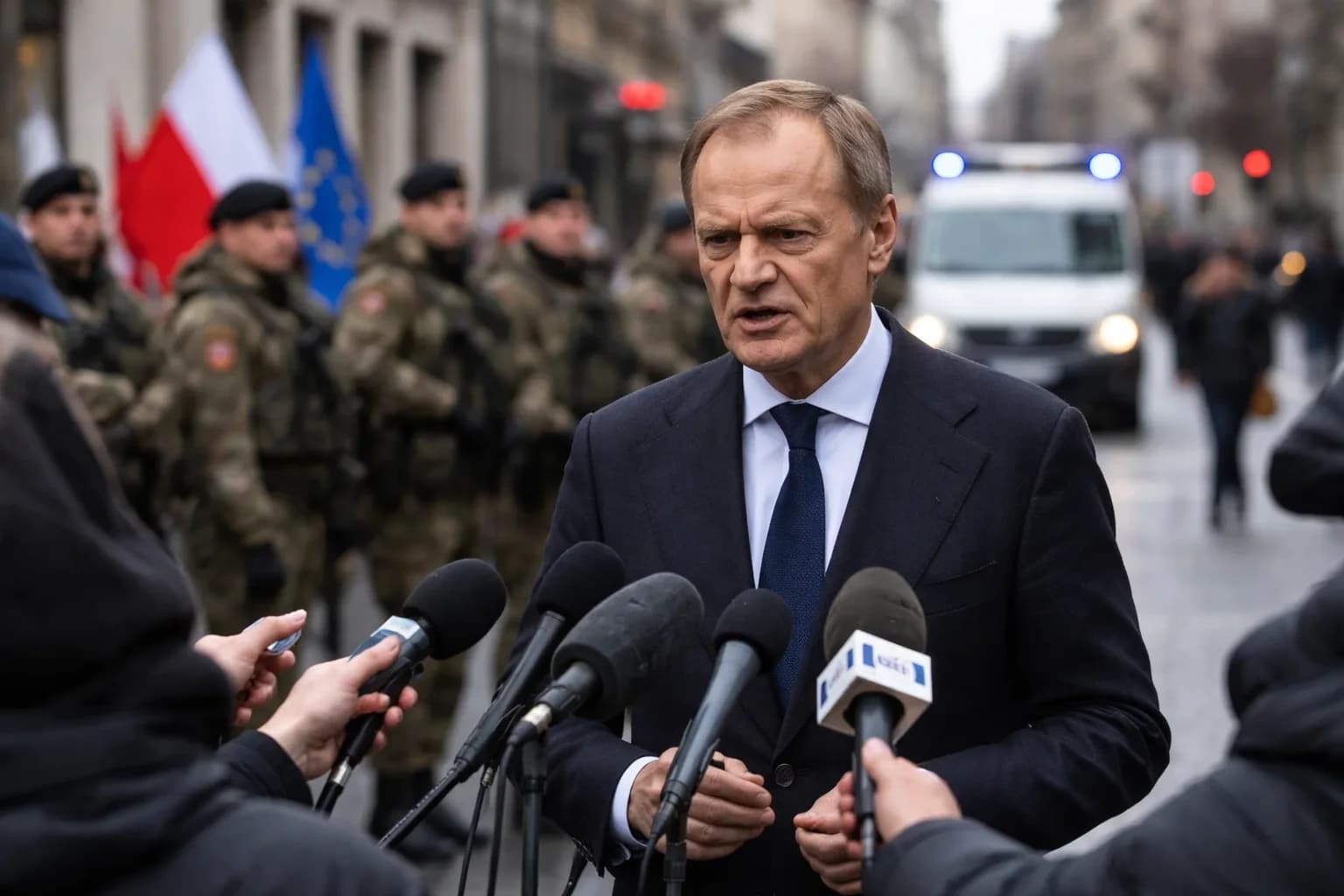
Polish Prime Minister Donald Tusk delivered a sobering assessment of the regional security landscape on Friday, cautioning that the upcoming months could be "critical" for the nation's safety and the stability of the Eastern Flank. Addressing reports that Moscow might be orchestrating an armed "provocation" on Polish soil, Tusk emphasized that Warsaw is actively preparing for various contingencies. This alert stems from intelligence reports suggesting that Russia aims to test the collective defense resolve of the NATO alliance. While the Prime Minister clarified that his intention was not to incite unnecessary fear, he noted that the changing nature of the ongoing war in Ukraine has made these concerns particularly palpable within the Baltic states and Poland. The government’s stance underscores a heightening of alert levels as the geopolitical situation remains volatile and unpredictable.
What's new in this update
The latest warnings, corroborated by Polish media outlet Onet, indicate that U.S. intelligence has shared specific concerns with the administration of President Karol Nawrocki regarding potential Russian plots. These purported plans involve a range of hostile actions, including potential missile strikes, drone incursions, or the deployment of soldiers across the border into Polish territory. Such actions would represent a significant escalation from previous hybrid warfare tactics, such as cyberattacks or orchestrated migration crises. The strategic objective behind these alleged provocations is believed to be the application of extreme pressure on Ukraine’s Western allies. By creating a direct security crisis within a NATO member state, Moscow reportedly hopes to force a suspension or reduction of the military and financial aid that has been essential to Ukraine’s defense since the 2022 full-scale invasion.
Key details
Specific intelligence reports, which have also been highlighted by international outlets like the Telegraph, suggest that Polish infrastructure could be the primary target of these potential strikes. This aligns with broader patterns of Russian aggression seen elsewhere in Eastern Europe, where critical utilities and logistics hubs are prioritized to cause maximum societal disruption. Lithuania's ambassador to NATO recently observed that Russia is currently more likely to utilize hybrid warfare—such as brief incursions or electronic interference—rather than launching a full-scale conventional military assault. However, Polish officials are not taking chances. Deputy Prime Minister Radek Sikorski has previously stated that "false flag" operations remain a distinct possibility over the next two years. These maneuvers are often designed to provide a fabricated justification for more overt military aggression against neighboring states by shifting the blame onto the victim.
Background and context
Since the beginning of the full-scale invasion of Ukraine in February 2022, Poland and the Baltic states have served as the primary Eastern Flank of NATO, bearing the brunt of regional tension. There have already been several documented instances of Russian drones or missiles entering Polish airspace, leading to the scrambling of fighter jets and the strengthening of air defense systems. NATO’s Article 5, the cornerstone of the alliance, dictates that an armed attack against any member is considered an attack against all. This principle of collective defense has been a deterrent throughout the Cold War and remains the primary shield for nations bordering Russia. The Baltic states—Latvia, Estonia, and Lithuania—have also raised alarms about Moscow's long-term intentions, with Latvian intelligence recently warning of similar military provocations planned for their own borders as Russia seeks to exploit perceived gaps in Western unity.
What to watch next
Attention now shifts to the upcoming NATO summit in Turkey, where President Karol Nawrocki will join other world leaders to discuss these emerging threats and the alliance's defensive posture. Secretary General Mark Rutte has signaled that the gathering will serve as a platform to demonstrate Europe’s commitment to increased defense spending, a priority long championed by U.S. President Donald Trump. Leaders are expected to formally pledge continued long-term funding for weapons deliveries to Ukraine, countering any Russian attempt to fragment the coalition through intimidation. Additionally, the Polish government is expected to continue its intensive preparation for "various scenarios," which likely includes further joint military exercises with neighbors like Lithuania and the deployment of advanced surveillance and interception technology along its eastern borders to mitigate the risk of accidental or deliberate incursions.
Why it matters
Any Russian military provocation against Poland, a NATO member, would trigger Article 5, potentially escalating the regional conflict into a direct war between Moscow and the North Atlantic Treaty Organization. This threat landscape tests the durability of Western support for Ukraine during a pivotal phase of the ongoing invasion.
Read next
Follow this story through the topic hub, more world coverage, and the latest updates.
Weekly briefing
Get the week's key developments in one concise email.
Get a fast catch-up on the biggest stories, the context behind them, and the links worth your time.
Cadence
Weekly, for a quick catch-up
Coverage
AI, business, world, security, sports
Format
Clear takeaways and useful context
Request the briefing
Leave your email to open a prepared request and get on the list for the weekly briefing.
About the byline
World correspondent
Leila Haddad covers world affairs, diplomacy, and humanitarian crises, with a focus on how fast-moving international developments affect public policy, conflict response, and cross-border institutions.
Sources and methodology