Oil Prices Plunge as Trump Announces 'Largely Negotiated' Peace Deal with Iran
Global benchmarks Brent and US crude fell more than 5% on news that the critical Strait of Hormuz shipping route could soon reopen.
Primary source: BBC World News. Full source links and update notes are below.
Fast summary
Start here
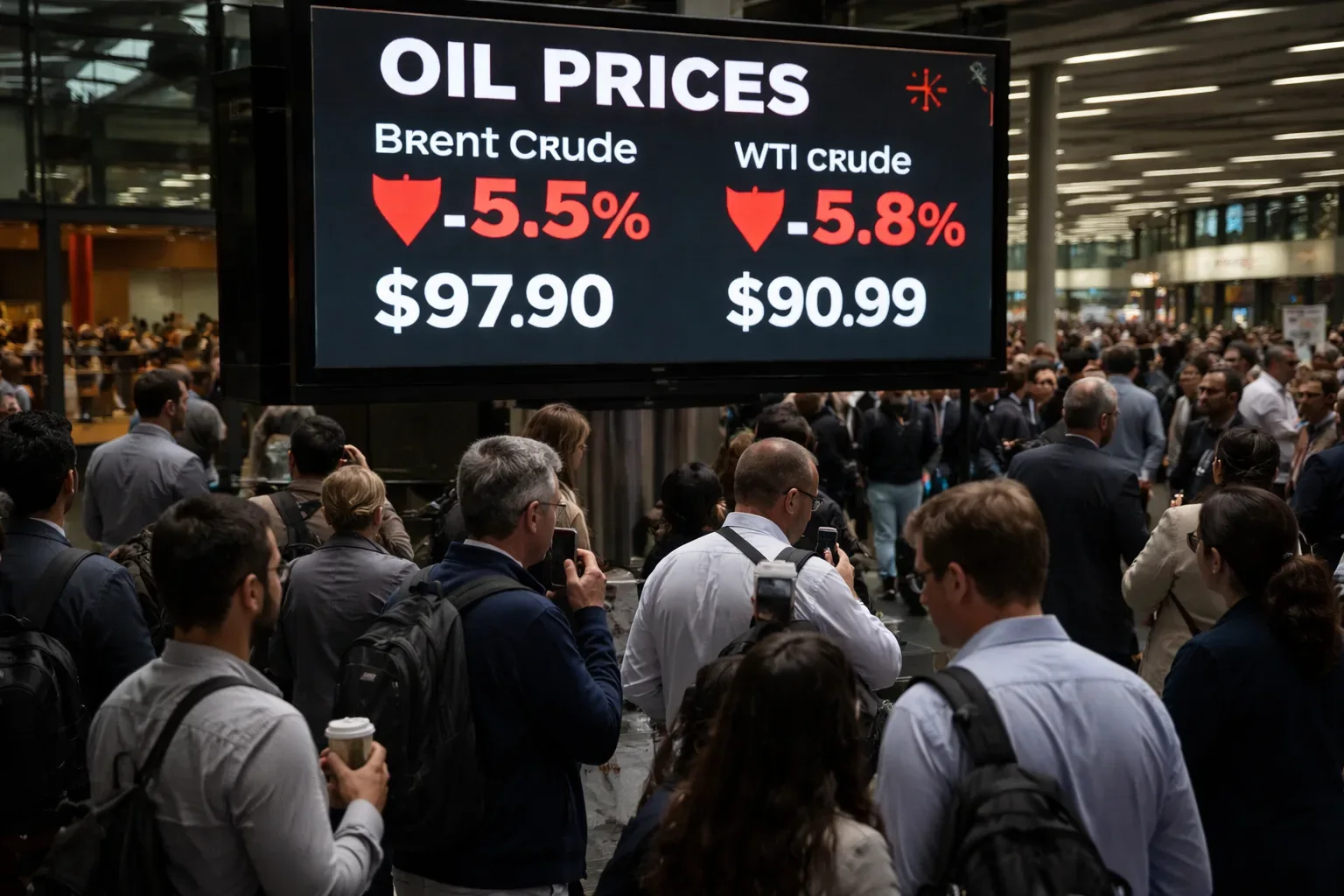
- Brent crude fell 5.5% to $97.90 while US-traded crude dropped 5.8% to $90.99 following optimistic diplomatic signals from the White House.
- The potential agreement includes the reopening of the Strait of Hormuz, a waterway handling one-fifth of global oil and liquefied natural gas supply.
- While President Trump stated a deal is largely negotiated, he recently cautioned his team to ensure the final aspects have no mistakes.
What happened
Global oil prices saw a sharp decline Monday morning in Asia as markets reacted to news of a potential peace agreement between the United States and Iran. Brent crude dropped 5.5% to $97.90 per barrel, while US crude fell 5.8% to $90.99, reflecting investor hope that the conflict involving Israel and Iran may be nearing a diplomatic resolution.
What's new in this update
President Donald Trump disclosed over the weekend that a "Memorandum of Understanding pertaining to PEACE" has been largely negotiated with Tehran. Trump indicated that final details are being discussed with various countries, including Saudi Arabia, the United Arab Emirates, and Qatar. However, by Sunday, the President tempered expectations, urging his negotiating team not to rush the finalization to ensure no mistakes are made.
Key details
A central component of the proposed agreement is the reopening of the Strait of Hormuz, which has been effectively closed since February 28. This waterway typically handles approximately one-fifth of the world's oil and liquefied natural gas. In response to the diplomatic progress, Japan's Nikkei 225 jumped 2.9%, surpassing the 65,000 mark for the first time, as the region remains heavily dependent on energy exports from the Gulf.
Background and context
The conflict erupted in late February, leading to Iranian threats against shipping and subsequent closures of the Strait of Hormuz. While a ceasefire was established in April, oil prices have remained elevated; Brent traded around $70 per barrel before the war began. Iran's foreign ministry confirmed that positions have converged over the last week but remains cautious regarding contradictory statements from US officials.
What to watch next
Market participants are awaiting the official announcement of the deal's final terms, which Trump stated would occur shortly. Despite the immediate price relief, energy analysts suggest the global market will remain tight through 2027. The recovery process involves not only restoring physical shipping through the Strait but also repairing damaged facilities and replenishing global oil reserves that reached record lows during the conflict.
Why it matters
The reopening of the Strait of Hormuz would alleviate a major global energy bottleneck, though analysts warn it may take until 2027 to fully normalize oil flows and rebuild depleted stocks.
Read next
Follow this story through the topic hub, more world coverage, and the latest updates.
Weekly briefing
Get the week's key developments in one concise email.
Get a fast catch-up on the biggest stories, the context behind them, and the links worth your time.
Cadence
Weekly, for a quick catch-up
Coverage
AI, business, world, security, sports
Format
Clear takeaways and useful context
Request the briefing
Leave your email to open a prepared request and get on the list for the weekly briefing.
Author
See who assembled this story and follow more of their work.
Sources and methodology