Trump's White House Ballroom Expansion Costs Hit $400M as Scope Grows
The project has evolved from a guest facility into a fortified complex including an underground hospital and a rooftop drone port.
Primary source: BBC World News. Full source links and update notes are below.
Fast summary
Start here
- The estimated cost of the White House ballroom has reached $400 million, doubling within one year.
- The 90,000-square-foot project now includes a three-story underground hospital and a rooftop drone landing site.
- The historic 120-year-old East Wing has been demolished to make way for the new construction.
What happened
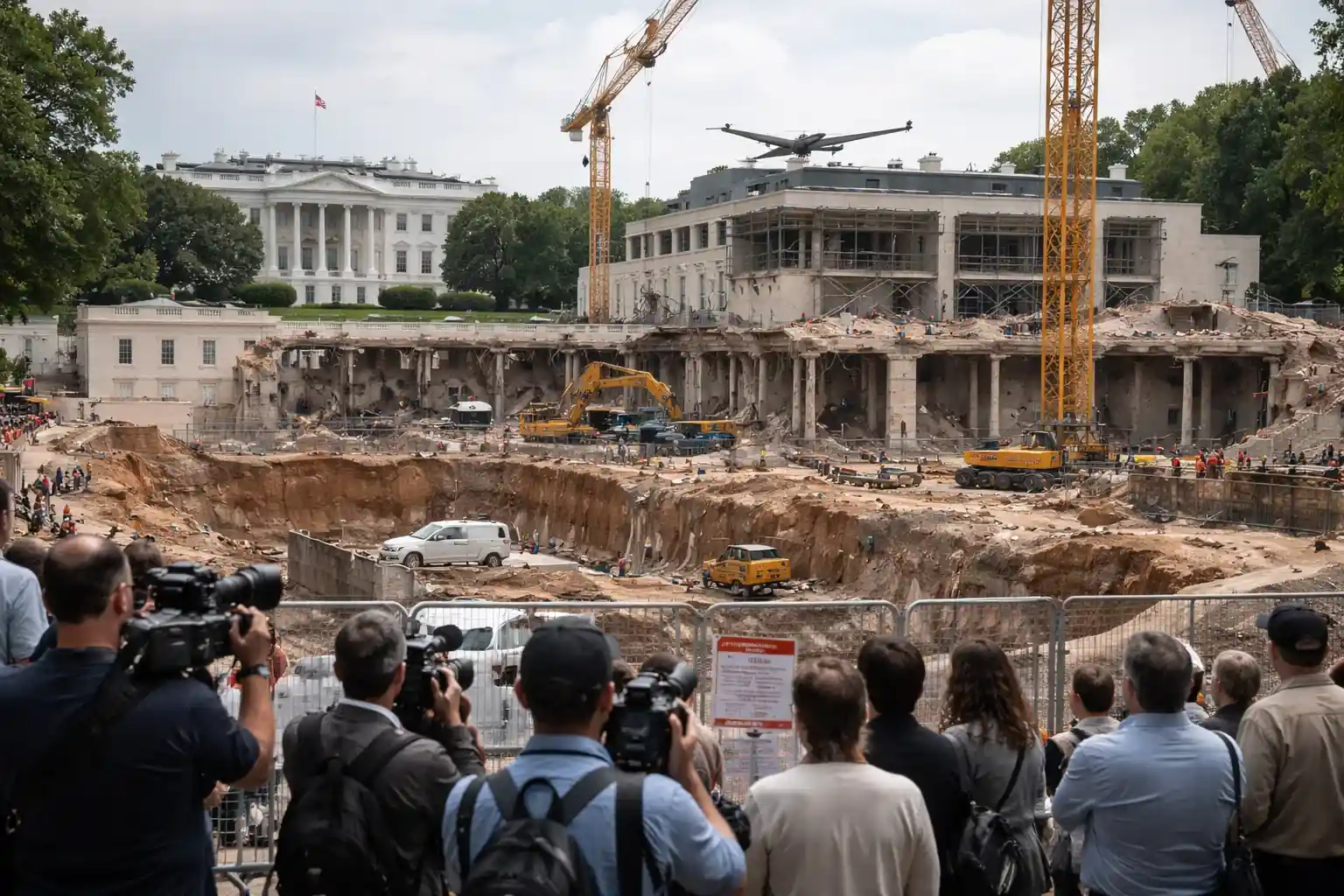
Plans for a new White House ballroom have expanded significantly in both cost and complexity. What was initially proposed as a 90,000-square-foot space for state dinners has now incorporated extensive military and medical infrastructure, with the estimated budget rising from its initial projections to $400 million.
What's new in this update
The latest plans disclosed by the administration include a rooftop 'drone port,' a three-story underground state-of-the-art hospital, and 'top secret' military facilities. These additions have contributed to the doubling of the project's cost and a shift in rhetoric regarding its purpose, which is now described as vital for national security.
Key details
Construction has already resulted in the total demolition of the East Wing, a 120-year-old structure that previously housed the First Lady's office. Satellite imagery shows deep excavations for the underground components. The new ballroom is designed to seat 650 guests, a sharp increase from the 200-seat capacity of the existing East Room.
Background and context
President Trump announced the project in June 2023, promising it would be built quickly and maintain the architectural heritage of the White House. While the president originally claimed the project would not cost taxpayers money, recent requests have been made to Congress for additional security funds during a period of economic strain linked to the Iran war.
What to watch next
The construction is scheduled for completion before the end of the current presidential term in January 2029. Future developments will likely focus on the approval of security-related funding by Congress and the continued integration of the underground facilities into the existing White House complex.
Why it matters
This project represents the most extensive modification to the White House grounds in decades, involving significant costs and the removal of historic structures.
Read next
Follow this story through the topic hub, more world coverage, and the latest updates.
Weekly briefing
Get the week's key developments in one concise email.
Get a fast catch-up on the biggest stories, the context behind them, and the links worth your time.
Cadence
Weekly, for a quick catch-up
Coverage
AI, business, world, security, sports
Format
Clear takeaways and useful context
Request the briefing
Leave your email to open a prepared request and get on the list for the weekly briefing.
Author
See who assembled this story and follow more of their work.
Sources and methodology