Lebanese Conservationist Mona Khalil Dies After Strike on Mansouri
The 76-year-old activist spent 25 years protecting endangered sea turtles on Lebanon's southern coast before her death on Friday.

World correspondent
Reports on international affairs, diplomacy, and humanitarian developments with an emphasis on official statements, multilateral institutions, and regional context.
Editorial responsibility: Lead reviewer for geopolitics, international institutions, and crisis coverage
Primary source: BBC World News. Full source links and update notes are below.
Fast summary
Start here
- Mona Khalil died on Friday following injuries from an Israeli air strike on her residence two weeks ago.
- She was the founder of the Orange House Project, which turned Mansouri beach into a critical nesting site for endangered sea turtles.
- Khalil remained at her home near Tyre to protect the coastline despite escalating conflict in southern Lebanon.
What happened
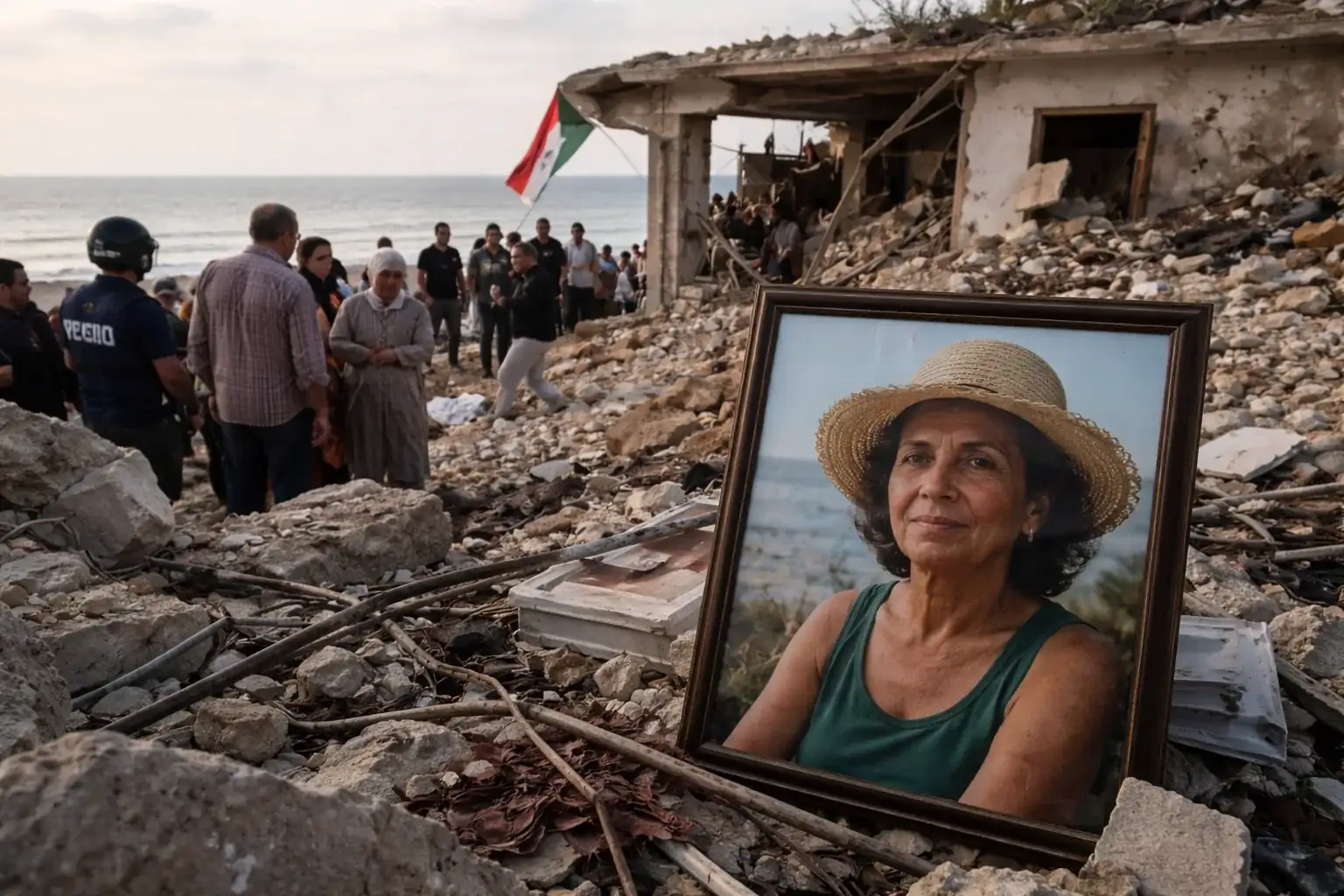
Mona Khalil, the Lebanese turtle conservationist who spent decades protecting sea turtle nesting grounds on Lebanon's southern coast, has died after suffering injuries in an Israeli strike on her home near Tyre. Her death is significant not only because of who she was to the local community, but because it highlights how conflict in southern Lebanon is damaging civilians whose work had nothing to do with military or political power. In Khalil's case, the loss is also environmental: a long-running conservation effort now carries the trauma of losing its most visible guardian.
The Mona Khalil story matters because she was more than a local activist. Through the Orange House Project, she became one of the best-known defenders of endangered sea turtles along the eastern Mediterranean, turning Mansouri beach into a place associated with protection rather than destruction.
Why Mona Khalil's work mattered
Khalil's conservation work carried unusual weight because it connected environmental protection, public education, and local stewardship in a region too often defined by instability. Protecting sea turtle nesting sites is painstaking work. It requires monitoring beaches, limiting human disturbance, educating residents and visitors, and persuading people that habitats have value even when development or conflict makes long-term thinking difficult.
That is what made the Orange House Project important. It did not just create a sanctuary for turtles. It built a living argument that environmental preservation could survive in a fragile and politically tense coastal region.
Mansouri beach and the sea turtle mission
Mansouri beach became known as a critical nesting site for endangered turtles partly because Khalil refused to treat conservation as a side project. She appears to have made it a life structure. That matters because marine conservation is often judged only by scientific outputs or legal designations, while the daily labor that sustains those protections is carried by people willing to stay visible and stubborn over decades.
In practical terms, Khalil's presence helped transform a vulnerable stretch of coast into a place where nesting turtles had a better chance of survival. In symbolic terms, she made environmental care part of the identity of the beach itself.
Why her death resonates beyond Lebanon
The killing of a conservationist in an air strike reverberates beyond national boundaries because it illustrates a wider truth about war: damage spreads into civil society, ecology, and memory, not just military positions. Environmental defenders are especially exposed in conflict zones because their work is tied to place. They often remain where they are most needed, even when the risk rises.
That appears to have been true for Khalil. Reports indicate she stayed near the coast she had spent years protecting. That decision reflects the kind of rooted commitment many conservation movements depend on, but it also shows how little protection moral status offers when war expands.
Background and context
Southern Lebanon has repeatedly been shaped by confrontation between Israel and Hezbollah, with civilians paying the price whenever escalation widens. In that setting, someone like Mona Khalil represents a different kind of public figure: not a combatant, not a politician, but a person trying to preserve life in one of its most literal forms. Her work with sea turtles carried ecological importance, but also emotional power. It gave the local coastline a story centered on survival and care.
That is why her death feels doubly symbolic. It is both the death of an individual and a strike against a form of civilian stewardship that conflict zones struggle to maintain.
What happens next
The immediate question is what becomes of the Orange House Project and the turtle conservation network tied to Khalil's work. Conservation groups may try to preserve the institutional legacy, but movements built around one person's knowledge and presence often face a difficult transition after such a loss. The security situation in southern Lebanon also complicates any straightforward continuation.
Why this matters
Mona Khalil's death matters because it exposes the human and environmental cost of the Israel-Hezbollah conflict, while reminding the world that the people lost in war are often the very people protecting fragile life, memory, and community along endangered coastlines.
Why it matters
Khalil was a central figure in Mediterranean marine conservation whose work secured protected status for vital nesting grounds; her death underscores the civilian and environmental toll of the ongoing conflict.
Read next
Follow this story through the topic hub, more world coverage, and the latest updates.
Weekly briefing
Get the week's key developments in one concise email.
Get a fast catch-up on the biggest stories, the context behind them, and the links worth your time.
Cadence
Weekly, for a quick catch-up
Coverage
AI, business, world, security, sports
Format
Clear takeaways and useful context
Request the briefing
Leave your email to open a prepared request and get on the list for the weekly briefing.
About the byline
World correspondent
Leila Haddad covers world affairs, diplomacy, and humanitarian crises, with a focus on how fast-moving international developments affect public policy, conflict response, and cross-border institutions.
Sources and methodology