Israeli Strikes Kill Nine in Lebanon as Border Violence Tests Partial Truce
Israeli forces targeted southern Lebanon and a Lebanese soldier, while Hezbollah launched rockets into northern Israel during high-level diplomatic talks in Washington.
Primary source: BBC World News. Full source links, newsroom standards, and correction details are below.
Fast summary
Start here
- At least nine people were killed in southern Lebanon on Wednesday, including two paramedics and one Lebanese army soldier.
- Hezbollah launched rockets and drones into northern Israel, claiming to target a gathering of Israeli troops.
- The surge in violence occurred as Israeli and Lebanese diplomats met in Washington to discuss shoring up a partial ceasefire.
What happened
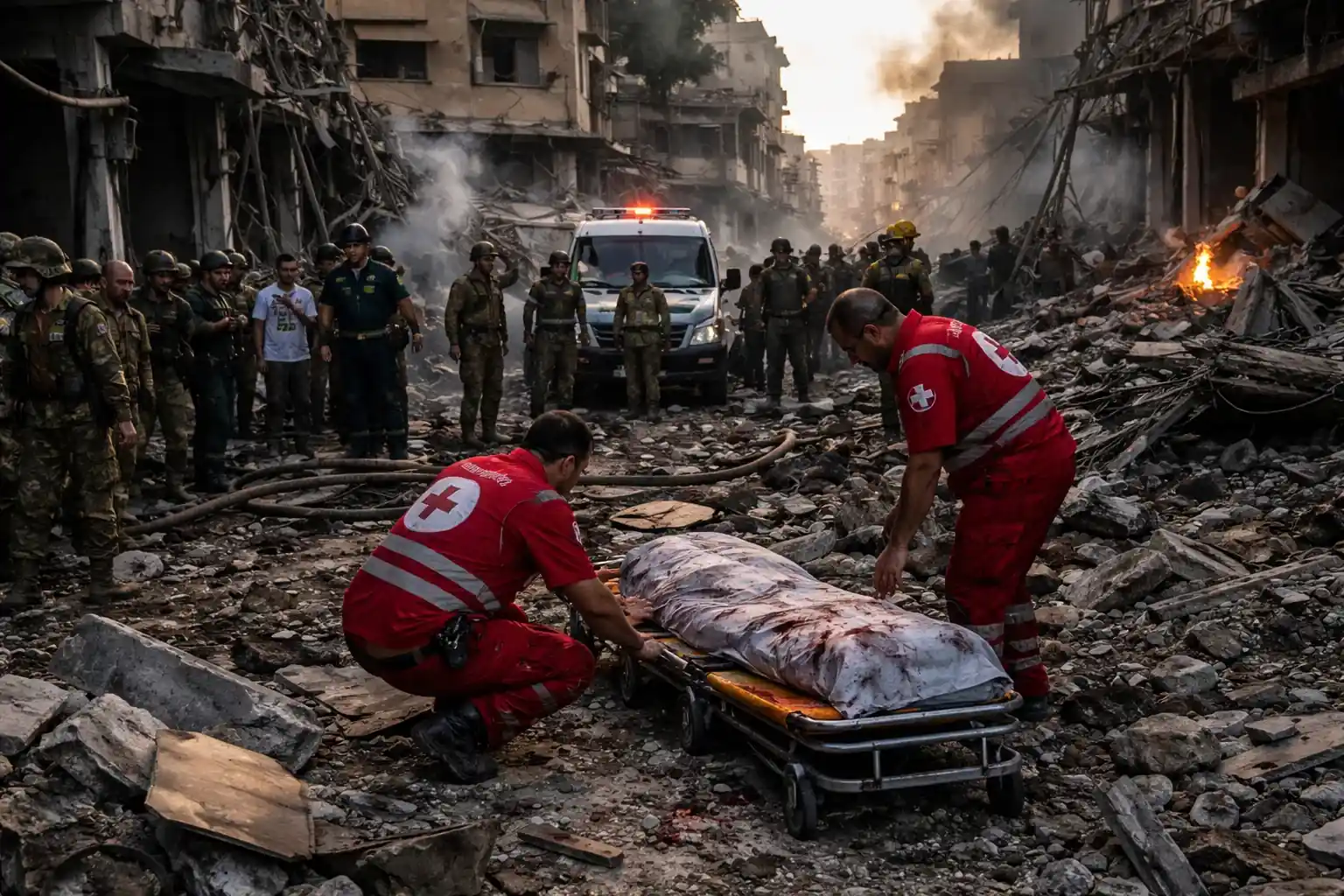
Israeli airstrikes killed at least nine people across southern Lebanon on Wednesday as Hezbollah retaliated with rocket fire. The exchange marks a significant test for a partial ceasefire agreed upon on Monday, which was intended to see Israel refrain from bombing Beirut in exchange for a cessation of Hezbollah attacks. The Lebanese health ministry reported that the strikes hit several areas, including a direct hit on an ambulance and a strike on a motorcycle.
What's new in this update
Lebanon's health ministry confirmed that two paramedics were killed and a third was seriously wounded when Israeli forces targeted an ambulance in the Chehour area. Additionally, the Lebanese army announced that one of its soldiers was killed by an Israeli drone strike while traveling on a motorbike near Nabatieh. This comes as U.S. Secretary of State Marco Rubio met with diplomats in Washington to seek a security track for Lebanon independent of Hezbollah.
Key details
The casualties on Wednesday included four Syrians and two Palestinians killed in the al-Housh area south of Tyre. On the Israeli side, the military reported intercepting a drone and two projectiles that crossed the border. Since the conflict began, the Lebanese health ministry reports at least 3,516 people have been killed, while the UN notes that more than one million people have been displaced due to evacuation orders covering an eighth of the country.
Background and context
Conflict intensified after Hezbollah launched rockets into Israel on March 2 in retaliation for an Israeli strike on an Iranian leader. While a U.S.-brokered ceasefire failed in April, the current partial agreement reached this week was designed to de-escalate strikes on major population centers. Israel maintains that its intensified campaign is a necessary response to persistent drone and rocket attacks on communities in northern Israel.
What to watch next
Diplomatic efforts in Washington remain the primary path for de-escalation, with officials attempting to draft a security action plan. However, the immediate focus remains on whether the partial ceasefire can hold as Israeli forces continue to advance deeper into southern Lebanon and Hezbollah maintains its rocket campaign against Israeli troops.
Why this matters
The continued escalation threatens the collapse of a nascent ceasefire agreement and underscores the heavy humanitarian toll, with over 3,500 reported dead in Lebanon.
Reader context
This story belongs to Northstar Herald's International Relations and Middle East Conflict coverage, with related entities including Lebanon, Israel, Hezbollah, Ceasefire. The report is based on BBC World News source material.
Related coverage
Why it matters
The continued escalation threatens the collapse of a nascent ceasefire agreement and underscores the heavy humanitarian toll, with over 3,500 reported dead in Lebanon.
Read next
Follow this story through the topic hub, more world coverage, and the latest updates.
Weekly briefing
Get the week's key developments in one concise email.
Get a fast catch-up on the biggest stories, the context behind them, and the links worth your time.
Cadence
Weekly, for a quick catch-up
Coverage
AI, business, world, security, sports
Format
Clear takeaways and useful context
Request the briefing
Leave your email to open a prepared request and get on the list for the weekly briefing.
Author

The world desk follows geopolitics, humanitarian crises, diplomacy, and major international developments with an emphasis on fast updates and public-interest context.
Sources and methodology