Keiko Fujimori Certified as Peru's President-Elect Following
After nearly a month of counting and legal challenges, the right-wing candidate secured a narrow victory over left-wing rival Roberto Sánchez.

World correspondent
Reports on international affairs, diplomacy, and humanitarian developments with an emphasis on official statements, multilateral institutions, and regional context.
Editorial responsibility: Lead reviewer for geopolitics, international institutions, and crisis coverage
Primary source: BBC World News. Full source links and update notes are below.
Fast summary
Start here
- Keiko Fujimori won 50.135% of the vote, defeating Roberto Sánchez by a margin of less than 50,000 ballots.
- The electoral court's certification comes weeks after the June 7 runoff, which was marked by allegations of irregularities from the opposition.
- Fujimori, the daughter of former President Alberto Fujimori, becomes the country's ninth president in just ten years.
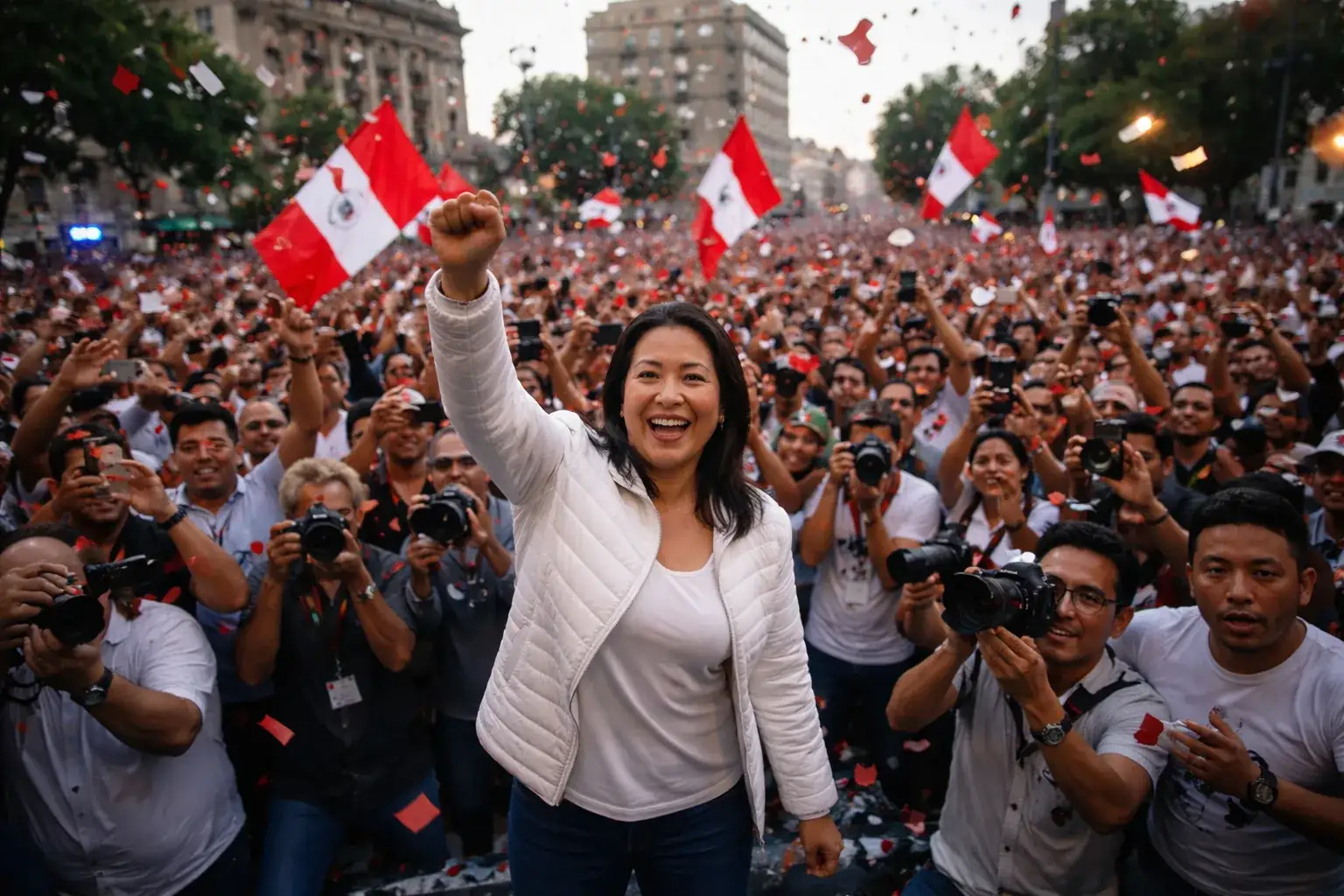
What happened
Peru’s national electoral court has officially declared Keiko Fujimori the winner of the country’s presidential election, concluding a period of intense political tension that lasted nearly a month after the polls closed. Fujimori, representing the right-wing Popular Force party, narrowly defeated her left-wing opponent Roberto Sánchez in a runoff that highlighted the deep ideological divisions within the Andean nation. The final certified count showed Fujimori securing 50.135% of the total vote, while Sánchez trailed closely with 49.865%. This razor-thin margin of less than 50,000 votes underscores the difficulty the president-elect may face in governing a fractured electorate. Upon the announcement, Fujimori pledged to assume the presidency with humility and a deep sense of duty, emphasizing the need for dialogue during the transition period before her expected swearing-in on July 28.
What's new in this update
The primary update is the formal certification by Peru's electoral court, which effectively ends the period of official counting but not necessarily the political friction. Roberto Sánchez and his party have formally appealed against the court's proclamation, calling for the entire vote to be nullified. Sánchez has alleged that the runoff was "seriously compromised," specifically pointing to Fujimori’s strong performance among Peruvian voters living abroad as a potential sign of irregularities. Despite these protests and threats of legal action, the electoral body’s declaration allows the official transition process to begin. Fujimori’s tone has remained conciliatory yet firm, stating that each day of the transition is an opportunity to listen and prepare for the challenges of a new government. This certification is a critical step in providing a semblance of stability to a country that has seen eight presidents in the last decade.
Key details
The specifics of the vote count highlight just how polarized the Peruvian electorate remains. Fujimori’s victory rests on a difference of fewer than 50,000 votes in a country of over 33 million people. Her platform was built primarily on a law and order message, promising a military-led crackdown on organized crime and extortion, which have reached record levels in recent years. Additionally, Fujimori has pledged to revitalize the economy by attracting private investment and has taken a hardline stance on immigration, promising the immediate expulsion of undocumented immigrants found to be involved in criminal activity. Her opponent, Sánchez, a former foreign trade minister, had campaigned on a platform of broad economic reforms and wealth redistribution, which resonated strongly in rural and impoverished regions but ultimately fell short in the final tally.
Background and context
Keiko Fujimori’s ascent to the presidency is the culmination of a decade-long political journey, marking her fourth attempt to win the office after losing by slim margins in 2011, 2016, and 2021. She is the daughter of Alberto Fujimori, a former president who remains a deeply polarizing figure in Peru. While some credit him with defeating the Shining Path insurgency and stabilizing the economy in the 1990s, others remember his tenure for authoritarianism, extra-judicial killings, and forced sterilizations, crimes for which he was eventually jailed. Keiko has frequently invoked her father’s legacy, particularly his tough-on-crime stance, to appeal to voters tired of insecurity and political paralysis. Peru has suffered through a period of unprecedented instability, having cycled through eight presidents in the last ten years due to impeachments, resignations, and criminal investigations.
What to watch next
With the swearing-in ceremony scheduled for July 28, the immediate focus will be on whether Roberto Sánchez’s legal challenges gain any traction or if his supporters take to the streets in protest. Beyond the internal politics of Peru, Fujimori’s win signifies a broader geopolitical shift in Latin America. She joins other right-wing leaders like Colombia’s president-elect Abelardo de la Espriella, Ecuador’s Daniel Noboa, and El Salvador’s Nayib Bukele. Many of these leaders have expressed alignment with the policies of US President Donald Trump. This leaves Brazil’s Luiz Inácio Lula da Silva as the primary left-wing leader in the region, facing his own challenges from the right in upcoming elections. Analysts will be watching how this new bloc of right-leaning presidents coordinates on regional issues like migration, trade, and organized crime, and how Fujimori manages a congress where she lacks a clear majority.
Why it matters
This election cements a regional shift toward right-wing leadership in Latin America and ends weeks of political uncertainty in a nation prone to executive instability.
Read next
Follow this story through the topic hub, more world coverage, and the latest updates.
Weekly briefing
Get the week's key developments in one concise email.
Get a fast catch-up on the biggest stories, the context behind them, and the links worth your time.
Cadence
Weekly, for a quick catch-up
Coverage
AI, business, world, security, sports
Format
Clear takeaways and useful context
Request the briefing
Leave your email to open a prepared request and get on the list for the weekly briefing.
About the byline
World correspondent
Leila Haddad covers world affairs, diplomacy, and humanitarian crises, with a focus on how fast-moving international developments affect public policy, conflict response, and cross-border institutions.
Sources and methodology