Crime and Economic Instability Dominate Final Stretch of Peru's Presidential Race
Candidates Keiko Fujimori and Roberto Sánchez offer contrasting visions of hardline security and resource nationalization ahead of Sunday's vote.
Primary source: BBC World News. Full source links, newsroom standards, and correction details are below.
Fast summary
Start here
- Organized crime and extortion have become the top concerns for Peruvian voters following a surge in violence in 2025.
- Keiko Fujimori is campaigning on a tough-on-crime platform that includes deploying the military to assist police against gangs.
- Roberto Sánchez proposes sweeping state changes and nationalizing natural resources to address economic inequality.
What happened
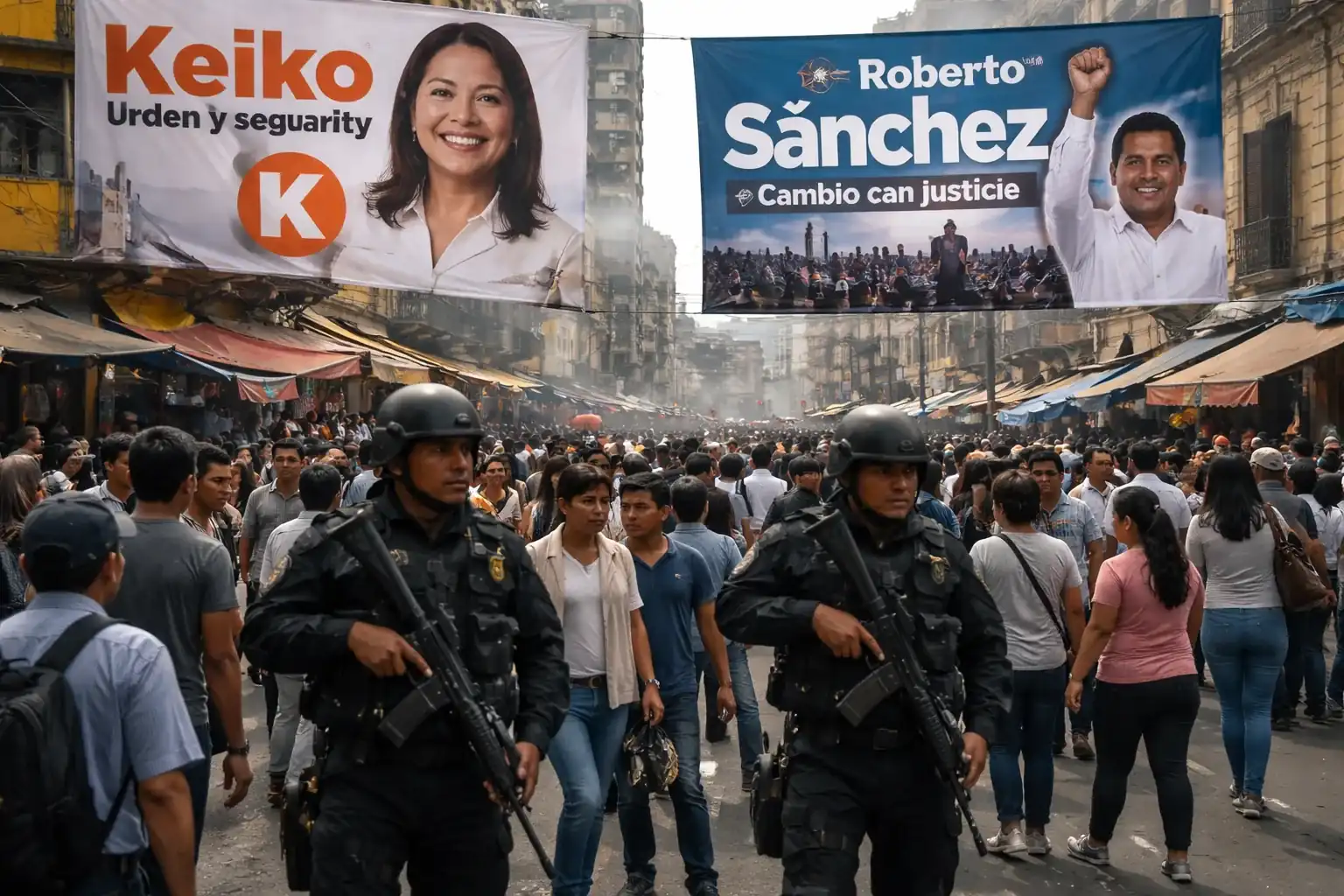
Peruvian voters are preparing to choose a new president this Sunday in an election dominated by fears of rising crime and demands for economic stability. The race between right-wing Keiko Fujimori and left-wing Roberto Sánchez remains highly competitive as the nation seeks a path out of chronic political volatility.
What's new in this update
Recent data reveals that nearly 30,000 extortion incidents were reported in Peru in 2025, significantly impacting small businesses and the transport sector. In the capital of Lima, districts like San Juan de Lurigancho have seen armed police deployed to protect bus drivers, 239 of whom were killed last year due to gang violence.
Key details
Fujimori has promised to deploy the military against organized crime, tighten control over prisons, and block the flow of extorted funds through financial institutions. In contrast, Sánchez is focusing on wealth redistribution, suggesting that mining wealth should be shared through increased corporate taxes and greater state control over natural resources, a stance that has unsettled financial markets.
Background and context
Peru has experienced extreme political turnover, with eight presidents in the last decade. While the economy has remained relatively resilient as a major exporter of copper and other metals, many citizens feel left behind. Fujimori, running for the fourth time, invokes the memory of her father Alberto Fujimori's hardline order, while Sánchez appeals to rural communities where mining takes place.
What to watch next
Following Sunday's vote, the immediate focus will be on the official count and the subsequent market reaction to the candidates' economic proposals. International investors are particularly concerned about Sánchez’s plans to review mining contracts and the potential for civil unrest depending on the narrowness of the margin.
Why it matters
The election outcome will determine the security strategy and economic future of one of the world's leading mineral exporters amid deep political polarization.
Read next
Follow this story through the topic hub, more world coverage, and the latest updates.
Weekly briefing
Get the week's key developments in one concise email.
Get a fast catch-up on the biggest stories, the context behind them, and the links worth your time.
Cadence
Weekly, for a quick catch-up
Coverage
AI, business, world, security, sports
Format
Clear takeaways and useful context
Request the briefing
Leave your email to open a prepared request and get on the list for the weekly briefing.
Author

The Northstar Herald editorial desk assembles wire-driven and source-linked coverage, verifies core facts against published materials, and updates stories as new reporting becomes available.
Sources and methodology