Controversy Erupts in West Bengal as State Drops Eggs from School
A new pilot program in West Bengal has replaced eggs with vegetarian alternatives in school lunches, sparking a heated debate over nutrition and religious

World correspondent
Reports on international affairs, diplomacy, and humanitarian developments with an emphasis on official statements, multilateral institutions, and regional context.
Editorial responsibility: Lead reviewer for geopolitics, international institutions, and crisis coverage
Primary source: BBC World News. Full source links and update notes are below.
Fast summary
Start here
- The West Bengal government is piloting a vegetarian-only school lunch program in some schools, replacing eggs with plant-based protein sources like soybeans.
- The project is being managed by the Iskcon-run Annamitra Foundation, which serves only vegetarian food, leading to accusations of ideological interference.
- Nutritionists and opposition parties argue that removing eggs, a cheap and effective protein source, could negatively impact the health of underprivileged children.
What happened
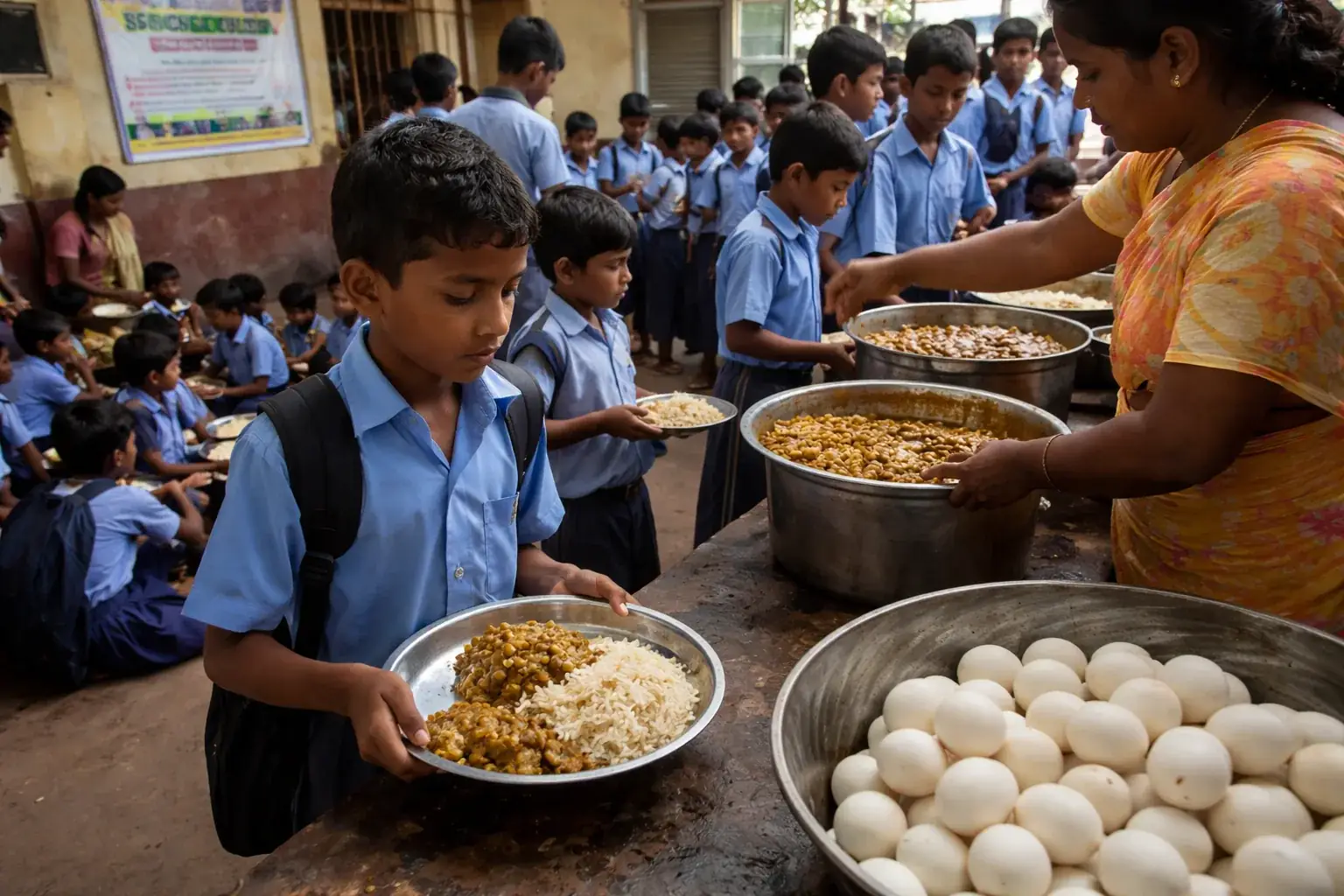
The eastern Indian state of West Bengal has launched a pilot project that removes eggs from government school lunch menus in specific districts. This initiative, part of the nationwide midday meal programme, replaces the traditional protein source with vegetarian options. The government has partnered with the Annamitra Foundation, an arm of the International Society for Krishna Consciousness (Iskcon), to prepare and distribute these meals. The move has immediately sparked a nationwide conversation regarding the intersection of public health policy, religious dietary practices, and political ideology. For many students in government-aided schools, these meals represent the most substantial nutrition they receive daily. The transition to a strictly vegetarian menu marks a significant shift in the state's approach to food security and student welfare, raising concerns among activists who view the removal of eggs as a step backward for childhood nutrition.
What's new in this update
The political fallout has intensified following the announcement by the newly elected Bharatiya Janata Party (BJP) government in West Bengal. The opposition All India Trinamool Congress (TMC) has vocally criticized the move, accusing the administration of attempting to impose vegetarianism on a population where eggs have been a dietary staple for generations. Amidst this friction, Radharaman Das, the vice-president of Iskcon's Kolkata branch, was recently removed from his post. While Iskcon has not explicitly linked his removal to the lunch controversy, the timing has raised questions among local observers. Meanwhile, Chief Minister Suvendu Adhikari has defended the project, framing it as an effort to provide good and pure food to children, while dismissing claims that the policy is driven by Hindu nationalist sentiment or a desire to force religious practices on students.
Key details
Eggs are widely regarded by nutritionists as one of the most cost-effective and bioavailable sources of protein, typically costing approximately eight rupees ($0.10) per unit. In West Bengal, where fish and eggs are central to the local diet, they have long been the backbone of the midday meal scheme. The proposed substitutes include soybeans and kidney beans, which an Iskcon official suggested would provide comparable nutritional value to the students. However, critics argue that these plant-based proteins may not be as readily accepted or easily digested by young children in the region. The midday meal programme itself is a massive logistical undertaking, serving over 110 million students across India. The pilot in West Bengal currently focuses on schools run by the Kolkata Municipal Corporation, but the lack of clarity on whether the program will expand has left many parents and educators in a state of uncertainty.
Background and context
This is not the first time the inclusion of eggs in school lunches has become a flashpoint in Indian politics. Several other states governed by the BJP, such as Karnataka, Madhya Pradesh, and Gujarat, have faced similar controversies after attempting to restrict or remove eggs from government menus. These decisions often involve collaborations with religious organizations like the Akshaya Patra Foundation, which already provides meals to nearly one million students across 16 Indian states. Proponents of these organizations emphasize their ability to maintain high standards of hygiene and large-scale efficiency. Conversely, health activists point to India's high rates of childhood stunting and malnutrition as reasons to prioritize the most efficient nutrient sources over ideological preferences. In West Bengal, the debate is particularly sensitive due to the state's distinct culinary heritage and the recent shift in political leadership following the state elections.
What to watch next
The immediate focus remains on the implementation of the pilot project and the subsequent data on student attendance and nutritional outcomes. If students reject the vegetarian menu or if nutritional markers decline, the government may face increased pressure to revert to the previous system. There is also a growing call from activists and some moderate politicians for a middle path approach, which would allow students to choose between an egg and a vegetarian alternative rather than mandating a single option. Monitoring the official response from Iskcon and the state education department will be crucial as they finalize the details of the partnership. Furthermore, the outcome of this pilot could influence how other states approach the midday meal menu, potentially setting a precedent for future dietary policies across India's government-run educational institutions.
Why it matters
This decision affects the nutritional intake of millions of underprivileged children for whom school lunches are the primary source of protein and essential nutrients, potentially setting a precedent for future dietary policies in Indian government institutions.
Read next
Follow this story through the topic hub, more world coverage, and the latest updates.
Weekly briefing
Get the week's key developments in one concise email.
Get a fast catch-up on the biggest stories, the context behind them, and the links worth your time.
Cadence
Weekly, for a quick catch-up
Coverage
AI, business, world, security, sports
Format
Clear takeaways and useful context
Request the briefing
Leave your email to open a prepared request and get on the list for the weekly briefing.
About the byline
World correspondent
Leila Haddad covers world affairs, diplomacy, and humanitarian crises, with a focus on how fast-moving international developments affect public policy, conflict response, and cross-border institutions.
Sources and methodology