Japan's Defence Minister Calls Military Expansion 'Critical' to
Shinjiro Koizumi signals a departure from decades of pacifist policy, emphasizing multi-layered deterrence and new arms export deals across the

World correspondent
Reports on international affairs, diplomacy, and humanitarian developments with an emphasis on official statements, multilateral institutions, and regional context.
Editorial responsibility: Lead reviewer for geopolitics, international institutions, and crisis coverage
Primary source: BBC World News. Full source links and update notes are below.
Fast summary
Start here
- Japan is relaxing 50-year-old arms export rules to sell lethal equipment to 17 allied nations.
- Defence Minister Koizumi supports revising Article 9 of the constitution to adapt to a changing security environment.
- Regional partners including Australia and the Philippines are actively seeking Japanese maritime defense technology.
What happened
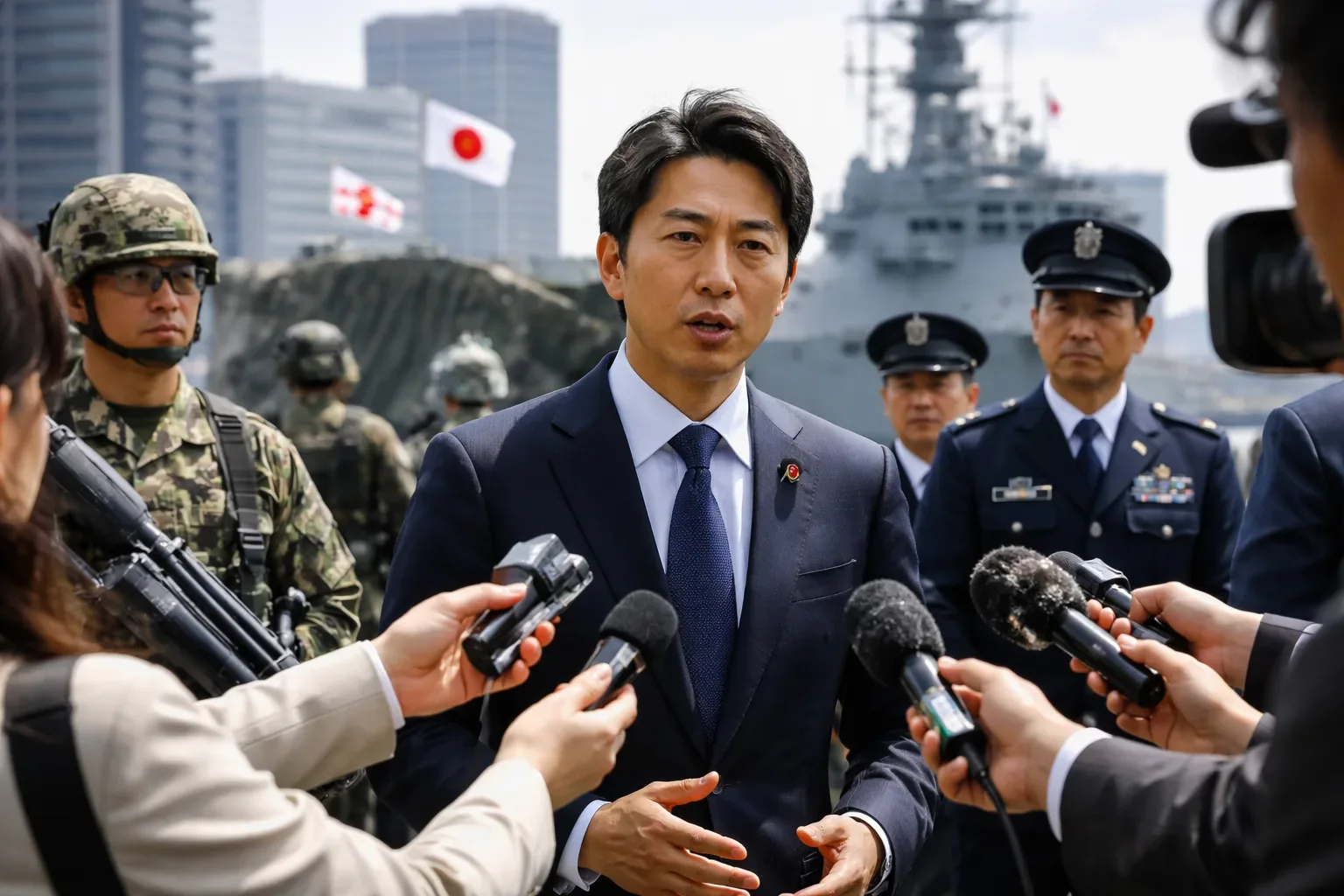
Japan's defence minister has argued that expanding the country's military capabilities is necessary to prevent conflict rather than invite it, framing Japan's defense buildup as a response to a harsher Indo-Pacific security environment. The message reflects a broader shift in Tokyo: Japan is no longer speaking about defense modernization as a narrow technical adjustment, but as a strategic necessity tied to deterrence, alliance credibility, and regional balance.
That is why the statement matters. Japan defense policy has become one of the clearest indicators of how the regional order is changing.
Why Japan is changing its defense posture
For decades, Japan's postwar identity was anchored in constitutional pacifism, especially Article 9 and the political culture built around it. That did not mean Japan lacked military capability, but it did mean the country presented force very cautiously and within tight legal and symbolic boundaries. Today, Japanese leaders increasingly argue those boundaries no longer fit the threat environment.
The two pressures cited most often are China and North Korea. China's expanding military reach and maritime assertiveness have forced Tokyo to think more seriously about deterrence in nearby waters, while North Korea's missile activity has kept direct homeland risk in the public imagination.
Why deterrence is the central idea
The defence minister's argument is built around deterrence: the idea that stronger military capability lowers the chance of war because adversaries see the cost of escalation more clearly. That is an important framing choice. Japan wants its rearmament to be understood, at least officially, as preventive and stabilizing rather than revisionist.
Whether neighboring countries accept that framing is another question. But inside Japan's policy debate, deterrence has become the main justification for larger budgets, expanded procurement, and deeper military coordination with partners.
The importance of Article 9
Any serious discussion of Japan defense policy eventually reaches Article 9, the constitutional provision that renounces war and constrains how force is understood in Japanese public life. Calls to revise or reinterpret Article 9 are politically sensitive because they touch the core of Japan's post-1945 identity. Supporters of change argue that law and reality have drifted apart. Critics worry that constitutional revision could normalize a much broader military role than the public has historically endorsed.
This is what makes the issue larger than procurement. Japan is not only buying equipment. It is renegotiating the meaning of its own strategic identity.
Why arms exports matter
Japan's move toward looser arms export rules is another sign of that transformation. Selling or transferring more lethal equipment to partners such as Australia or the Philippines would have been difficult to imagine under older interpretations of Japan's security role. Today, these moves are being presented as part of a shared Indo-Pacific defense network.
That matters because exports create influence. They tie Japan more directly into regional defense planning, interoperability, and alliance politics rather than limiting its role to national self-defense alone.
The China factor
China remains the most important strategic backdrop to Japan's defense buildup. Tensions around maritime claims, military modernization, and the possibility of regional confrontation have made Tokyo more willing to invest in capabilities that once seemed politically out of reach. Even when officials avoid using openly escalatory language, the logic is clear: Japan believes the balance of power is shifting and does not want to fall behind it.
That belief also helps explain why Japan is trying to deepen coordination not only with the United States, but with other regional partners.
Domestic and regional tension
Japan's defense expansion is not free of risk. Domestically, it raises questions about spending priorities, constitutional legitimacy, and how far the public wants leaders to go. Regionally, even defensive modernization can fuel suspicion among countries with historical memory of Japanese militarism or concerns about a broader arms buildup across the Indo-Pacific.
So while the official case is that military growth prevents war, the political challenge is proving that increased capability does not produce new instability.
What to watch next
The next important signals will come from budget decisions, white paper language, arms export deals, and any concrete movement on Article 9 revision. It will also matter how Japan explains these changes to domestic voters and to regional neighbors who are watching the shift closely.
For now, Japan's defense expansion marks a real turning point. The country is moving away from a narrower postwar posture and toward a more explicit role in regional deterrence. Whether that strategy succeeds will depend on whether stronger Japanese capabilities are seen as reassuring, provocative, or both at the same time.
Why it matters
This marks a significant pivot in Japan's post-war identity, moving away from strict pacifism toward a proactive military role in response to regional tensions with China and North Korea.
Read next
Follow this story through the topic hub, more world coverage, and the latest updates.
Weekly briefing
Get the week's key developments in one concise email.
Get a fast catch-up on the biggest stories, the context behind them, and the links worth your time.
Cadence
Weekly, for a quick catch-up
Coverage
AI, business, world, security, sports
Format
Clear takeaways and useful context
Request the briefing
Leave your email to open a prepared request and get on the list for the weekly briefing.
About the byline
World correspondent
Leila Haddad covers world affairs, diplomacy, and humanitarian crises, with a focus on how fast-moving international developments affect public policy, conflict response, and cross-border institutions.
Sources and methodology