Crowd-Funded Review Challenges Australia's $239 Billion Aukus
Former environment minister Peter Garrett will lead an independent inquiry into the defense deal's impact on regional peace and national sovereignty.

World correspondent
Reports on international affairs, diplomacy, and humanitarian developments with an emphasis on official statements, multilateral institutions, and regional context.
Editorial responsibility: Lead reviewer for geopolitics, international institutions, and crisis coverage
Primary source: BBC World News. Full source links and update notes are below.
Fast summary
Start here
- Former minister Peter Garrett and retired military leaders are launching a five-month independent inquiry into the Aukus deal.
- The A$368bn project involves Australia acquiring second-hand US Virginia-class nuclear submarines to replace its aging fleet.
- The inquiry aims to address concerns over nuclear waste storage, sovereignty, and the strategic impact on relations with China.
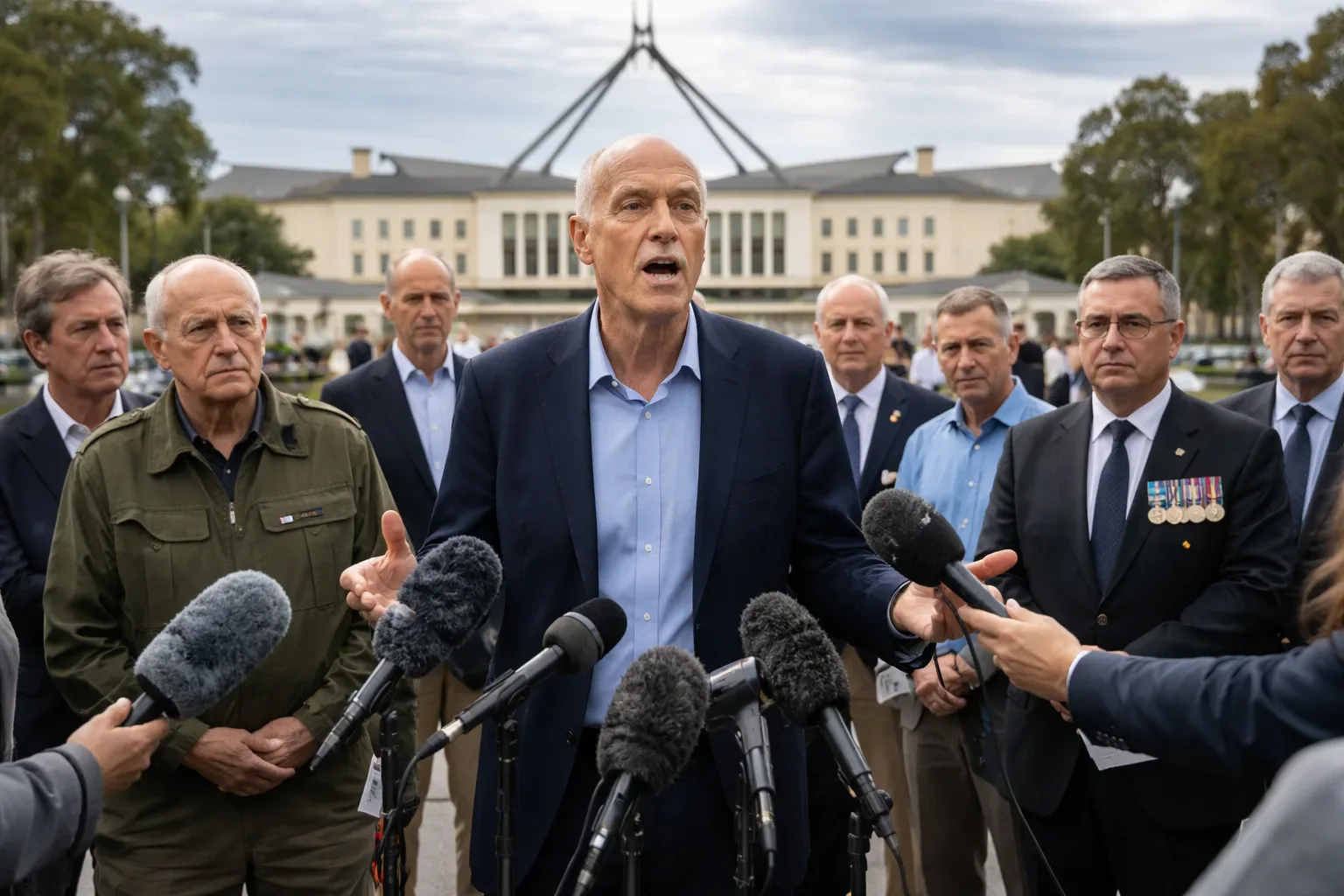
What happened
Former Australian minister Peter Garrett is leading a crowd-funded inquiry into the Aukus submarine deal, challenging one of the most expensive and strategically consequential defense commitments in Australian history. The inquiry, backed by retired military figures and civil society voices, aims to test whether the A$368 billion Aukus project will genuinely improve Australia's security or instead deepen dependence, fiscal strain, and regional tension. The very existence of a crowd-funded review is a political signal in itself: critics believe the formal democratic debate around Aukus has been too narrow for a project of this scale.
This matters because Aukus is not just a procurement plan. It is a long-term restructuring of Australia's strategic identity, industrial commitments, and military posture in the Indo-Pacific. An inquiry questioning that path therefore touches defense, sovereignty, economics, diplomacy, and public trust all at once.
Why Aukus draws such intense scrutiny
Aukus is Australia's biggest-ever defense undertaking, involving the acquisition of nuclear-powered submarines and deeper long-term integration with the United States and the United Kingdom. Supporters argue the pact is essential given worsening strategic competition in the Indo-Pacific, especially the rise of China. Critics argue the costs, timelines, and strategic assumptions remain deeply uncertain.
That split is not minor. It goes to the heart of whether Australia should define security primarily through alliance integration and advanced military deterrence, or whether it risks locking itself into a more dependent and escalatory regional role.
Why the crowd-funded inquiry is unusual
The inquiry's crowd-funded structure is important because it reflects distrust of the normal oversight process. Garrett and others are effectively arguing that parliament, the public, and independent scrutiny have not been given enough room to test the assumptions behind the submarine pact. In democratic terms, that is a serious critique. It suggests that a project involving enormous public money and decades of strategic consequence has been advanced with less open contest than its scale warrants.
The symbolism matters too. A citizen-funded review implicitly claims that formal institutions have not done enough.
Cost, sovereignty, and dependence
The costs attached to Aukus are one source of concern, but critics are also focused on sovereignty. If Australia becomes dependent on U.S. submarine supply, U.S. industrial timing, and U.S. strategic coordination, then the question is not simply whether the submarines arrive. It is whether the arrangement narrows Australia's independent room for decision-making in future crises.
This is why sovereignty is central to the inquiry. Critics are not just asking whether Aukus is expensive. They are asking whether it binds Australia more tightly to alliance logic than the public fully understands.
The China factor
No serious debate about Aukus can avoid China. The pact is widely understood as part of a broader Western effort to counter China's military and strategic expansion in the region. Supporters see that as prudent deterrence. Critics worry it may contribute to an arms-competition mindset and reduce diplomatic space in the Indo-Pacific.
That makes Aukus about more than equipment. It is about the kind of regional order Australia is helping to build, and whether that order becomes more stable or more militarized as a result.
What comes next
The inquiry will likely examine nuclear waste, industrial feasibility, strategic assumptions, alliance dependence, and the domestic economic trade-offs of the project. Even if the government remains firmly committed to Aukus, the inquiry could shape how critics organize, how media frame future milestones, and how much pressure builds for stronger parliamentary oversight.
For now, Peter Garrett's crowd-funded inquiry matters because it opens a broader political challenge to a defense project that has often been presented as inevitable. Aukus may remain official policy, but the debate around it is widening. The question is no longer just whether Australia can afford the submarines. It is whether Australia fully understands what strategic path it is buying into.
Why it matters
As Australia's largest-ever defense project, the Aukus deal faces growing scrutiny over its massive cost and the long-term geopolitical implications for the Indo-Pacific region.
Read next
Follow this story through the topic hub, more world coverage, and the latest updates.
Weekly briefing
Get the week's key developments in one concise email.
Get a fast catch-up on the biggest stories, the context behind them, and the links worth your time.
Cadence
Weekly, for a quick catch-up
Coverage
AI, business, world, security, sports
Format
Clear takeaways and useful context
Request the briefing
Leave your email to open a prepared request and get on the list for the weekly briefing.
About the byline
World correspondent
Leila Haddad covers world affairs, diplomacy, and humanitarian crises, with a focus on how fast-moving international developments affect public policy, conflict response, and cross-border institutions.
Sources and methodology