Israeli Air Strikes Hit Southern Lebanon After Hezbollah Dismisses
Tensions escalate in the Middle East as Israeli drones target southern towns and Hezbollah's leadership declares the newly signed US-brokered framework

World correspondent
Reports on international affairs, diplomacy, and humanitarian developments with an emphasis on official statements, multilateral institutions, and regional context.
Editorial responsibility: Lead reviewer for geopolitics, international institutions, and crisis coverage
Primary source: BBC World News. Full source links and update notes are below.
Fast summary
Start here
- Israeli air strikes in Nabatieh al-Fawqa resulted in at least one fatality and multiple injuries shortly after a diplomatic agreement was signed.
- Hezbollah leader Naim Qassem officially rejected the US-brokered deal, labeling it a humiliating surrender of Lebanese sovereignty.
- Israeli Defense Minister Israel Katz has instructed military forces to prepare for an extended presence within a 10km security zone inside Lebanon.
What happened
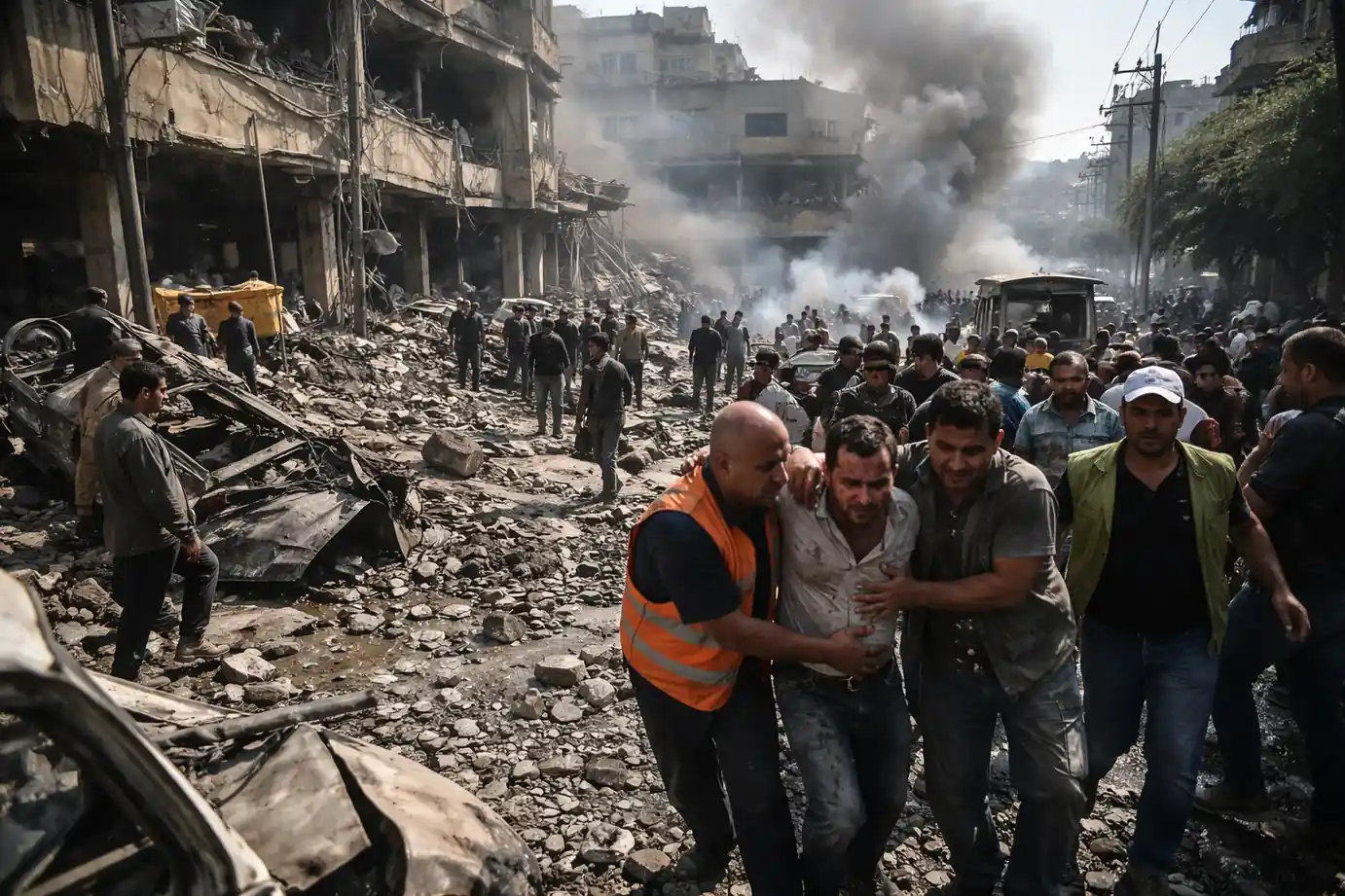
Israeli military operations resumed in southern Lebanon on Saturday, resulting in at least one death in the town of Nabatieh al-Fawqa. According to Lebanon’s state news agency, an Israeli drone strike targeted an individual the Israeli military identified as a threat, though specific details regarding the target’s identity or affiliation were not immediately released. This military action occurred less than twenty-four hours after the announcement of a US-brokered agreement intended to establish a lasting peace between the two nations. The strike was followed by additional reports of aerial activity in the region, leaving at least two more people wounded and signaling that the diplomatic breakthrough reached in Washington remains extremely fragile. Israeli Prime Minister Benjamin Netanyahu had previously characterized the deal as historic, while the reality on the ground suggests a continued state of high-intensity conflict.
What's new in this update
The most significant development following the strikes is the formal response from Hezbollah’s leadership. Naim Qassem, the head of the militant group, delivered a televised address on Saturday condemning the framework agreement. Qassem asserted that the deal—which was negotiated by the Lebanese government in Beirut but did not include Hezbollah in direct talks—was null and void. He specifically targeted the provisions requiring the group’s disarmament and the link between Israeli withdrawal and Hezbollah’s military status, calling these conditions red lines that were crossed. This rejection places the Lebanese government in a precarious position, as the group maintains significant influence within the country’s political and military landscape. Furthermore, Israeli Defense Minister Israel Katz adjusted military directives, ordering troops to prepare for an extended stay in a security zone up to 10km inside Lebanese territory.
Key details
The four-point framework agreement established in Washington seeks to reorganize the security architecture along the border. Under the terms, Israel is expected to withdraw its primary forces from the South Litani area, allowing the Lebanese army to take exclusive control of the territory. However, a critical caveat allows Israeli forces to maintain a presence within an expanded security area in southern Lebanon, a point of contention that Qassem labeled as a step toward potential annexation. The United States has pledged to assist in the creation of pilot zones where the Lebanese Armed Forces will take exclusive control to the exclusion of non-state actors like Hezbollah. Despite these diplomatic efforts, the human cost of the conflict remains staggering. The Lebanese health ministry reports that over 4,192 people have been killed and 1.2 million displaced since hostilities ignited, while Israel reports the loss of 36 soldiers and four civilians.
Background and context
The current cycle of violence began on March 2, when Iran-backed Hezbollah launched a missile barrage into Israel. That attack was framed as retaliation for an Israeli strike that killed Iran’s supreme leader, sparking a massive escalation. In response, Israel launched a comprehensive air campaign across Lebanon and initiated a ground invasion in the south to dismantle Hezbollah infrastructure. This is not the first attempt at a ceasefire; a US-brokered truce on April 16 failed to stop the fighting, leading to the renewed diplomatic push in June. The conflict is deeply rooted in the broader geopolitical rivalry between Israel and Iran, with Hezbollah serving as Tehran’s primary regional proxy. The inclusion of disarmament clauses in the latest deal reflects Israeli and American demands to neutralize Hezbollah’s capability to strike northern Israel, a demand the group has historically resisted as a violation of its resistance mandate.
What to watch next
In the coming days, the focus will shift to whether the Lebanese government can enforce the terms of the Washington agreement without triggering a domestic political crisis. The Lebanese Armed Forces are tasked with moving into areas previously dominated by Hezbollah, a transition that requires the cooperation of the very group that has just declared the deal a shameful surrender. Observers will also monitor the behavior of the Israeli military within the designated 10km security zone. If Israeli forces remain entrenched or continue to carry out drone strikes, it may provide Hezbollah with the justification it needs to continue its armed resistance, as promised by Qassem. The international community, particularly the United States, will likely exert pressure on Beirut to uphold its commitments, while the potential for further Iranian involvement remains a volatile variable that could expand the scope of the conflict.
Why it matters
The immediate resumption of hostilities and Hezbollah's outright rejection of the peace framework threaten to derail a significant diplomatic effort intended to end months of devastating regional conflict.
Read next
Follow this story through the topic hub, more world coverage, and the latest updates.
Weekly briefing
Get the week's key developments in one concise email.
Get a fast catch-up on the biggest stories, the context behind them, and the links worth your time.
Cadence
Weekly, for a quick catch-up
Coverage
AI, business, world, security, sports
Format
Clear takeaways and useful context
Request the briefing
Leave your email to open a prepared request and get on the list for the weekly briefing.
About the byline
World correspondent
Leila Haddad covers world affairs, diplomacy, and humanitarian crises, with a focus on how fast-moving international developments affect public policy, conflict response, and cross-border institutions.
Sources and methodology