Israel Conducts Targeted Strike in Beirut as Ceasefire Strains Mount
The Israel Defense Forces hit Beirut's southern suburbs for the second time since the ceasefire began, reportedly targeting an Iranian militia official.
Primary source: BBC World News. Full source links, newsroom standards, and correction details are below.
Fast summary
Start here
- The IDF carried out a 'targeted' strike in the Dahieh suburb of Beirut on Thursday afternoon.
- Israeli media reports the target was Ali al-Husni, a missile force leader for an Iranian militia allied with Hezbollah.
- A massive new evacuation order issued by the IDF covers 14% of Lebanese territory, including approximately 300 towns.
What happened
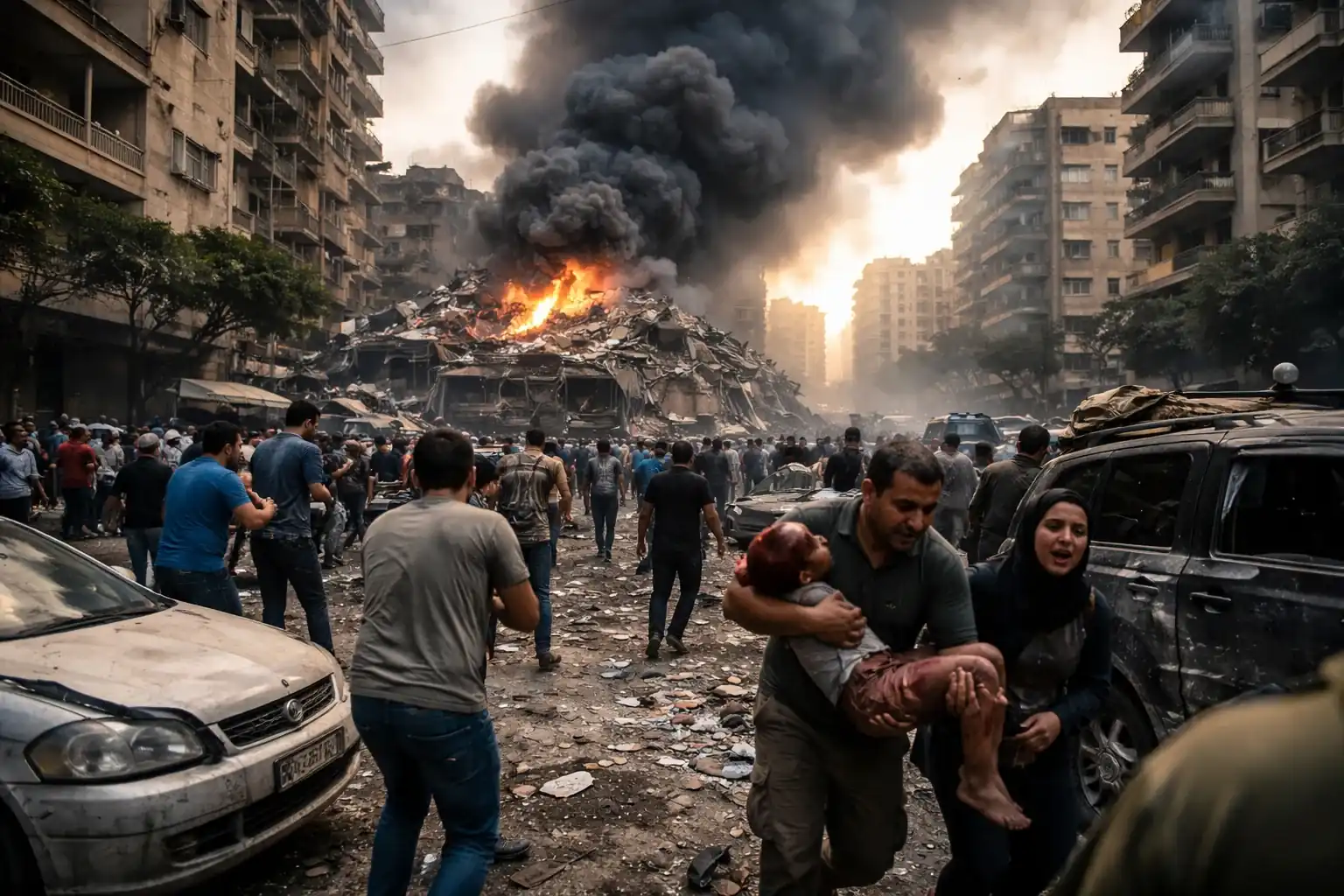
On Thursday afternoon, Israeli forces launched a targeted air strike on Beirut's southern Dahieh suburb. The attack sent plumes of smoke over the densely populated area, which serves as a Hezbollah stronghold. This marks only the second time Israel has hit the Lebanese capital since the ceasefire was established last month. According to Israeli media outlets, the strike was aimed at Ali al-Husni, head of the missile force in the Imam Hossein Division, an Iranian militia group operating in coordination with Hezbollah.
What's new in this update
The strike follows a series of escalations, including an announcement by Israeli Prime Minister Benjamin Netanyahu that ground operations would be expanded. This decision comes in response to recent Hezbollah drone attacks on Israeli troops and civilians. Additionally, the IDF has issued its largest evacuation order since the ceasefire took effect, demanding that residents in roughly 300 towns and villages move north of the Zahrani River, about 40km from the border.
Key details
Beyond the strike in the capital, Israeli military activity has intensified in southern Lebanon. At least 11 people were killed in strikes near Tyre on Thursday, while a separate missile strike in Saida killed four people, including two displaced individuals. Rescue operations in Tyre have been hampered by continued military warnings and safety risks, according to local officials. The humanitarian situation is tightening as shelters in cities like Saida have reached full capacity, leaving many of the newly displaced with nowhere to go.
Background and context
The ceasefire, which had largely spared Beirut from intermittent attacks until now, has been under pressure as both Israel and Hezbollah accuse one another of repeated violations. While Israel had reportedly limited strikes in Beirut at the request of U.S. President Donald Trump, the IDF maintains that its recent actions are necessary responses to Hezbollah's continued use of infrastructure in southern Lebanon and drone activity against Israeli positions.
What to watch next
The international community is monitoring the situation to see if diplomatic channels can salvage the fragile truce. Observers will be looking for a response from Hezbollah or Iranian-backed militias following the targeted strike on Al-Husni. Furthermore, the mass displacement caused by the latest evacuation orders—covering 14% of the country—is expected to place an immense strain on Lebanon's already overwhelmed humanitarian infrastructure.
Why this matters
The strike on Beirut and the expansion of ground operations indicate a significant deterioration of the month-old ceasefire, risking a return to full-scale conflict.
Reader context
This story belongs to Northstar Herald's International Relations and Middle East Conflict coverage, with related entities including Israel, Lebanon, Hezbollah, Beirut. The report is based on BBC World News source material.
Related coverage
Why it matters
The strike on Beirut and the expansion of ground operations indicate a significant deterioration of the month-old ceasefire, risking a return to full-scale conflict.
Read next
Follow this story through the topic hub, more world coverage, and the latest updates.
Weekly briefing
Get the week's key developments in one concise email.
Get a fast catch-up on the biggest stories, the context behind them, and the links worth your time.
Cadence
Weekly, for a quick catch-up
Coverage
AI, business, world, security, sports
Format
Clear takeaways and useful context
Request the briefing
Leave your email to open a prepared request and get on the list for the weekly briefing.
Author

The world desk follows geopolitics, humanitarian crises, diplomacy, and major international developments with an emphasis on fast updates and public-interest context.
Sources and methodology