Lethal Strikes in Southern Lebanon Strain Newly Announced Ceasefire
At least 16 people were killed in Nabatieh as Israel and Hezbollah traded fire less than 24 hours after a truce was intended to take effect.

World correspondent
Reports on international affairs, diplomacy, and humanitarian developments with an emphasis on official statements, multilateral institutions, and regional context.
Editorial responsibility: Lead reviewer for geopolitics, international institutions, and crisis coverage
Primary source: BBC World News. Full source links and update notes are below.
Fast summary
Start here
- Israeli airstrikes and artillery targeted the Nabatieh district, killing at least 16 people and injuring a dozen more.
- Hezbollah launched over 50 projectiles at Israeli forces, with officials stating they do not recognize the US-announced ceasefire.
- US envoy Steve Witkoff is traveling to Switzerland for talks with Iran to stabilize the broader regional peace framework.
What happened
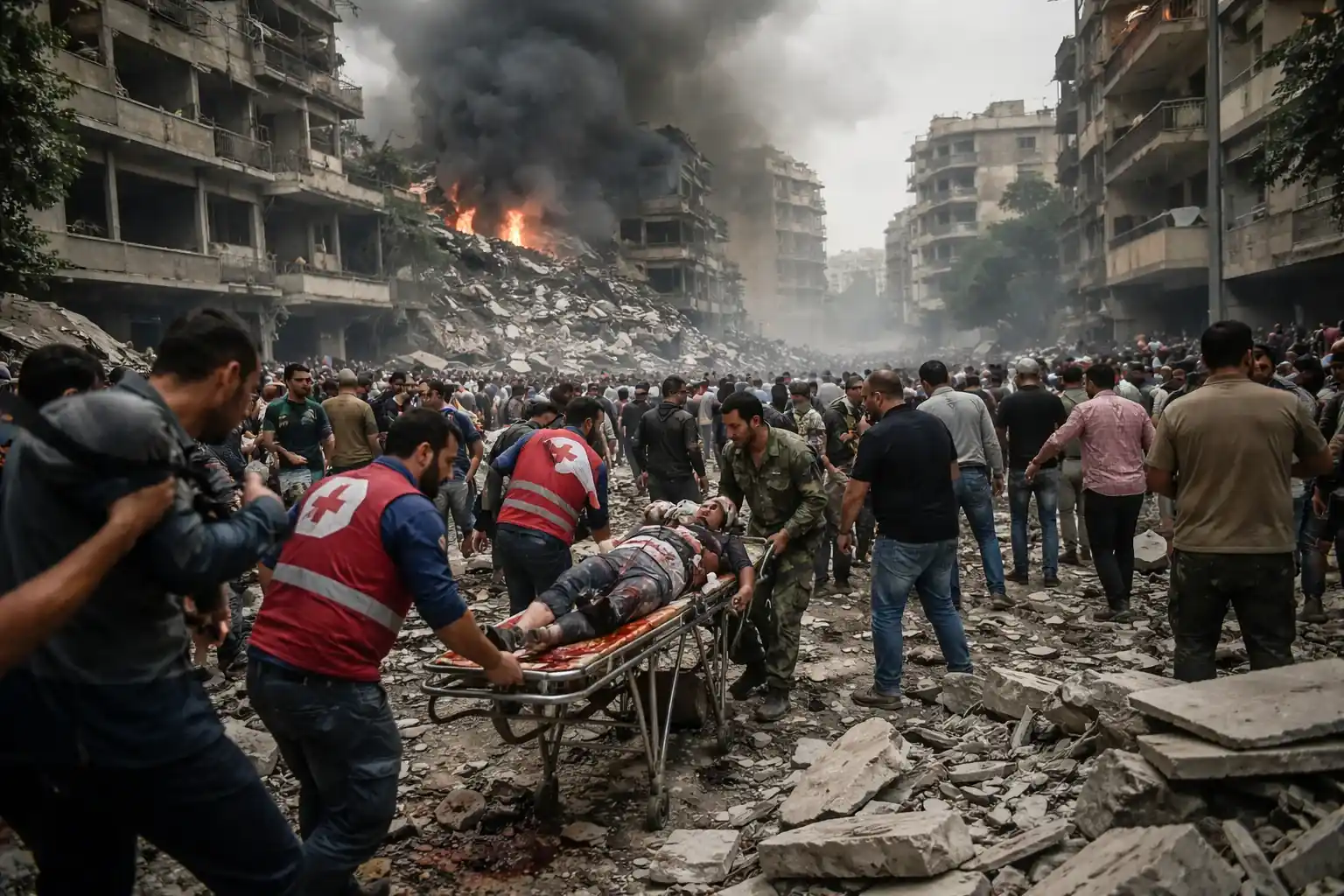
Israel and Hezbollah exchanged strikes following a ceasefire announcement, with heavy violence in southern Lebanon exposing how fragile the truce was almost as soon as it was declared. In the Nabatieh district, Israeli airstrikes and artillery reportedly killed at least 16 people and wounded more, while Hezbollah fired a large volume of projectiles in response.
The speed of the breakdown is what makes this development especially serious. Ceasefires in this conflict have often been fragile, but when fighting resumes almost immediately, it raises doubts not only about military restraint on the ground but also about whether the political framework behind the agreement was accepted by the parties expected to honor it.
What's new in this update
The main update is that the new ceasefire appears to have been weakened by competing interpretations from the start. Hezbollah officials indicated they did not recognize the U.S.-announced terms, especially if those terms were seen as allowing Israel to continue operating inside Lebanon. Israel, meanwhile, continued to describe its actions as necessary responses to immediate threats.
That gap matters because ceasefires rarely survive when the sides do not agree on the rules that govern the first hours after a deal is announced. In this case, the Israel-Hezbollah ceasefire seems to have entered force without a stable shared understanding of enforcement, retaliation, or acceptable military presence.
Key details
The immediate humanitarian toll has been severe. Hospitals and emergency workers in southern Lebanon have reported high casualty pressure, especially in the Nabatieh area, where strikes caused significant destruction. The exchanges also came after an already deadly phase of violence, which means the civilian system was under strain even before the newest bombardment.
The key operational facts reported so far include:
- Israeli strikes hit targets in southern Lebanon, especially around Nabatieh
- Hezbollah launched more than 50 projectiles at Israeli forces
- Lebanese casualties rose despite the truce announcement
- U.S. diplomacy is now under pressure to prevent broader regional unraveling
This is what makes the situation more than a local flare-up. The ceasefire is tied to a broader diplomatic push involving the United States and Iran, which means every violation carries implications beyond the immediate Israel-Lebanon front.
Background and context
The conflict between Israel and Hezbollah has repeatedly risked becoming a wider regional war, especially when events in Lebanon intersect with tensions involving Iran, U.S. military positioning, and Israeli domestic political pressure. Southern Lebanon has been one of the central arenas where those tensions are tested in real time.
This round of violence comes amid wider efforts to stabilize the region through indirect diplomacy. If Washington is trying to build or preserve a broader peace framework with Tehran, then continued cross-border fire between Israel and Hezbollah threatens that effort by showing that one of the most volatile fronts remains uncontrolled.
The history of failed truces also matters. Previous ceasefires have often broken down because the parties used different standards for what counts as deterrence, self-defense, or provocation. When those definitions remain unresolved, violations become almost inevitable.
What to watch next
The next phase will center on whether outside diplomacy can restore a basic level of restraint before the violence expands further. Steve Witkoff's talks with Iran and related U.S. engagement may now matter even more than they did before the latest strikes, because the diplomatic track has shifted from consolidating a ceasefire to rescuing it.
Three questions stand out:
- Whether Israel continues high-intensity strikes in southern Lebanon
- Whether Hezbollah treats the ceasefire as effectively void
- Whether U.S. and Iranian diplomacy can stabilize the broader regional framework
If those answers move in the wrong direction, the truce may soon be remembered not as a pause in the war but as a brief diplomatic intermission before renewed escalation.
Why this matters
The Israel and Hezbollah exchange strikes following ceasefire announcement story matters because it shows how quickly a truce can lose credibility when the political terms behind it are unsettled. The conflict is not taking place in isolation. It sits inside a larger web of U.S., Iranian, Israeli, and Lebanese calculations.
That means every violation is more than a battlefield event. It is also a test of whether outside diplomacy still has enough leverage to keep one flashpoint from igniting a broader regional crisis.
Why it matters
The immediate violation of the truce threatens to undermine a fragile US-brokered peace deal between Washington and Tehran that seeks to end fighting across multiple fronts.
Read next
Follow this story through the topic hub, more world coverage, and the latest updates.
Weekly briefing
Get the week's key developments in one concise email.
Get a fast catch-up on the biggest stories, the context behind them, and the links worth your time.
Cadence
Weekly, for a quick catch-up
Coverage
AI, business, world, security, sports
Format
Clear takeaways and useful context
Request the briefing
Leave your email to open a prepared request and get on the list for the weekly briefing.
About the byline
World correspondent
Leila Haddad covers world affairs, diplomacy, and humanitarian crises, with a focus on how fast-moving international developments affect public policy, conflict response, and cross-border institutions.
Sources and methodology