Iran Releases Missile Footage as Israel Conducts Retaliatory Strikes
Tehran warns of a week-long campaign following the first direct exchange of fire between the two nations since a recent ceasefire.

World correspondent
Reports on international affairs, diplomacy, and humanitarian developments with an emphasis on official statements, multilateral institutions, and regional context.
Editorial responsibility: Lead reviewer for geopolitics, international institutions, and crisis coverage
Primary source: BBC World News. Full source links and update notes are below.
Fast summary
Start here
- Iran released video documentation of missile launches, threatening a full week of continuous operations against Israel.
- The Israel Defense Forces confirmed retaliatory strikes on military targets located in western and central Iran.
- This escalation marks the first direct territorial exchange between the two countries since a ceasefire was established two months ago.
What happened
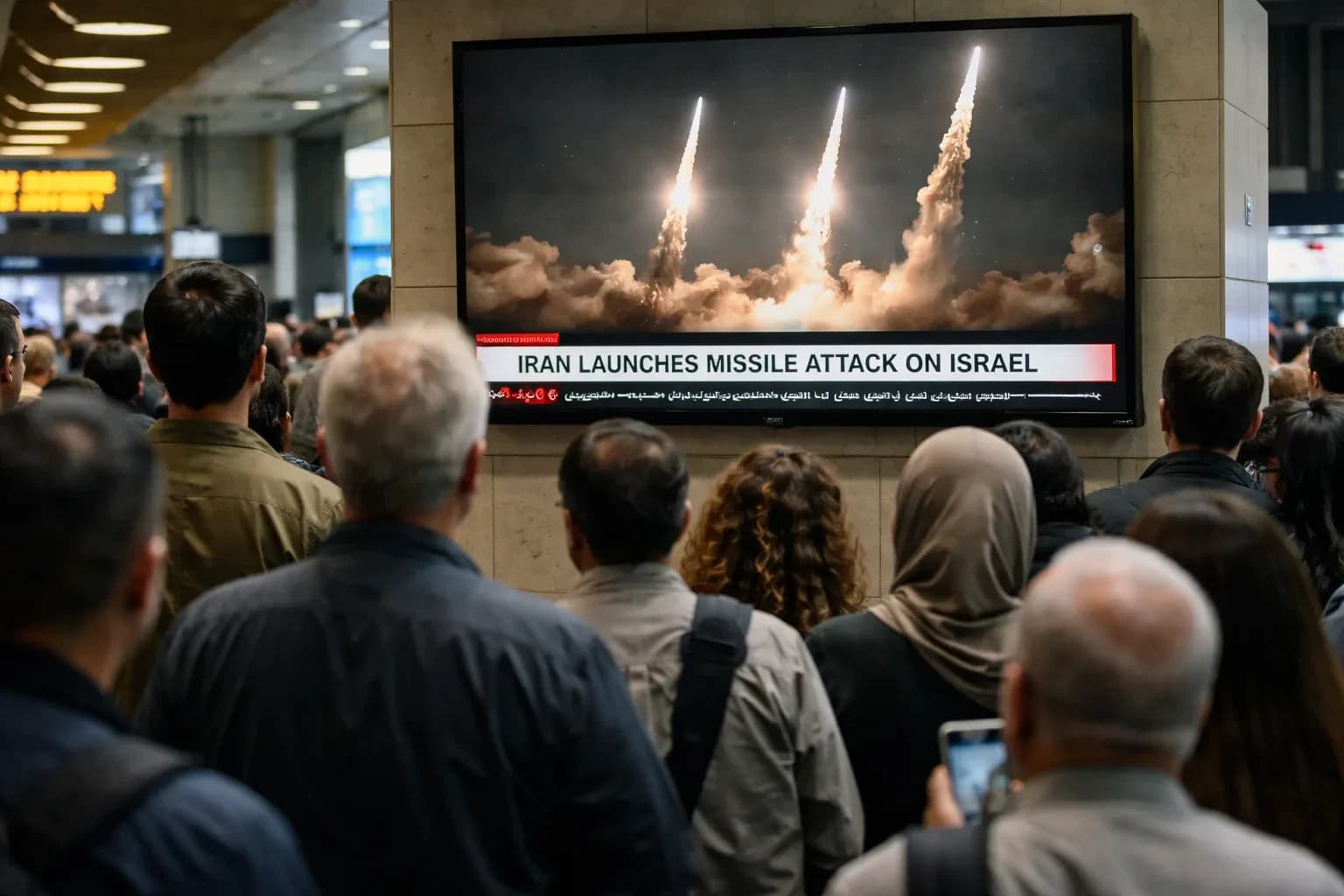
Iran has released footage of missile launches aimed at Israel, publicly framing the strikes as part of a broader and potentially extended campaign, while Israel says it has responded with retaliatory strikes on military targets in western and central Iran. The release of video matters because it turns a military exchange into a deliberate political message. Tehran is not only conducting operations; it is advertising them. At the same time, Israel's acknowledgment of retaliation confirms that the confrontation has moved back into direct state-to-state exchange after a period of ceasefire.
This is significant because once both sides are openly exchanging fire and publishing images of it, the risk of miscalculation rises sharply.
Why the footage release matters
Governments do not release combat imagery casually during a crisis. Missile launch footage is often intended to shape perception as much as to document action. Iran's decision to publicize the strikes suggests it wants domestic, regional, and international audiences to understand the attack as sustained, intentional, and politically consequential. In other words, the footage is part of the strategy, not just evidence of it.
That matters because signaling can harden positions. Public threats of a week-long campaign become harder to retreat from without appearing weak.
Why the ceasefire breakdown is serious
The most dangerous element in this story is not only the new attack, but the fact that it breaks a ceasefire that had held for two months. Ceasefires do not eliminate hostility, but they create a narrow structure for restraint. Once that structure collapses, both sides often return not to a stable status quo, but to a more volatile environment than the one that existed before the pause.
That is why this latest Iran-Israel exchange is so closely watched. It is not simply another tense episode in a long rivalry. It is a sign that a previously established limit on direct confrontation may no longer hold.
Why Israel's response matters
The Israel Defense Forces' retaliatory strikes show that the exchange is not being contained at the level of threats or proxies. Direct action against Iranian military targets in western and central Iran raises the stakes because it broadens the geographic and strategic frame of the confrontation. Once core-state territory becomes the explicit site of action, pressure grows on both governments to escalate or visibly deter further blows.
That dynamic is especially dangerous in conflicts where each side feels compelled to preserve credibility as much as security.
The international pressure angle
The mention of high-level outside pressure, including efforts to speak with Israeli leadership, underlines how quickly global actors become involved when Iran and Israel move into direct conflict. The concern is not abstract. A wider war could disrupt energy markets, trigger allied responses, and raise the possibility of further regional spillover involving Lebanon, Syria, Iraq, or Gulf states.
That is why even political figures not directly in office or command structures can become part of the story. Diplomatic messaging matters when the confrontation is moving faster than formal mediation can keep up.
What to watch next
The immediate question is whether Iran follows through on its stated threat of a longer campaign or whether the missile footage is partly intended to maximize the political effect of a narrower strike pattern. Analysts will also watch whether Israel's retaliation remains limited to military sites or expands in scope. Casualty levels, additional video releases, and the tone of official statements from both governments will all help indicate whether escalation is deepening or being quietly capped.
For now, the release of Iranian missile launch footage and Israel's retaliatory strikes mark a dangerous new phase in renewed Iran-Israel conflict. The ceasefire has been broken, the messaging from both sides is hardening, and the possibility of a contained exchange remains uncertain. In this kind of confrontation, what is shown publicly can become almost as important as what is struck militarily.
Why it matters
The breakdown of a two-month ceasefire between Iran and Israel represents a significant escalation in regional instability and could draw in global powers.
Read next
Follow this story through the topic hub, more world coverage, and the latest updates.
Weekly briefing
Get the week's key developments in one concise email.
Get a fast catch-up on the biggest stories, the context behind them, and the links worth your time.
Cadence
Weekly, for a quick catch-up
Coverage
AI, business, world, security, sports
Format
Clear takeaways and useful context
Request the briefing
Leave your email to open a prepared request and get on the list for the weekly briefing.
About the byline
World correspondent
Leila Haddad covers world affairs, diplomacy, and humanitarian crises, with a focus on how fast-moving international developments affect public policy, conflict response, and cross-border institutions.
Sources and methodology