Iran Launches National Mourning Rites for Former Supreme Leader
Months after the military strikes that led to his death, Iran has initiated a massive public funeral process for Ayatollah Ali Khamenei during a sensitive

World correspondent
Reports on international affairs, diplomacy, and humanitarian developments with an emphasis on official statements, multilateral institutions, and regional context.
Editorial responsibility: Lead reviewer for geopolitics, international institutions, and crisis coverage
Primary source: BBC World News. Full source links and update notes are below.
Fast summary
Start here
- The former Ayatollah's body will lie in state at Tehran's Grand Mosalla for three days before being transported to Iraq and then his final burial site in Mashhad.
- Iranian officials expect as many as 20 million mourners to participate in the ceremonies, leading to total city lockdowns and airspace closures in the capital.
- The mourning period occurs during a fragile ceasefire between Iran and the United States, following a preliminary agreement signed in June to halt active hostilities.
What happened
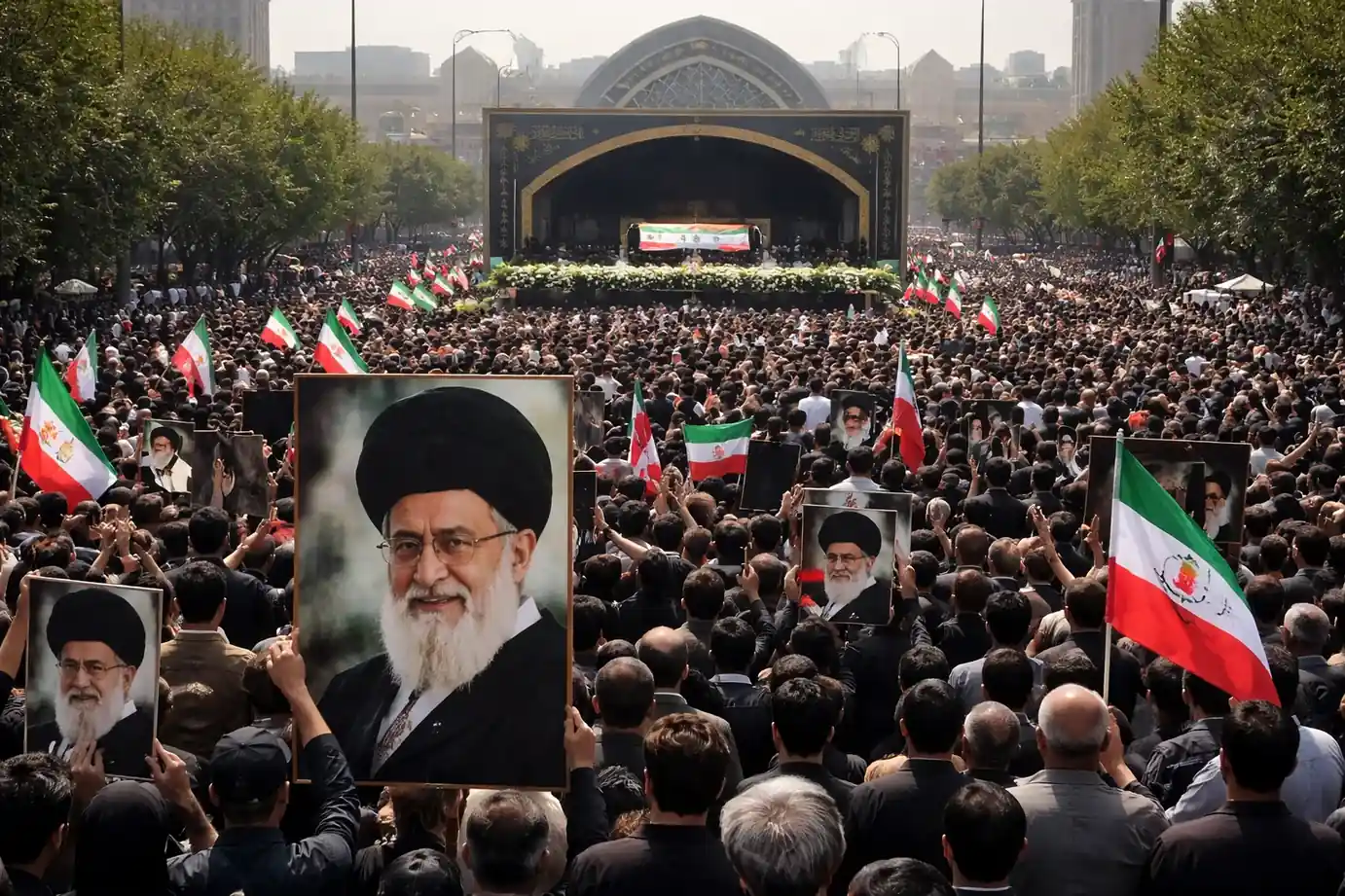
Iran has officially commenced a several-day period of public mourning and high-profile funeral processions for its former Supreme Leader, Ayatollah Ali Khamenei. This state event comes more than four months after the leader was killed in military strikes launched by the United States and Israel in February. The commencement of these rites marks a transition from the immediate crisis management following the strikes to a formalized period of national grieving. Beginning Friday, the former Ayatollah's body will lie in state in Tehran's Grand Mosalla, serving as the focal point for millions of citizens expected to pay their final respects. This massive mobilization is intended to project a sense of national unity and strength following a period of significant regional instability.
What's new in this update
The latest development in the aftermath of the February strikes is the implementation of a rigorous and extensive logistical plan for the funeral, which had been delayed until a preliminary ceasefire could be established. Iranian authorities have now mandated the closure of all public and private offices in Tehran from Saturday through Monday to accommodate the influx of mourners. Traffic restrictions have effectively sealed off the city center to private vehicles, and the airspace over the capital is scheduled to be partially closed starting Friday, with a full closure taking effect on Monday. These updates represent the most concrete steps taken by the Iranian government to facilitate a mass public gathering since the signing of the June ceasefire agreement with the United States.
Key details
Official estimates provided by state media and cited by AFP suggest that the funeral ceremonies could draw as many as 20 million mourners from across the country. The former Supreme Leader’s body will be displayed alongside the remains of family members who also perished in the February strikes, adding a personal dimension to the state's political narrative of martyrdom. Following the three-day lying-in-state at the Grand Mosalla, the funeral procession will move to the Iraqi holy cities of Najaf and Karbala, illustrating the transnational religious ties of the Iranian leadership. The final burial is scheduled for next Thursday in Khamenei’s hometown of Mashhad. International attendance is also expected, with high-level representatives such as Pakistan’s Prime Minister Shehbaz Sharif confirmed to attend the Tehran ceremonies.
Background and context
The death of Ayatollah Ali Khamenei in February was a watershed moment in Middle Eastern geopolitics, occurring during a period of intense military escalation between Iran and the coalition of the United States and Israel. The subsequent months were characterized by heightened tensions and the potential for a full-scale regional war. However, a preliminary deal signed in June established a fragile ceasefire, allowing for the current mourning period to proceed without immediate military threat. Domestically, the transition of power has been quiet but significant; Khamenei has been succeeded by his son, Mojtaba Khamenei. Despite his new role, Mojtaba has not yet made a public appearance, leading to widespread speculation regarding the internal stability of the government and the future direction of its foreign policy.
What to watch next
In the immediate term, the international community will be monitoring the public ceremonies for any signs of civil unrest or shifts in political rhetoric that could threaten the June ceasefire. A major point of interest is whether the new Supreme Leader, Mojtaba Khamenei, will use this period to make his first public address or appearance, which would signal his official assumption of visible authority. Additionally, the movement of the funeral procession through Iraqi territory will be a key logistical and security test for both Tehran and Baghdad. Observers will also be watching for the reactions of US and Israeli officials to the massive display of support for the late leader, as the rhetoric surrounding the burial in Mashhad next Thursday could set the tone for future diplomatic negotiations.
Why it matters
This state-sanctioned mourning period serves as a critical test of national stability and a public demonstration of the regime's continuity during a leadership transition. It highlights the delicate balance Iran must maintain between honoring its former leader and upholding a precarious ceasefire with the West.
Read next
Follow this story through the topic hub, more world coverage, and the latest updates.
Weekly briefing
Get the week's key developments in one concise email.
Get a fast catch-up on the biggest stories, the context behind them, and the links worth your time.
Cadence
Weekly, for a quick catch-up
Coverage
AI, business, world, security, sports
Format
Clear takeaways and useful context
Request the briefing
Leave your email to open a prepared request and get on the list for the weekly briefing.
About the byline
World correspondent
Leila Haddad covers world affairs, diplomacy, and humanitarian crises, with a focus on how fast-moving international developments affect public policy, conflict response, and cross-border institutions.
Sources and methodology