JD Vance Emerges as Public Face of High-Stakes US-Iran Agreement
As President Trump jokes about his vice-president taking the blame for a potential failure, JD Vance defends a deal that has split the Republican party.

World correspondent
Reports on international affairs, diplomacy, and humanitarian developments with an emphasis on official statements, multilateral institutions, and regional context.
Editorial responsibility: Lead reviewer for geopolitics, international institutions, and crisis coverage
Primary source: BBC World News. Full source links and update notes are below.
Fast summary
Start here
- Vice-President JD Vance is leading the public defense of a new memorandum of understanding with Iran despite internal party divisions.
- President Trump publicly joked that Vance might be the 'fall guy' if the diplomatic effort collapses.
- The White House canceled Vance's planned trip to Switzerland for a signing ceremony as technical details remain unresolved.
What happened
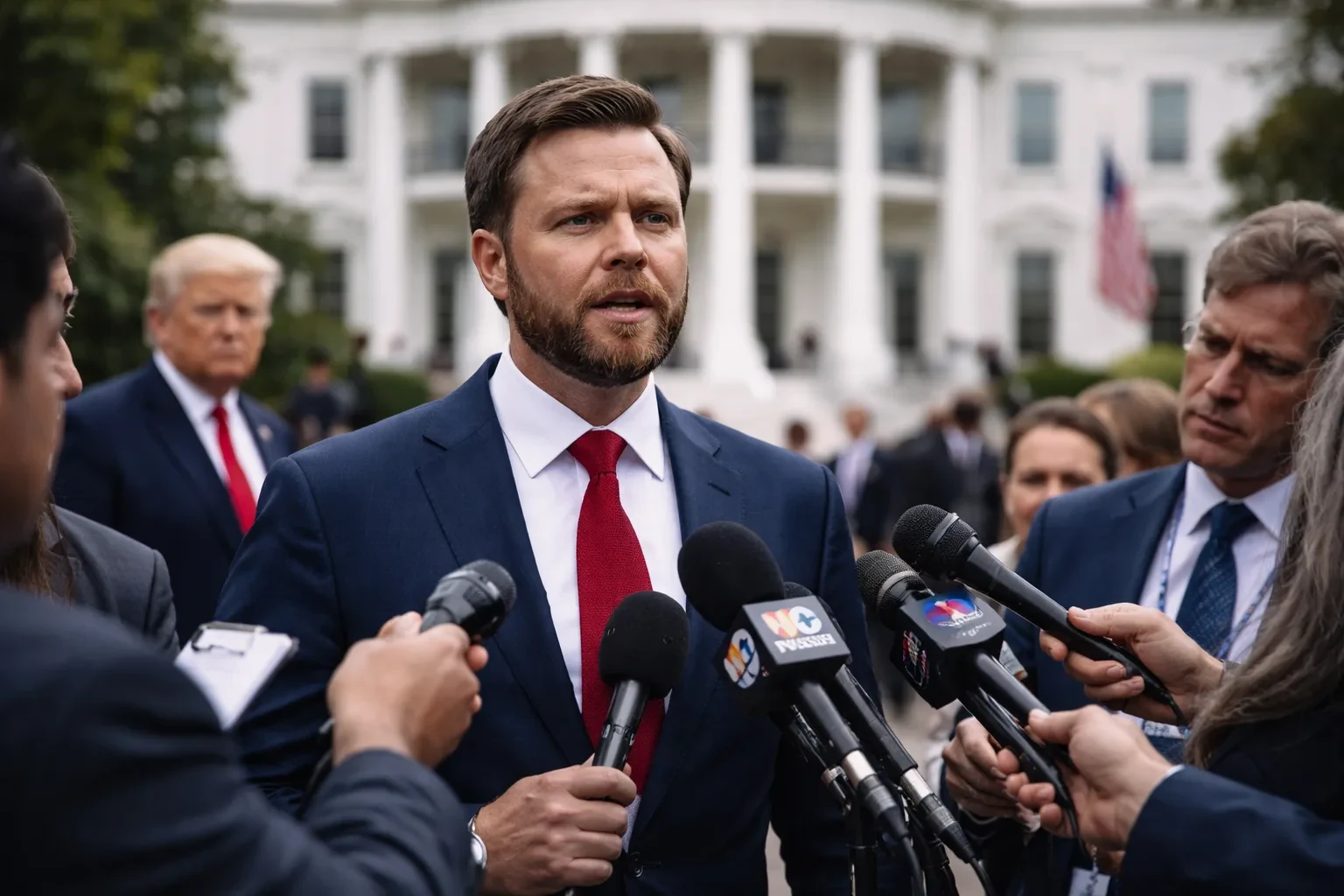
JD Vance has become the public face of the White House's Iran deal effort, defending a new US-Iran memorandum while Donald Trump keeps a more flexible political distance from the fallout. That arrangement is significant because it places the vice-president in the most exposed position on one of the administration's most controversial foreign-policy moves, even as Trump signals that credit and blame may not be shared equally.
This is why the Vance Iran deal story matters. It is not only about diplomacy with Tehran. It is also about how power, risk, and succession politics are being distributed inside the Republican administration.
Why JD Vance is carrying the message
Vice-presidents often act as political surrogates, but this case feels more consequential because the Iran deal cuts directly across major Republican fault lines. Some in the party favor strategic restraint and negotiation if it limits conflict. Others see any agreement with Iran as weakness or dangerous concession. By placing Vance at the front of the defense, the White House is effectively asking him to absorb the ideological shock of that split.
That matters for two reasons. First, it tests whether Vance can carry a difficult national-security argument. Second, it exposes him if the agreement unravels or angers too many factions at once.
Why Trump's posture matters
Trump's role in the story is central because he remains the dominant political force in the administration and the party, yet he appears to be managing his distance carefully. Public jokes about Vance becoming the "fall guy" may be framed as humor, but they also perform a useful political function: they remind observers that Trump retains flexibility if the Iran deal becomes unpopular.
In other words, Trump can allow Vance to take ownership of the sales job while keeping room to reshape the narrative later. That is a classic power move in an administration built heavily around personal political positioning.
Why the Iran deal is dividing Republicans
The modern Republican coalition is not unified on foreign policy. Intervention skeptics, America First nationalists, defense hawks, Israel-focused hardliners, and institutional security conservatives do not all react to Iran negotiations in the same way. A memorandum with Tehran, even an interim one, can therefore trigger competing reactions about deterrence, regional credibility, and the risks of diplomacy.
That is why the White House messaging challenge is so difficult. Selling an Iran deal requires more than policy explanation. It requires managing an intraparty argument about what strength actually looks like.
The Switzerland cancellation and what it signals
The cancellation of Vance's planned Switzerland trip matters because it suggests the technical and diplomatic details are less settled than the political rollout might imply. In diplomacy, symbolic staging matters, but last-minute changes often reveal uncertainty underneath the choreography.
For Vance, that creates an awkward position. He is defending the framework publicly while some of the practical architecture still appears unresolved. That can make him look either like the deal's most committed advocate or its most exposed messenger.
Why this matters for Vance's future
Vance's political future is part of the story whether the White House says so openly or not. Any vice-president tied this visibly to a major foreign-policy gamble is being tested on credibility, discipline, and survivability. If the Iran deal stabilizes and produces a plausible path forward, Vance can claim ownership of a serious diplomatic achievement. If it collapses, critics inside and outside the party will remember that he carried the defense.
That asymmetry is what makes this assignment risky. Vance gains visibility, but not necessarily control.
The broader foreign-policy stakes
Beyond domestic Republican politics, the Iran deal matters because it could affect regional tension, nuclear diplomacy, US credibility with allies, and the balance between coercion and negotiation in Middle East strategy. A temporary framework is not a final settlement, but even interim steps can change expectations and trigger reactions from Israel, Gulf states, Congress, and global markets.
That wider context means the Vance role is not just symbolic. The public face of the deal is also shaping how international actors interpret the seriousness of the US position.
What comes next
The next critical phase is the negotiation window for a fuller agreement, along with the White House effort to keep Republican critics from hardening into outright opposition. Observers will watch whether Vance continues to lead the messaging or whether Trump steps more directly into the spotlight if success becomes more likely.
For now, JD Vance's emergence as the face of the Iran deal places him in a politically exposed but potentially defining role. The diplomacy itself remains uncertain, but one thing is already clear: if this agreement becomes a major foreign-policy turning point, Vance's name will be tied to it.
Why it matters
The deal represents a major pivot in US-Middle East policy that could either cement Vance's diplomatic legacy or sabotage his future political ambitions if it fails.
Read next
Follow this story through the topic hub, more world coverage, and the latest updates.
Weekly briefing
Get the week's key developments in one concise email.
Get a fast catch-up on the biggest stories, the context behind them, and the links worth your time.
Cadence
Weekly, for a quick catch-up
Coverage
AI, business, world, security, sports
Format
Clear takeaways and useful context
Request the briefing
Leave your email to open a prepared request and get on the list for the weekly briefing.
About the byline
World correspondent
Leila Haddad covers world affairs, diplomacy, and humanitarian crises, with a focus on how fast-moving international developments affect public policy, conflict response, and cross-border institutions.
Sources and methodology